Work

DSCN0544

There is nothing more disheartening that endless futile labor or doing something you absolutely loathe or have a fundamental problem with. As you might recall, Sisyphus was condemned to an eternity of rolling a rock up a steep mountain incline only to have it roll back to the valley again once he got it to the top. On his way back down the mountain, he had to think about his existential position.

Looked at in another way, work is applied effort. It is what we put ourselves into…whatever we expend our energy on for the sake of accomplishing something. Work in this fundamental sense is not what we do for our living, but what we do with our living.

Happiness resides in activity, both physical and mental. It resides in doing things that one can take pride in doing well. Those who have missed the joy of work, of a job well done, have missed something very important.

All work can be done well or it can be done poorly. All work can be done cheerfully and with pride or grudgingly and with distaste. Whichever way we do it is really up to us. It is a matter of choice. There are no menial jobs. Only menial attitudes. In the theatre we say there are no small parts, only small actors.  Our attitudes are up to us. A laborer is worthy of his hire.

As Sisyphus presses his face against the rock, each atom of the stone, each mineral flake of that night-filled mountain itself forms a world. The struggle itself towards the heights is enough to fill a man’s heart. One must imagine Sisyphus happy.

Shades of Gray

DSCN0544

I was a Safety Manager in manufacturing for 20 years and a Human Resources Manager for 15. While I was a Human Resources Manager I had a chance encounter with a Safety Manager who was visiting my site. We had a discussion about the difference between the two professions.

“I could never be a Human Resources Manager,” he said. “Everything is a shade of gray. I like things to be black and white. In the safety profession, everything is black and white. Something is either safe or it isn’t.”

“Well, that’s where you and I are different.” I answered. “That’s why I got out of the safety business and into the human resources business. Because I see everything in shades of gray.”

Boom!

Place for Politics, 8-19-2015: Bobby Jindal

Bobby Jindal was born but not bred in Baton Rouge, LA. on June 10, 1971. His full name is Piyush Jindal. He was born six months after his parents arrived from Punjab, India. He is an american citizen by reason of his birth as is so prescribed by the 14th amendment to the US Constitution. I think it ironic, to say the very lesat, that our Mr. Jindal would be anti-immigration or that he would support the repeal of the 14th amendment.

Bobby Jindal

Mr. Jindal is a very smart man and once accused the Republicans of being memebrs of the “Stupid Party.” He is not acquitting himself very well of late for someone who has come so far and risen so high.

Quote of the Day 8-16-2015

957894

The fate of all nations will not be settled until the problems of peace and world organization have been solved…the effectiveness of the people’s action depends on their finding the courage to give up some of their dreams for now in order to save lives. Before it is all over, it will, perhaps, be necessary to raise our voices.

Albert Camus, 11-29-1946, Combat

My Books are Never so Happy as When they are all Together

wpid-20150705_171758.jpg

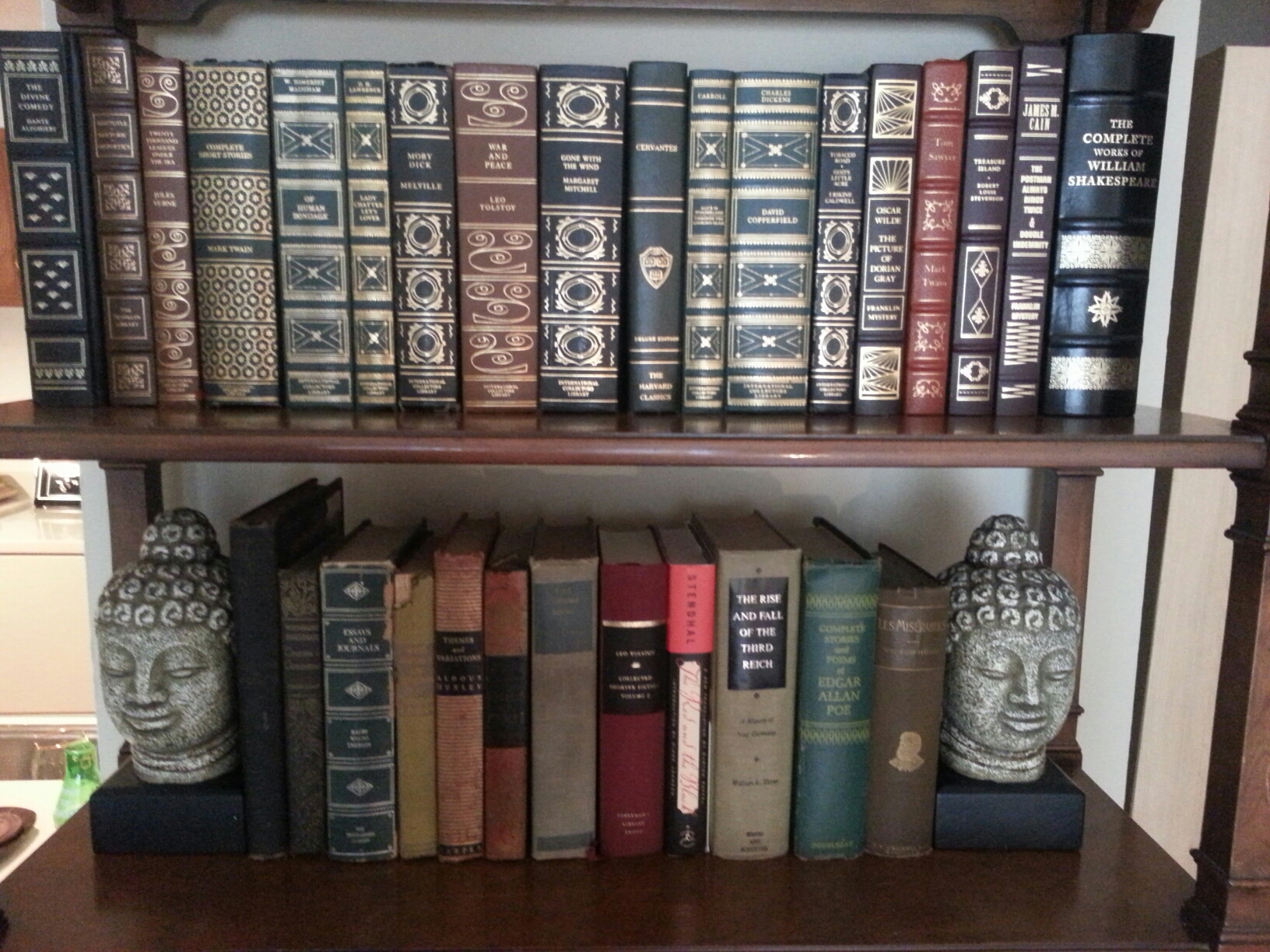
I have moved recently and whenever I move I am always fretting over how much stuff I have. Not the least of which is a rather large collection of books. My library as it were. I have been hauling this collection of books around the country with me for some 50 years. Every time I make a move I try to winnow it down to a core number, but giving away books is a little like giving away children. It is an agony.

I discovered Christopher Hitchens

wpid-20150705_180055-1.jpg

had a similar problem as he described in his essay, Prisoner of Shelves: “I try to cull them out but the closer I get to the center the harder it is to cull. I can’t throw out a book that has been with me for years and is like an old friend. Or a book that has been written by an acquaintance or who knows when I will need a reference to a subject however obscure. I never lend my books, I am compulsive about not letting them out of my sight.”

I feel the same way. In fact I composed this little ditty to describe my feelings:

Neither a lender nor a borrower be
For borrowing dulls the edge of husbandry
With this in mind then, if you still want to borrow
I’ll expect the book back by tomorrow.

wpid-20141028_065834.jpg

When I moved from Trenton to Louisville three years ago I gave away literally 20 cases of books and downsized five bookcases. It gets harder each time. I just moved from a three bedroom house to a two bedroom apartment and once again find myself downsizing. At least now they are all together and they couldn’t be happier.

wpid-20140724_192007.jpg

Free Will?

Ingmar_Bergman-The_Seventh_Seal-01

The question, do we live in a determined universe, and if so do we have free will, is frequently asked and one I have often wrestled with. My conclusion is yes, the universe is determined and, yes we do have free will but, it is limited. I call this limited modified free will. This idea is best illustrated by the following analogy. We are like an ant traveling down a rushing stream of water on a leaf. The ant can turn the leaf a bit this way or that way, but it cannot change the direction of the traveling leaf or its final destination.
Because we are men and women and not ants, we have a bit more control of our lives, and can make choices which creates causes. As the world operates by cause and effect these causes can change the course of lives. But some circumstances are beyond our control and are indeed determined. Such as when and where we were born, who our parents are, our genetic makeup, our intelligence, and the color of our skin. All of these things play a role in determining our existence in spite what free choices we make.
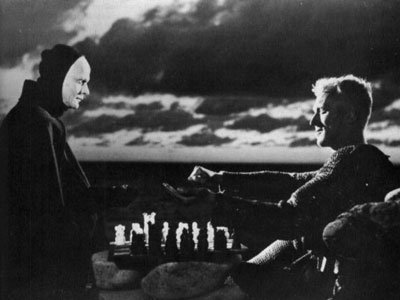
And then there is the question of fate. Sometimes, it seems, no matter how hard we try, no matter what choice we make, we still cannot avoid what seems to be our fate. I am reminded of the story of the servant who had an appointment in Samarra. There was a merchant in Baghdad who sent his servant to market to buy provisions and in a little while the servant came back, white and trembling, and said, Master, just now when I was in the marketplace I was jostled by a woman in the crowd and when I turned I saw it was Death that jostled me. She looked at me and made a threatening gesture, now, lend me your horse, and I will ride away from this city and avoid my fate. I will go to Samarra and there Death will not find me. The merchant lent him his horse, and the servant mounted it, and he dug his spurs in its flanks and as fast as the horse could gallop he went. Then the merchant went down to the marketplace and he saw me standing in the crowd and he came to me and said, “Why did you make a threatening gesture to my servant when you saw him this morning?” “That was not a threatening gesture,” I said, “It was only a start of surprise. I was astonished to see him in Baghdad, for I had an appointment with him tonight in Samarra.”

Unions

DSCN0544

As a labor relations manager, I have been on the opposite sides of many labor disputes. I have often been toe to toe with union presidents and once accused of trying to steal daylight past a rooster. I have been charged with drawing up yellow dog contracts and had fingers wagged in my face. I have turned a poor labor climate into a good labor climate. Yet, throughout it all I have never been anti-unions. I have always thought that unions have an important role to play and a significant place to hold in the history of the American workforce and labor market. Unions provide workers protections and wages that they never would have had otherwise. And I have always believed that a rising tide lifts all boats.

I think the right’s plan to kill unions is a misguided effort by the 1% to to dominate the American workforce to keep wages and benefits low and maximize control of the means of production.

Small Town Blues

028_25

When I moved to the North East from the Lone Star State to take a job in South Jersey, I took the opportunity to reside in the Great American City of Brotherly Love, Philadelphia. When my co-workers asked me why I moved to Philly instead of Salem, I announced I wanted to live in a small town. Philly’s not small, they cried in amazement. It’s smaller than Houston, I retorted.

Boom!