Late Spring (1949)

Movie Blurb


Late spring poster

The more films I watch by master director Yasujiru Ozu the more enamored I become of him. His gentle style of storytelling and film making touches the soul and transcends the mundane world he is depicting as his characters move through their everyday lives and reaches a spiritual dimension. From the opening scene in Late Spring, which just portrays leaves on trees and bushes blowing softly in the breeze as the camera loving lingers on, to the final scene of waves gently lapping the shore this film of a dutiful daughter devoted to her father tugs at the heart strings.

Late Spring

La Grande Illusion (1937)

Movie Review

Grand Illusion poster

La Grande Illusion, directed by Jean Renoir, is a must-see film for anyone who is a serious film lover. It is considered to be Renoir’s masterpiece and has made many critic’s lists of best films ever made, including mine.

The film is about a group of French prisoners of war in two German camps during World War I. There are officers in the group that includes an aristocrat, a wealthy Jewish banker, a music hall actor and a mechanic. Pretty much a cross section of French society.

La Grande Illusion

These officers make several escape attempts. Their last attempt to tunnel out is interrupted when they are transferred out to another camp before they can complete the tunnel. They are sent to a fortress called Winterborn from which no one has ever escaped. This camp is run by a German aristocrat named Captain von Rauffenstein (Eric von Stroheim).

The French aristocrat de Boeldieu (Pierre Fresnay) forms a bond with Captain Rauffenstein but sacrifices his life in order to help his fellow officers, working-class Maréchal (Jean Gabin) and the wealthy Jewish banker Rosenthal (Marcel Dalio) finally escape. These class distinctions are essential to the story and are part of the overall theme of the illusion of class barriers which artificially separate men in society. The themes of race and ethnicity are also explored. The men are rescued by a German widow, Elsa (Dita Parlo), and eventually make it across the border to Switzerland.

Two other famous movies were directly influenced by La Grande Illusion: The Great Escape and Casablanca. The digging of the tunnel in The Great Escape is performed in the same way as in La Grande Illusion including the way the prisoners hide the dirt from the tunnel in their pants and shake it out on the ground during their exercises period. The singing of the “Marseilles” to enrage the Germans in Casablanca can also be found in La Grande Illusion.

La Grande Illusion is an anti-war film in which the main thesis is the futility of war. It relies heavily on ideas from the book The Great Illusion by Norman Angell published in 1909. Angell argued that the cost of war was so great that no one would risk starting a war because the result would be disastrous. Of course, this proved to be illusory.

The title of the movie seems to have multiple layers of meaning. The futility of war, the artificial boundaries between men in class distinctions and even the artificial and invisible borders between countries. In the last scene of the movie as Maréchal and Rosenthal make their escape into Switzerland across a snowy mountainside a German patrol spots the men and fires shots at them. The order is given to stop shooting as the prisoners are over the border into Switzerland. The camera pans down the mountain side to the two men. Marechal asks, “Are you sure we are in Switzerland, it’s so alike?” Rosenthal, who has a map, says, “Of course. You can’t see frontiers. They were invented by men. Nature doesn’t care.”

This is a movie that has definitely stood the test of time in every way.


Detour (1945)

Movie Review

Detour

Detour, directed by Edgar G. Ulmer, is a classic “B” movie in the Film Noir genre straight out of Pulp Fiction Hell. Shot on the cheap in four weeks it packs a wallop! This Criterion edition film is beautifully restored in glorious black and white. It is worth seeing just for the visuals alone. The story is as cheap as the characters it portrays. The writing is a little weak but the performances of the unknown actors more than compensate.

The story is told in flashbacks from an opening scene in a diner somewhere in the middle of nowhere.

The main character, Al Roberts (Tom Neal), is an out of work down on his luck pianist from New York City. He hitchhikes out to Hollywood to join up with his girlfriend Sue (Claudia Drake) who is a chanteuse, also from New York City, who went out west earlier to find her fame and fortune. Along the way he is picked up by a guy named Haskell (Edmund McDonald). Haskell tells him about another hitchhiker he had picked up earlier. A young female who turns out to be a real hell cat who put some deep scratches in his hand when he had tried to make advances on her. “There oughta be a law against dames with claws,” he says. Later he dies of a heart attack. Al panics as he thinks the cops will think he killed the guy. He hides the body and takes Haskell’s clothes, money, identification and drives away in his car.

He meets a girl at a gas station and offers her a ride. She falls asleep in the car then suddenly sits bolt upright and demands, “Where’d you leave his body? Where did you leave the owner of this car? Your name’s not Haskell!” About this time Al realizes he has picked up the same girl that Haskell had picked up and she turns out to be the femme fatale of all femme fatales. She berates him all the way to Los Angeles.

When they get to Los Angeles, they cook up a scheme for Al to impersonate Haskell, the long-lost son of the elderly rich father who they read about in a newspaper is dying. They plan to inherit his estate when he dies. Waiting to execute their plan, they sit around in an apartment, drinking, playing cards and fighting. Al’s not playing ball to suit the drunken Vera and she threatens to call the cops. She runs to another room with the phone and slams the door. Al grabs the phone cord and pulls on it. He pulls and pulls. Finally, the line goes slack. He goes in the room to find Vera has become entangled in the cord and is accidentally strangled on it. Now Al has another corpse on his hands that just might point to murder.

That’s when he heads back east and we find him in the diner. In the final scene he is walking out on the desert highway and gets picked up by the cops. His last line is delivered in a voice over, “Fate, for some mysterious force, can put the finger on you or me, for no good reason at all.”

Most reviewers of Detour take Al’s story at face value. But I have a different view. Al is an unreliable narrator and tell us what he wants us to hear to make himself  look good. He more likely is a psychopath who has committed both murders and is caught by circumstance or fate as he likes to say.

Famed film maker Errol Morris said of Detour, “It has an unparalleled quality of despair, totally unrelieved by hope.” A pretty apt description.


The Silence (1963)

Movie Blurb

The silence poster

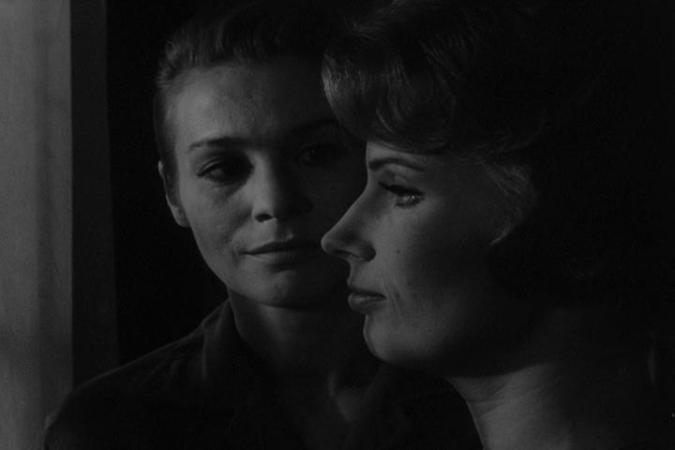
Catching up on my Bergman. I’ve seen The Silence before, back in the 70s, when I first became acquainted with Bergman and he quickly became my favorite auteur. One benefits from the passage of time and the experience one gains from it. I watched The Silence again with new eyes and a new found appreciation. The Silence is a movie of visuals. Bergman strove to find a vocabulary of moving pictures with few words. There were 38 exchanges of dialogue in the film. He would have been happier with 28.

The characters are traveling by train home to Sweden and have to stop off in a strange city where they don’t speak the language making verbal communication impossible with the locals.

The Silence 2

Anna and Ester are sisters who are emotionally isolated from one another. Ester is ill and may be dying and she is the reason for the interruption of their journey. Anna represents the carnality of the pair and Ester is the intellectual component. Anna’s son, Johan, is along for the ride and keeps getting rejected and shunted aside as he first explores the corridors of the train then the empty hallways of the hotel.

The silence 3

The Silence, was the final installment of his film trilogy, The Silence of God, which included, Through Glass Darkly and Winter Light. The word “silence” in the title of this film refers not only to the silence of God but also to the silence of the characters which represents a total breakdown in communication between human beings.

the silence

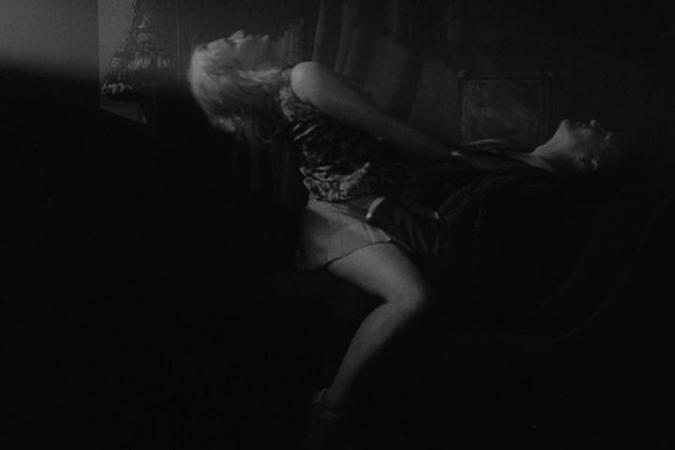
When the film first came out in 1963 it was considered pornographic in some quarters. There are a couple of explicit scenes in the movie which are rather tame by today’s standards. During that time period however, Bergman, like always, was pushing the envelope.

The Silence 4

Pretty bleak stuff, but Bergman at his best.

Don’t Look Now (1973)

Movie Blurb

Dont look now poster

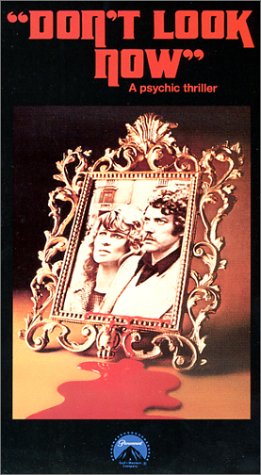
Don’t Look Now, directed by Nicholas Roeg falls squarely into the supernatural thriller category. It has made a lot of best horror film of all times lists. I saw it when it first came out and was suitably impressed. On my second viewing, most recently, I was not disappointed. I was surprised at how much I forgot, but what I remembered most was the emotional impact and eerie feeling it elicited from me. And, of course, the infamous sex scene between the stars, Donald Sutherland Julie Christie. The movie takes place in Venice, a beautiful city, but this Venice is dark and sinister. The photography and editing is superb, cross cutting from image to image and making transitions and connections that advance the dramatic arc of the story. It won the BAFTA 1974 award for Best Cinematography. Highly Recommended!

Dont Look Now

Dont look now 2

Dont look now sex sceneDont look now 3

The Skin I live In (2011)

Movie Blurb

Skin 3

Pedro Almodovar is a quirky filmmaker, although I love all his films. Each one is quirky in its own way and never fails to entertain or amaze. I have been putting off seeing The Skin I Live In for years because I didn’t think I’d like the subject matter and I am not particularly a fan of horror films. Boy was I wrong. So glad I finally got around to seeing this fascinating film. Even though it is a horror film of sorts it has its campy moments. Antonio Banderas plays a brilliant plastic surgeon (mad scientist) who is obsessed with the idea of developing a skin that is burn proof and is willing to make any sacrifice in order to fulfill this Frankenstein like desire. The backstory unfolds to reveal that his beautiful wife was burned and horribly disfigured in a car crash and thus is the progenitor of his obsession. There are a lot of twists and turns but why spoil the fun. See for yourself.


Skin 2

Elevator to the Gallows (1958)

Movie Blurb

Elevator Poster

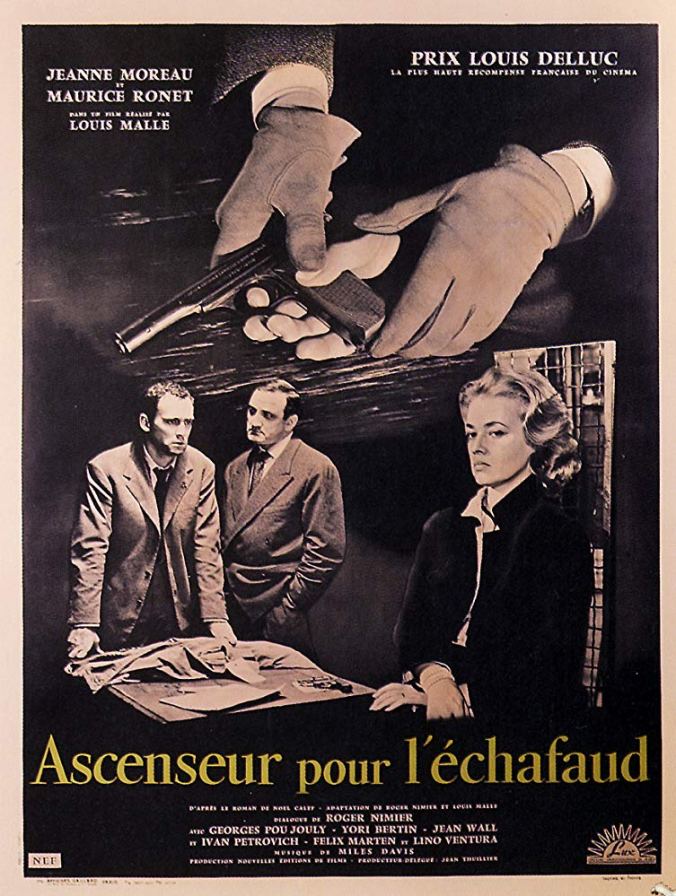
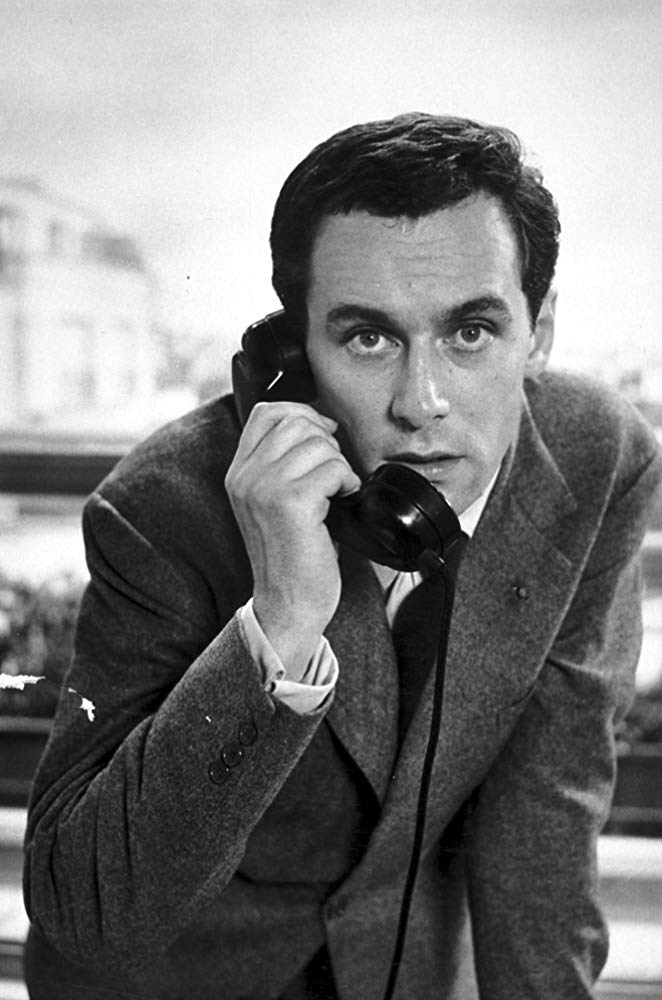
Elevator to the Gallows (1958) is Louis Malle’s first feature film. A French Noir and an early entry into the New wave. Excellent entertainment that touches on several societal issues and displaying a gorgeous black and white portrait of Paris from the 1950s. Sizzling performance by Jeanne Moreau and a killer sound track by Miles Davis. There is absolutely nothing not to like here. Highly recommend!


Jeanne M Elevator

Jeanne Moreau

Maurice Elevator

Maurice Ronet

Jeanne Moreau

Jeanne Moreau

Jeanne M

Jeanne Moreau

The Maids (1975)

Review

The maids Poster

The Maids (1975)

Glenda Jackson and Susanna York

The maids Susanna York

Susanna York

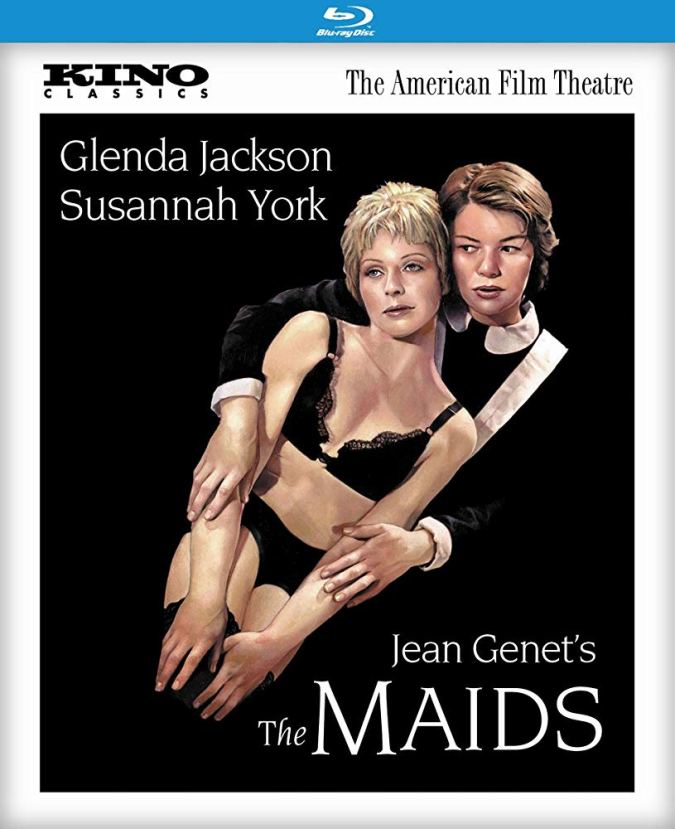
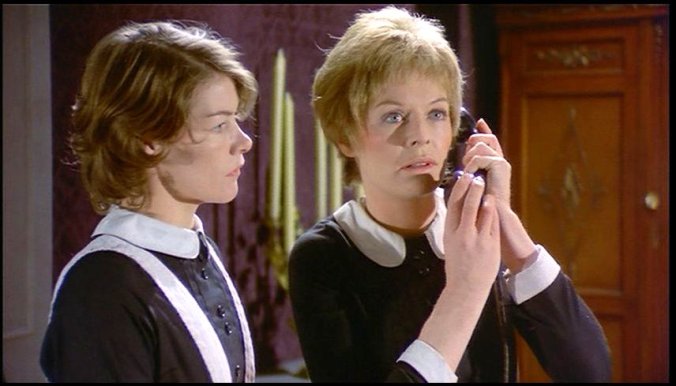
The Maids is a film based on the Gene Genet play of the same name. It is a film about a sad-masochistic relationship between the maids and their employer. It is about role playing, the nature of reality, and class distinctions. It is one of those things that to fully appreciate you had to be there. In other words, to see the live performance of the actors Glenda Jackson and Susanna York, which were electrifying. The whole thing seemed a bit dated and stultifying to me as time has eroded some of its shock value. Still a valuable contribution to the cinema.

Yojimbo (1961)

Movie Review

Yojimbo Poster

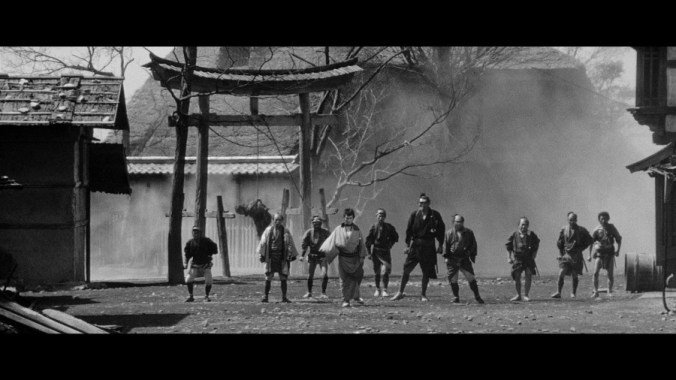
Before there was Kevin Costner there was Toshiro Mifune, who stars in Akira Kurasawa’s Yojimbo (Bodyguard). Kurasawa intentionally made his film using all the western tropes of the Western. Then Sergio Leone copied Kurasawa and made A Fist Full of Dollars starring the man with no name, Clint Eastwood. Walter Hill had a go at it too with his Last Man Standing with Bruce Willis. But this is the original and is Kurasawa’s masterpiece.

Toshiro Mifune

Toshiro Mifune as Sanjuro, the Ronin Samuari

Dog Yojimbo

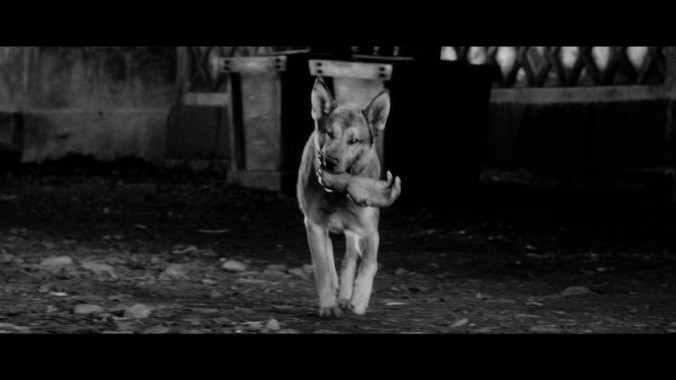
The first thing the ronin samurai Sanjuro sees when he arrives in town is a dog trotting down the main street with a human hand in its mouth. This sets the tone of the movie. I have seen this image before. Once in the David Lynch film, Wild at Heart, and once at the Houston Museum of Fine Arts in a medieval painting from Europe. The images are too strikingly similar to be coincidental.

yojimbo

Sanjuro learns from the innkeeper that the town is divided between two gangsters, he hires on as a body guard first to one then the other of the gangs and plays one side off against the other in order to ultimately free the town from their malignant influence.

Yojimbo gang 1

Yojimbo gang 2

Beautifully photographed in his inimitable style in glorious black and white. Two thumbs way up!

The Battle of Algiers

Movie Review

Battle of Algiers


The Battle of Algiers is an Italian film directed by Gillo Pontecorvco, which was produced in 1966. It depicts true events which occurred during the Algerian war of independence from France, which was fought from 1955 – 1962. The events depicted in the movie occurred during the Battle of Algiers which took place from 1954-1957.

This film has been ranked in the top 100 films ever made. It was banned in France for five years where it was finally released in 1974. The Battle of Algiers is an important commentary on guerrilla warfare.  Revolutionary guerrilla fighters holed up and grouped together in cells in the Casbah section of Algiers. French paratroopers attempted to wipe them out. The movie is about this struggle and the methods used by both sides.

The tactics of the National Liberation Front (FLN) guerrilla insurgency and the French counter-insurgency are shown in the film. The French colonial power committed atrocities against the civilian population of their Algerian colony and the colonized insurgents committed atrocities against the civilian population of their oppressors in a spiraling escalation of violence. The FLN engaged in acts of terrorism by placing bombs in public places such as restaurants, nightclubs, and airports, indiscriminately killing civilians in the European Quarter.  The French paratroopers tortured, intimidated, and murdered members of the FLN. The use of waterboarding as an interrogation technique is depicted.  Algeria eventually won its independence in 1962.

Some of the scenes that really struck me were the incidents of waterboarding by the French Paratroopers, the men of the FLN covering themselves in burqas like women to disguise themselves and escape detection,  FLN women dressing like European women and carrying bombs in baskets, and in the end the women ululating in victory when Algeria won its independence.

The Battle Algiers is as relevant today as it was in 1965.The film was screened by the Pentagon in August 2003 as a field guide to fighting terrorism. Former National Security Advisor, Zbigniew Brezezinski, said: “If you want to understand what is happening right now in Iraq, I recommend The Battle of Algiers.” This film was also used by the Black Panthers as a training film. I am sure there are other terrorists groups that have been influenced by the film as well. The Boson Bombing suspects come immediately to mind.

The film, shot in black and white, is a triumph of realistic production values and heavily influence by Italian Neorealism of the 1950’s. It was filmed on location in Algiers using the real locations in the European quarters and the Casbah. It was so realistic that Pontecorvo had to issue a disclaimer that not one foot of documentary or newsreel footage was used in his two hours of film. Everything was shot live.

The film was nominated  for Academy Awards for Best Foreign Film, Best Screen Play, and Best Director. It was the winner of the Venice Film Festival Golden Lion Award.