Dostoevsky, Bergman, Camus, and the search for truth
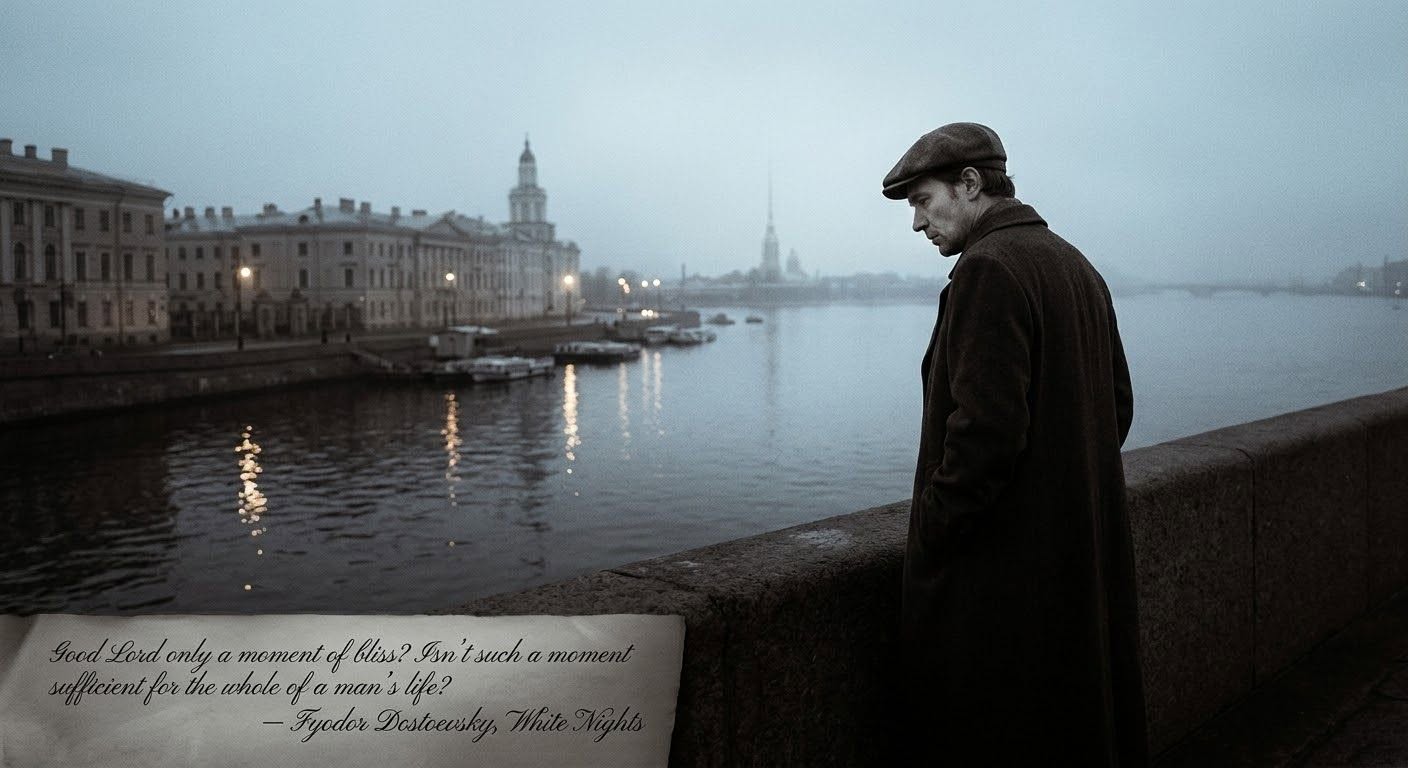
In rereading White Nights by Fyodor Dostoevsky, I encountered this passage:
The Dreamer tells Nastenka that he feels like the spirit of King Solomon after a thousand years imprisoned beneath seven seals, which have finally been removed. He then says that a thousand floodgates have opened in his head and that he must pour out his words.
The seven seals is a familiar reference. It got me to thinking. My question is: What underlies this reference? I remember the Seventh Seals from the Bible and a movie by the same name.
My research reveals fascinating legend involving King Solomon, supernatural imprisonment, and seals that bind powerful spirits. But there’s a distinction worth making: the story of Solomon being imprisoned in a jar for a thousand years until the seventh seal was removed is not a well-established biblical story. It sounds like a blending of several traditions involving Solomon, demons, magical seals, and the number seven.
And an important distinction: Solomon isn’t the one imprisoned. It’s his spirit, or, more precisely, a supernatural being associated with Solomon in the legend. In the Jewish, Islamic, and later occult traditions Solomon’s magical ring gives him power over demons.
In the New Testament’s Book of Revelation, chapter 5 onward, a scroll is sealed with seven seals. As the seals are opened, apocalyptic events unfold.
Why Does Dostoevsky Use This Image?
I think the symbolism is especially revealing. The Dreamer has spent his life emotionally imprisoned in solitude, fantasy, and unexpressed longing. When he finally meets Nastenka and feels a connection with another human being, something inside him breaks free. His words pour out because his inner world has suddenly found an audience.
The image works on two levels: The mythological level: a supernatural spirit is released from its confinement. The psychological level: a lonely man is released, temporarily, from the prison of his own isolation.
And there’s a wonderful irony here: the Dreamer describes this liberation in such an elaborate, theatrical way that Nastenka gently teases him for sounding as if he’s reading from a book.
That’s Dostoevsky having a little fun with his own character.
I particularly like the connection between the seven seals and the thousand floodgates. The seals are removed, and suddenly everything inside the Dreamer can flow. He’s not merely happy; he’s overflowing with the possibility of human connection.
I am wondering: is Dostoevsky suggesting that Nastenka truly frees the Dreamer, or that she merely gives his fantasies a temporary outlet? This might connect with other literary ideas I have been thinking about lately.
Another question I have: What is the exact nature of the Seal? Also, I like the reference to the Seventh Seal as it is one of my favorite movies by Ingmar Bergman. What is the connection?
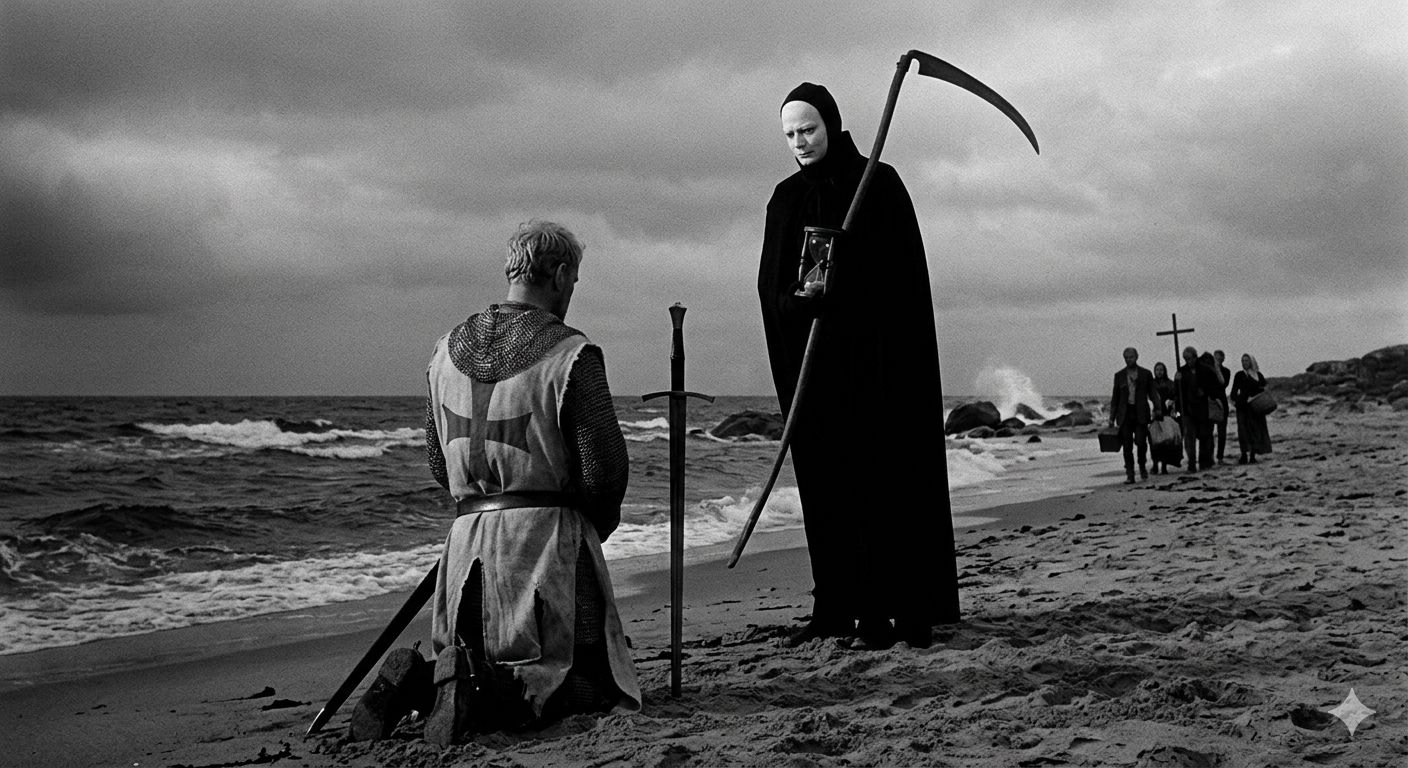
Dostoevsky and Bergman are approaching very different subjects, but both use images of things being sealed, concealed, and finally revealed. And given my interest in Camus and Sartre, I think there’s a rich existential question hiding in this comparison.
What exactly is a seal?
The answer depends on which tradition we’re talking about.
In the biblical Book of Revelation, a seal is essentially a mark of authority and a means of securing something that is not yet to be revealed. Revelation transforms that physical object into a cosmic symbol.
In Revelation 5, a scroll in God’s hand is sealed with seven seals. No one is initially found worthy to open it. Then the Lamb, representing Christ, is declared worthy to open the scroll.
Each seal that is opened reveals another vision of judgment and catastrophe. When the seventh seal is opened in Revelation 8:1, there is silence in heaven for about half an hour. That is the silence of God that Bergman is suggesting in his film, The Seventh Seal.
But what does the seal mean in White Nights?
Here we must distinguish Dostoevsky’s literary allusion from the biblical text.
The Dreamer says that he is like the spirit of King Solomon, released after a thousand years under seven seals. He immediately compares this release to a thousand valves opening in his head, compelling him to pour out a river of words.
Notice what Dostoevsky is doing: he borrows the grandeur of a supernatural legend to describe an intensely personal experience.
The Dreamer has spent years locked inside his own imagination. He has dreamed of companionship without really experiencing it. Now Nastenka is listening to him, and he can finally express himself.
I would interpret the seals here as the barriers that separate the Dreamer’s rich inner life from actual human connection.
But there is an irony. Has Nastenka really freed him? Or has he merely found a new person around whom to construct his fantasies? His liberation might be real, but it may also be temporary.
That ambiguity is what makes the passage interesting.
What about Bergman’s The Seventh Seal?
The title of The Seventh Seal comes directly from Revelation 8:1. Bergman uses the biblical image to frame a film about mortality, faith, and the apparent silence of God.
The knight, Antonius Block, returns from the Crusades to a land devastated by plague. He plays chess with Death, hoping to delay his end while searching for answers to questions that faith has failed to settle.
Here is the fascinating distinction between the two works.
In White Nights, the opening of the seals represents a personal outpouring: a lonely man suddenly feels that he can speak and be heard.
In The Seventh Seal, the opening of the seventh seal leads not to a flood of words but to silence.
That silence is central to Bergman’s existential drama. The knight wants evidence that God exists, that life has meaning, and that death is not the final answer. Yet the universe does not give him the clear response he wants.
Dostoevsky’s Dreamer is released from silence but may still be imprisoned by his fantasies. Bergman’s knight seeks an answer from beyond himself but encounters silence.
Both men confront the gap between what they desperately want to believe and what experience actually gives them.
This brings us close to Camus, too. In The Myth of Sisyphus, Camus examines our desire for ultimate meaning in a world that does not provide a definitive answer. The problem isn’t simply that we lack answers; it’s that we continue asking questions for which the universe may offer none.
And perhaps that is the deeper significance of a seal: it represents the boundary between what we long to know and what we can actually know.
Breaking the seal may reveal the truth. But it may also reveal that there is no answer waiting behind it.
In Bergman’s film, for me, the silence itself is what Block encounters in his quest for the truth. Perhaps the knight’s tragedy is not that he fails to find the truth, but that he cannot accept the possibility that no answer will come.
Antonius Block returns from the Crusades having risked his life for a faith that he now desperately wants to understand. He wants more than belief. He wants certainty. He wants God to speak, to make His presence unmistakable.
But the silence persists.
There’s a moment in the film that I find particularly important: Block confesses to a person he believes to be a priest, explaining his doubts and his desire to know. He speaks openly about his fear of death and his need for meaning. Then he discovers that his confessor is Death himself.
The scene is devastating because Block has exposed his innermost thoughts to the very thing he is trying to outwit. This scene has particular salience and resonance for me and has stayed with me all these years.
But I don’t think the film simply tells us that God doesn’t exist. Bergman leaves room for uncertainty. The silence might indicate God’s absence, God’s unknowability, or the limitations of our own capacity to understand.
That distinction matters.
This is where I think my reading intersects beautifully with Camus.
Camus’s Absurd is born from the confrontation between our hunger for meaning and the world’s silence. We ask the universe to explain itself, and it doesn’t answer in a language we can understand.
But Camus’s response differs from Block’s quest. Rather than continuing to demand an ultimate answer, Camus asks us to live lucidly in the absence of one, to acknowledge uncertainty without surrendering our lives to despair.
Block wants to know whether his life has a cosmic meaning. Camus might ask whether he can live meaningfully without ever resolving that question.
And there’s an unexpected moment of grace in Bergman’s film. Block distracts Death long enough for Jof, Mia, and their child to escape. In the midst of his uncertainty, he performs an act that allows others to live.
He may not discover the truth about God, but he finds an opportunity to act compassionately.
Perhaps the answer isn’t spoken because it must be lived.
I’m not suggesting Bergman necessarily intended that as a final answer. The film is more ambiguous than that. But the contrast between Block’s unanswered questions and his eventual act of sacrifice makes this interpretation compelling.
There’s a paradox here that I love: we may spend our lives searching for the meaning of existence, only to discover that the search itself has prevented us from fully experiencing existence.
Block wants an answer from God. The Dreamer in White Nights wants an escape from his isolation. Both long for something beyond their present circumstances. One seeks certainty; the other seeks connection.
And perhaps neither can be found exactly where the seeker expects.
In Camus’s The Fall, Clamence spends much of that novel talking, confessing, and analyzing himself. But does all that talk bring him closer to freedom, or does it become another prison? It’s an interesting contrast with Block, whose moment of grace comes not through an answer but through an action.
Maybe that’s the distinction: we cannot always resolve the great questions, but we can decide how to live while they remain unresolved.
As Camus might remind us, we don’t have to solve the mystery of existence before we participate in it.
Sometimes the silence remains, but we learn to live differently within it.
Your comments are wellcome.

