THE WASP

A Poem by Benn Bell

wasp-3

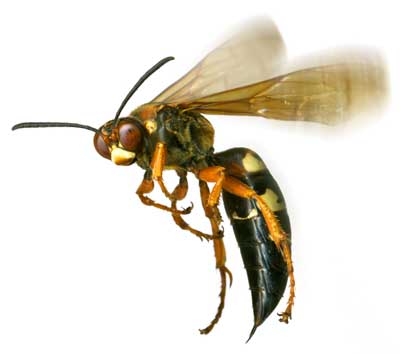
I saved a wasp from drowning today

I ducked my head as it flew away

I was afraid it might sting me like bee

And hurt like everything

For it is the nature of the wasp to sting

But it is my nature to do the saving thing

Tomorrow you just wait and see

I’ll be saving a Pharisee.

THE ARTIST

A poem by William Carlos Williams

Illustrated by Benn Bell

Dedicated to Ginger Peacock Jones

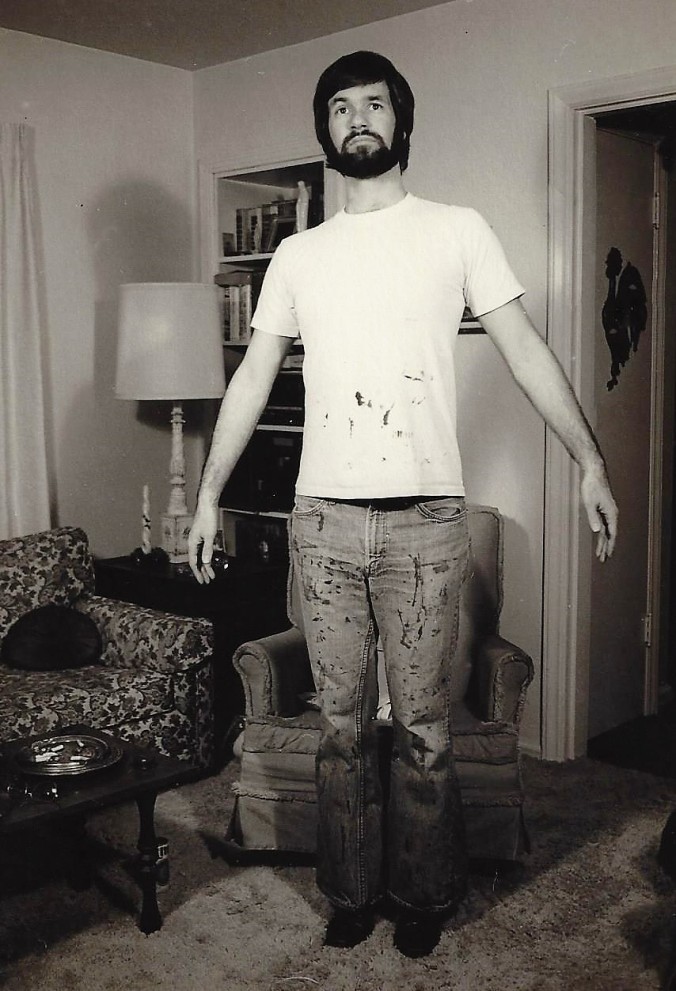
Artist 1

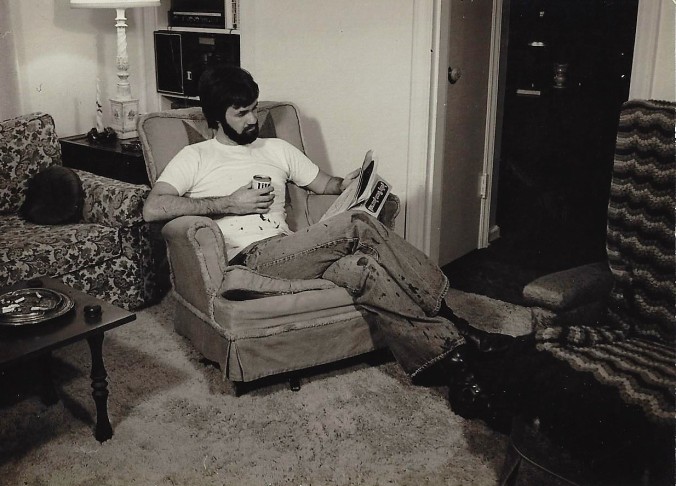
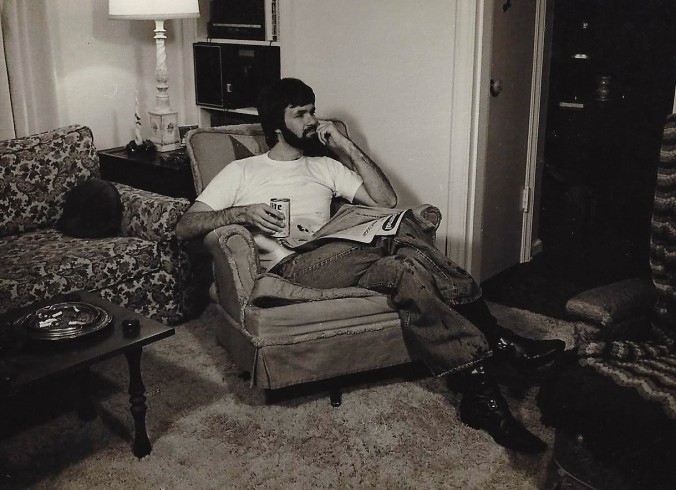
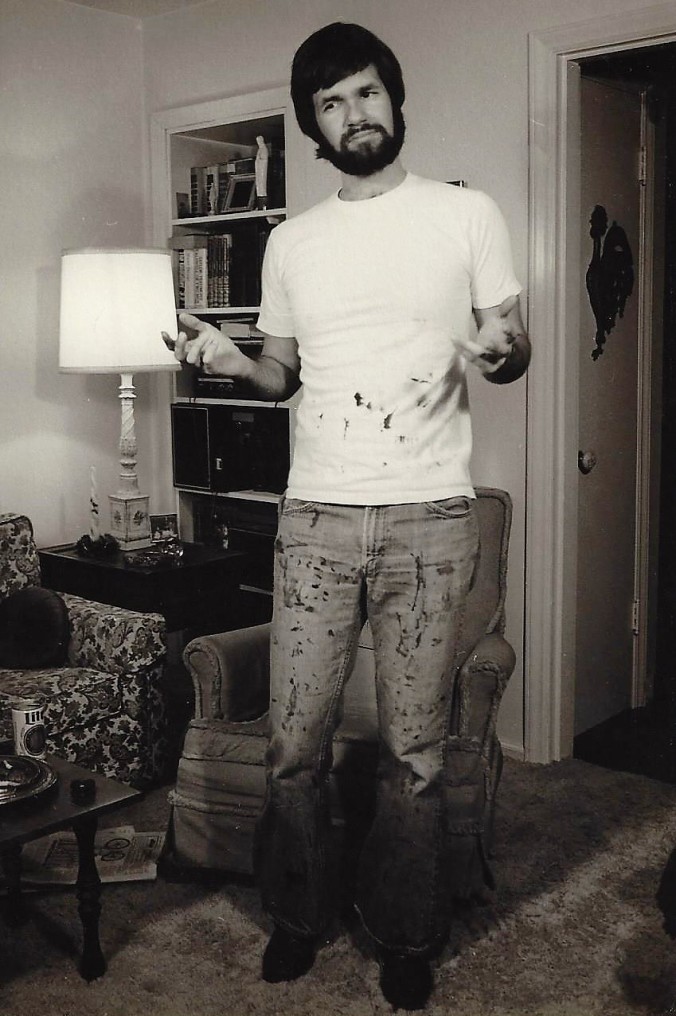
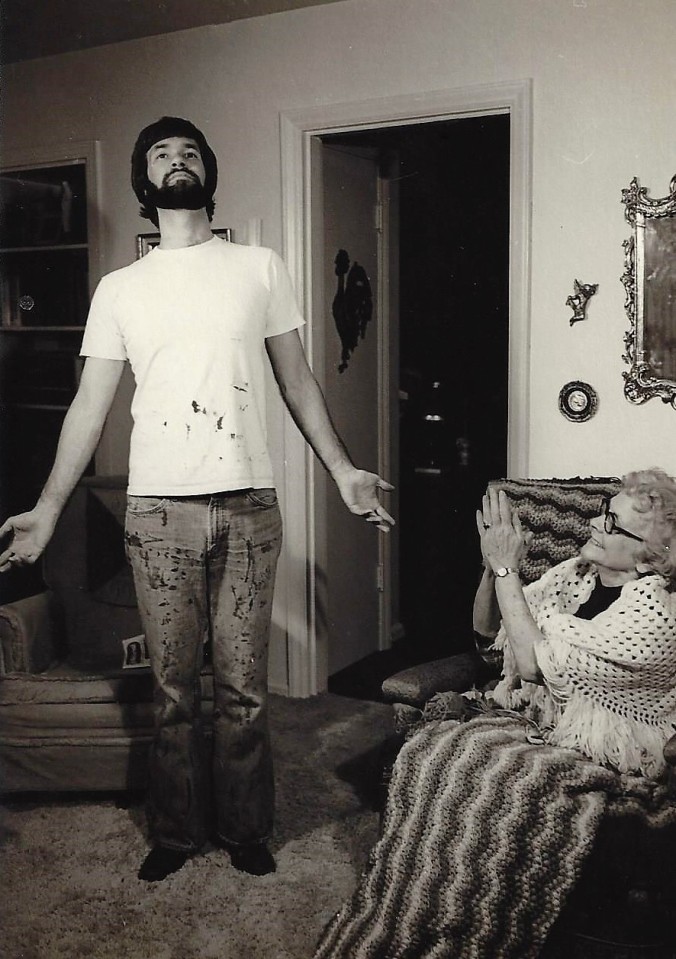
Mr T.  bareheaded in a soiled undershirt

Artist 2

his hair standing out on all sides

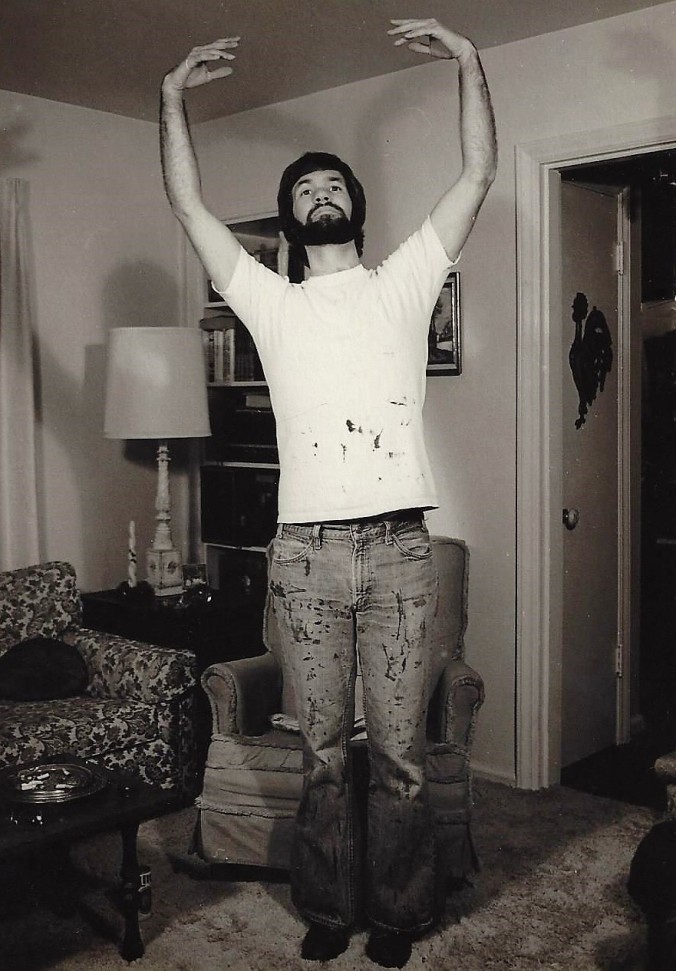
Artist 3

stood on his toes heels together

Artist 4

arms gracefully for the moment curled above his head.

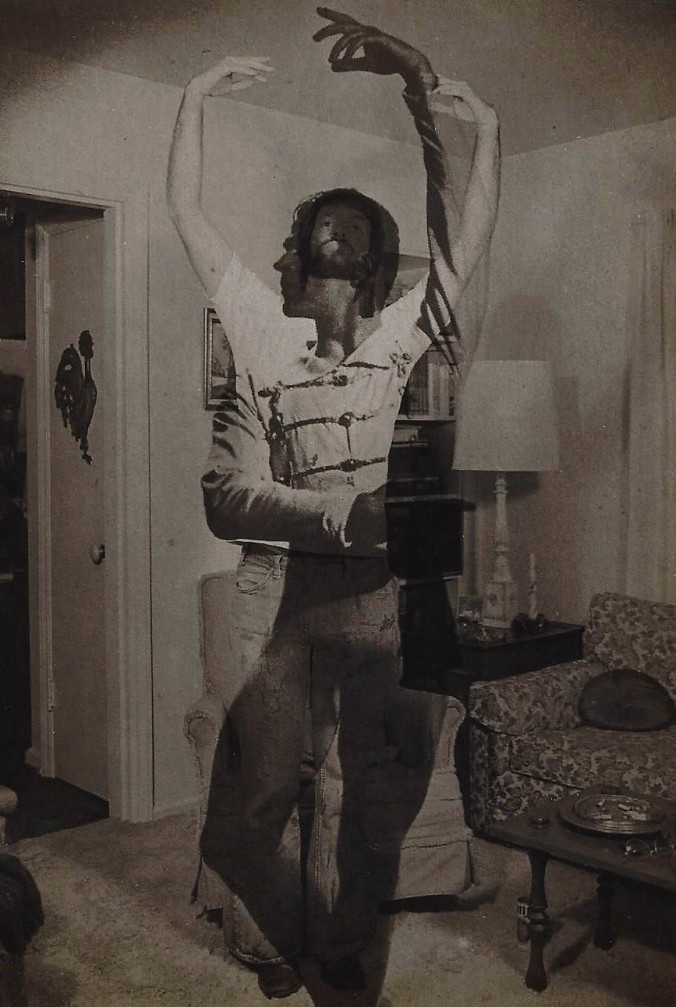
Artist 5

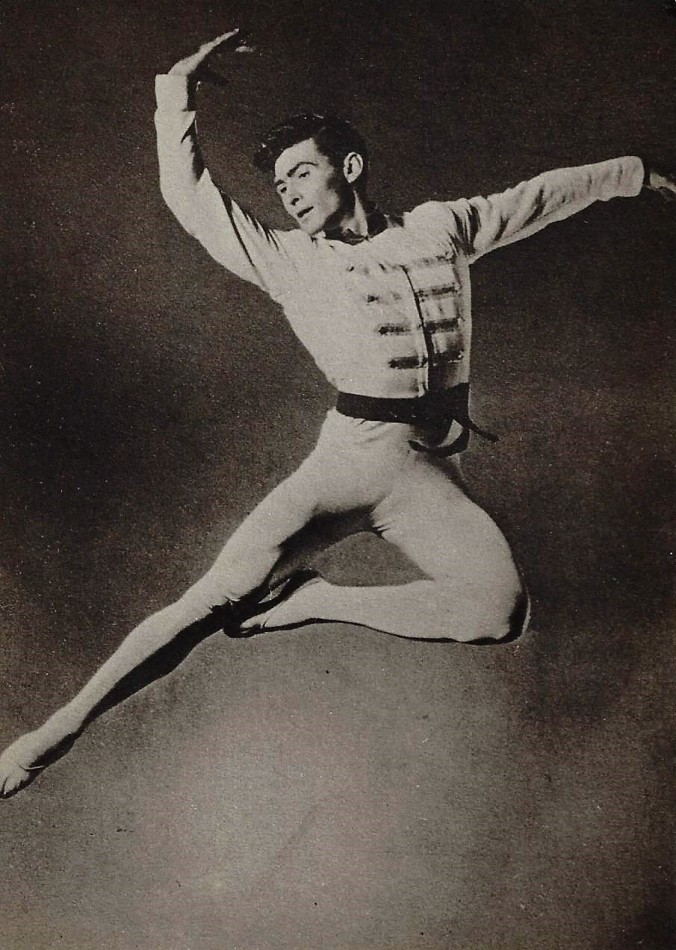
Then he whirled about bounded into the air

Artist 6

and with an entrechat perfectly achieved
completed the figure.

Artist 7 Dancer

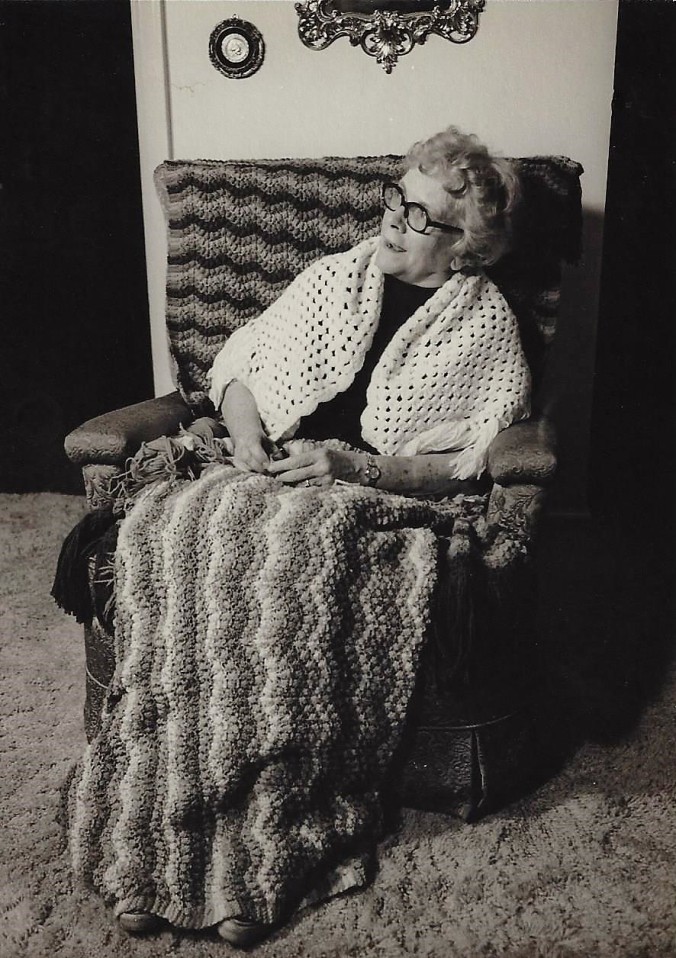
My mother
taken by surprise
where she sat
in her invalid’s chair
was left speechless.

Artist 8

Bravo! she cried at last
and clapped her hands.

Artist 9


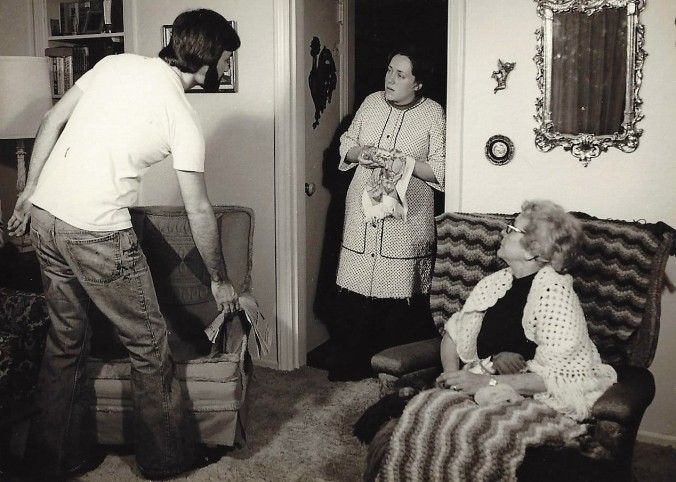
The man’s wife came from the kitchen: What goes on here? she said.

Artist 10

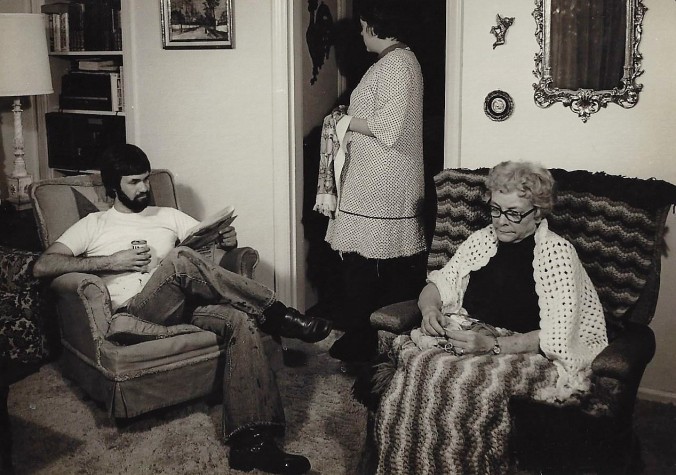
But the show was over.


Artist 11 last


LUST

The editors of WordPress have chosen “Lust” as the word of the day for my daily inspiration. I am happy to accommodate them with my own interpretation and inspired rendering of this volatile, combustible, and knocked out loaded word.

I take you to the lust capitals of the world, two sister cites really, which gives an extra added dimension to the word lust, if you catch my meaning.

So here we have visual evidence of the lusty nature of these two great cities: Philadelphia and Paris.

wp-1501508066901.jpg

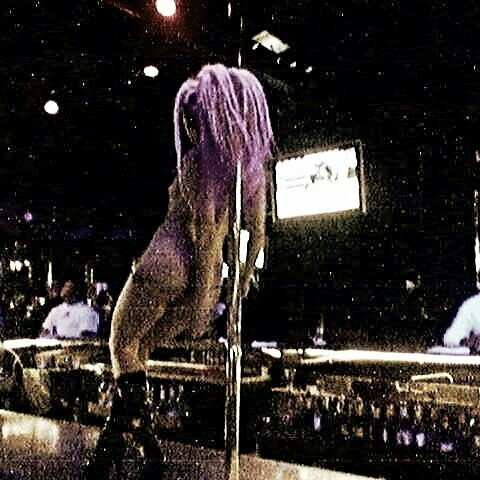
A Philly stripper goes into the Candy Store for stripper supplies.


“Of all the worldly Passions, lust is the most intense.”

-Buddha


wp-1501507902213.jpg

Purple Orchid, Philadelphia

“She was perfect, pure maddening sex, and she knew it, and she played on it, dripped it, and allowed you to suffer for it.”
–  Charles Bukowski

wp-1501507873442.jpg

Ozz Gentleman’s Club, Philadelphia

“Lust is the source of all our actions, and humanity.”
― Blaise Pascal

o

Club Ozz, Philadelphia

“I live for sex. I celebrate it, and relish the electricity of it, with every fibre of my being. I can see no better reason for being alive.”
― Fiona Thrust

wp-1501507405845.jpg

Sex Shop on South Street in Philly

“The world is divided into those who screw and those who do not. He distrusted those who did not—when they strayed from the straight and narrow it was something so unusual for them that they bragged about love as if they had just invented it.”
― Gabriel Garcia Marquez, Love in the Time of Cholera

wp-1501507491818.jpg

Leather and Latex, Philly


“Lust’s Passion will be served; it demands, it militates, it tyrannizes.”

-Marquis de Sade


SAMSUNG CAMERA PICTURES

Moulin Rouge in Paris where girls who can Cancan

“Lust is to the other passions what the nervous fluid is to life; it supports them all, lends strength to them all ambition, cruelty, avarice, revenge, are all founded on lust.”
–  Marquis de Sade

wp-1501507780124.jpg

Pussy’s Gentleman’s Club, Paris

“I can resit anything but temptation.”

– Oscar Wilde

wp-1501507314099.jpg

Sex Shop, Paris

“There’s something here, my dear boy, that you don’t understand yet. A man will fall in love with some beauty, with a woman’s body, or even a part of a woman’s body (a sensualist can understand that) and he’ll abandon his own children for her, sell his father and mother, and his country, Russia, too. If he’s honest, he’ll steal; if he’s humane, he’ll murder; if he’s faithful, he’ll deceive.”

-Fyodor Dostoyevsky, The Brothers Karamazov

wp-1501507713111.jpg

La Diva, Paris

 “Only the united beat of sex and the heart can create ecstasy.”

-Anais Nin

wp-1501507688076.jpg

New Girl’s, Paris

“To have her here in bed with me, breathing on me, her hair in my mouth – I count that as something of a miracle.”

-Henry Miller

SAMSUNG CAMERA PICTURES

Paris Museum of Erotic Art


All photos by me.


Paterson (2016)

A Movie Review


PATERSON_D06_0133.ARW

One of the better movies to emerge out of  the 2016 crop of movies is the small slice of life film, Paterson, written and directed by Jim Jarmusch. Had I had a chance to see it earlier it would have appeared on my Top 10 List for best films of 2016. I happily add it now.

Paterson is a movie about the daily life of a bus driver named Paterson driving a bus in a town named Paterson, played by an actor named Driver. Oh, the irony abounds.

This is a small, quiet, little movie about the daily routine of the main character, Paterson as he goes through this daily rituals of getting up the same time every day, eating a bowl of Cheerios for breakfast and then walking to work. He is a city bus driver for New Jersey Transit. He stops for lunch everyday at the Great Falls located on the Passaic River in Paterson. Paterson eats from a lunch box prepared lovingly by his eccentric wife, Laura, and writes his poetry in a secret notebook that he has been composing in his head as he makes his rounds in the bus. The words flow like the waters from the falls. Paterson writes about the small, little, mundane things in life, but as the imagery picks up speed it sometimes explodes into a passionate torrent of love for Laura, his wife and muse.

Paterson comes home everyday after work and is greeted by his wife, a stay at home creative type who is into making strong and bold visual statements of black and white patterns, swirls, and circles as she designs and paints curtains and clothing and paints every available surface in their modest home with her bold designs. It is obvious that they love each other and accept each other for who they are. Laura encourages Paterson in his poetry and begs him to make copies so he can share them with the world.

After dinner Paterson walks Laura’s dog, Marvin, an English Bull Dog with a lot of personality. But Paterson and Marvin are not exactly best friends. Paterson stops each night on his walk at a neighborhood bar called, The Bar. He ties Marvin out front and goes in for exactly one beer. Here we meet more interesting characters from the city and learn more about Paterson. Posted on the wall behind the bar are pictures of famous people who are from Paterson or who are associated with Paterson in some way.

On the bus we and Paterson overhear snatches of conversations as the passengers talk about everything from historical events to famous people who hail from Paterson. There is an animated discussion about the boxer Hurricane Carter who was arrested for a triple homicide that took place in a bar in Paterson. Turns out the Hurricane was in the wrong place at the wrong time and was wrongfully convicted of the crime. Bod Dylan wrote a song about it and Denzel Washington played him in the movie.

This is a deceptively simple movie that actually has lots going on. Paying close attention to the background details will pay off in dividends. On Paterson’s night stand is an copy of Moby Dick with the name Melville splayed across the cover. In the basement we see the Earlier Collected Works of William Carlos Williams and many other books by other poets and writers.

Paterson, played to perfection by Adam Driver, is a basement poet who loves literature and observing the small details of everyday life and interacting with the interesting characters that inhabit Paterson, New Jersey. His favorite poet is William Carlos Williams, also from Paterson.

In the end, this movie is really a poem. A poem about the city of Paterson and the people who inhabit it as seen through the eyes of a bus drier. Brilliant!


Traces

wp-1493221888806.jpg

I love to see the traces of the places you have been

it gives me hope in the possibility of seeing you again

the things you leave behind like a band for your hair

reminds of the fact that once you were there.

The Poetry of William Butler Yeats (1865-1939)

A Critical Review

wp-1492866262901.jpg

William Butler Yeats is widely considered to be one of the greatest poets of the 20th century. He was the winner of the Nobel Prize for Literature 1923. He had the gift for enchanting the ear. His themes were: Life and Death, Love and Hate, man’s condition, and the meaning and patterns of history.

The poems present images and magical incantations that resonate deeply with the reader apart from their literal meaning.  Hear the music…visualize the pictures they project. Yeats considered himself to be one of the last Romantic poets. The element of song is always present in his works. Everywhere the theme of music and singing recurs constantly.

He believed that certain patterns or cycles of civilization existed throughout history, the most important being what he called gyres, interpenetrating cones representing mixtures of opposites of both a personal and historical nature portrayed as rotating gyres forever whirling into one another’s centers, merging, and then separating. Yeats used the term “gyre” in his most famous poem, “The Second Coming.”

“Turning and turning in the widening gyre

The falcon cannot hear the falconer”

He contended that gyres were initiated by the divine impregnation of a mortal woman, first, the rape of Leda by Zeus, then later, the immaculate conception of Mary. Yeats found that within each 2000 year era, certain symbolic moments of balance occurred at the midpoints of the 1000 year cycle designating moments of high achievement in the culture. Yeats cited as examples the glory of Athens at 500 B.C., Byzantium at 500 A.D., and the Italian Renaissance at 1500  A.D.

Certain patterns of history recur that are entirely indifferent to human suffering. History, like art, teaches us that only through identification with the impersonal can we transcend human suffering and limitations. A symbol of this transcendence for Yeats was the Byzantine Civilization. Byzantium became for Yeats the purest embodiment of the union and subsequent transfiguration through art of the fleshly condition and the ideal of holiness. (Byzantium is the name given to both the state and the culture of the Eastern Roman Empire in the middle ages. Istanbul is now the name of what was formally called Constantinople, the empire’s capital city).

He was a symbolist poet, using allusive imagery and symbolic structures throughout his career. He chose words that, in addition to a particular meaning, they suggested abstract thoughts that may seem more significant and resonant. His use of symbols is usually something physical that is both itself and a suggestion of other  possibly immaterial and  timeless qualities.

Yeats employed the continental stanza and used straightforward syntax. He wrote in iambic pentameter which is a line of verse with five metrical feet, each consisting of one short (unstressed) syllable) followed by one long (stressed) syllable. For example: “Two households, both alike in dignity.” He also used what is known as the heroic couplet, which is a pair of rhyming iambic pentameters. This is a traditional form of English poetry used for epic and narrative poetry.

Yeats was 62 when he wrote, “Sailing to Byzantium.”

Sailing to Byzantium, by William Butler Yeats

I

That is no country for old men. The young

In one another’s arms, birds in the trees,

—Those dying generations—at their song,

The salmon-falls, the mackerel-crowded seas,

Fish, flesh, or fowl, commend all summer long

Whatever is begotten, born, and dies.

Caught in that sensual music all neglect

Monuments of unageing intellect.

II

An aged man is but a paltry thing,

A tattered coat upon a stick, unless

Soul clap its hands and sing, and louder sing

For every tatter in its mortal dress,

Nor is there singing school but studying

Monuments of its own magnificence;

And therefore I have sailed the seas and come

To the holy city of Byzantium.

III

O sages standing in God’s holy fire

As in the gold mosaic of a wall,

Come from the holy fire, perne in a gyre,

And be the singing-masters of my soul.

Consume my heart away; sick with desire

And fastened to a dying animal

It knows not what it is; and gather me

Into the artifice of eternity.

IV

Once out of nature I shall never take

My bodily form from any natural thing,

But such a form as Grecian goldsmiths make

Of hammered gold and gold enamelling

To keep a drowsy Emperor awake;

Or set upon a golden bough to sing

To lords and ladies of Byzantium

Of what is past, or passing, or to come.

Allusions and terminology

“Perne in a gyre”- a perne is a bobbin. A gyre is a circular motion. A perne in a gyre is your life spinning out before you.

“No Country for Old Men”, a title to a popular book by Cormac McCarthy and a popular movie by the Cohen Brothers

“The Dying Animal”, the title to a popular book by Philip Roth, and a popular movie made from the book.

“The Golden Bough” is from Roman Mythology. It was a tree branch that allowed Aenas to travel safely through the underworld guided by Sybil so that he could learn of the fate of his people. It is referenced in the epic poem he Aeneid by Virgil.

“God’s Holy Fire” is a miracle that occurs every year at the Church of the Holy Sepulchre in Jerusalem on Holy Saturday, the day preceding Easter. A blue light emanates within Jesus’ tomb which forms a column of fire from which candles are lit.

Byzantium, by William Butler Yeats

The unpurged images of day recede;

The Emperor’s drunken soldiery are abed;

Night resonance recedes, night-walkers’ song

After great cathedral gong;

A starlit or a moonlit dome disdains

All that man is,

All mere complexities,

The fury and the mire of human veins.


Before me floats an image, man or shade,

Shade more than man, more image than a shade;

or Hades’ bobbin bound in mummy-cloth

May unwind the winding path;

A mouth that has no moisture and no breath

Breathless mouths may summon;

I hail the superhuman;

I call it death-in-life and life-in-death.


Miracle, bird or golden handiwork,

More miracle than bird or handiwork,

Planted on the starlit golden bough,

Can like the cocks of Hades crow,

Or, by the moon embittered, scorn aloud

In glory of changeless metal

Common bird or petal

And all complexities of mire or blood.


At midnight on the Emperor’s pavement flit

Flames that no faggot feeds, nor steel has lit,

Nor storm disturbs, flames begotten of flame,

Where blood-begotten spirits come

And all complexities of fury leave,

Dying into a dance,

An agony of trance,

An agony of flame that cannot singe a sleeve.


Astraddle on the dolphin’s mire and blood,

Spirit after spirit! The smithies break the flood,

The golden smithies of the Emperor!

Marbles of the dancing floor

Break bitter furies of complexity,

Those images that yet

Fresh images beget,

That dolphin-torn, that gong-tormented sea.


 The Second Coming, by William Butler Yeats

Turning and turning in the widening gyre

The falcon cannot hear the falconer;

Things fall apart; the centre cannot hold;

Mere anarchy is loosed upon the world,

The blood-dimmed tide is loosed, and everywhere

The ceremony of innocence is drowned;

The best lack all conviction, while the worst

Are full of passionate intensity.


Surely some revelation is at hand;

Surely the Second Coming is at hand.

The Second Coming! Hardly are those words out

When a vast image out of Spiritus Mundi

Troubles my sight: somewhere in sands of the desert

A shape with lion body and the head of a man,

A gaze blank and pitiless as the sun,

Is moving its slow thighs, while all about it

Reel shadows of the indignant desert birds.

The darkness drops again; but now I know

That twenty centuries of stony sleep

Were vexed to nightmare by a rocking cradle,

And what rough beast, its hour come round at last,

Slouches towards Bethlehem to be born?

References

 Information for this article was gleaned from the flowing sources:

  1. William Butler Yeats, Selected Poems and Plays, Edited with and Introduction by M. L. Rosenthal
  2. The Poetry Foundation
  3. Wikipedia



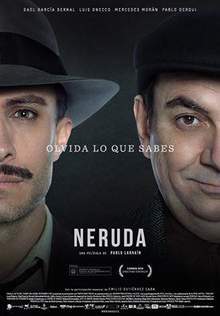
NERUDA (2016)

A Movie Review

is

“Tonight I can write the saddest lines.
I loved her, and sometimes she loved me too.”

This is the beautiful poetry of Pablo Neruda. To read it is to be mesmerized, to hear it is to be cast under a magical spell.  Such are the words of Pablo Neruda. His entire countrymen were under his thrall. That is what made him such a dangerous man.

Police Inspector Oscar Peluchonneau (Gael Garcia Bernal), hunts down the poet and National Senator, Pablo Neruda, who has become a fugitive in his home country of Chile for joining the communist party. The policeman’s dogged pursuit put me in mind of Javert’s chase of Jean Valjean in Les Miserables. He never gives up! Although, one begins to wonder if Oscar is really serious about catching Neruda at all.

Neruda2

I loved the line about how Neruda had created the policeman and the policeman had created Neruda. It is as though we are all products of each others imaginations. Imagine that.

The movie is sumptuously photographed and is more dream play than a real play, more surreal than real.

I must confess I didn’t know much about Neruda before watching this movie. Of course I was familiar with his poetry which I loved for it beautiful sensuality and lyrical presentation. I now know more about him as a result of this movie and my subsequent research into the subject.

Neruda won the Nobel Prize for literature in 1971. Gabriel Garcia Marquez described him as the greatest poet of the 20th century.

In fact he was a complicated man full of contradictions but no one deny the beauty of his poetry. I really enjoyed this movie and I hope you do too.


CLOWN SHOW

dscn2348

The roar of the crowd

The smell of the greasepaint

Always signaled to me

The arrival of the circus

Wringling Brothers

Barnum and Bailey

May have folded

Their tents

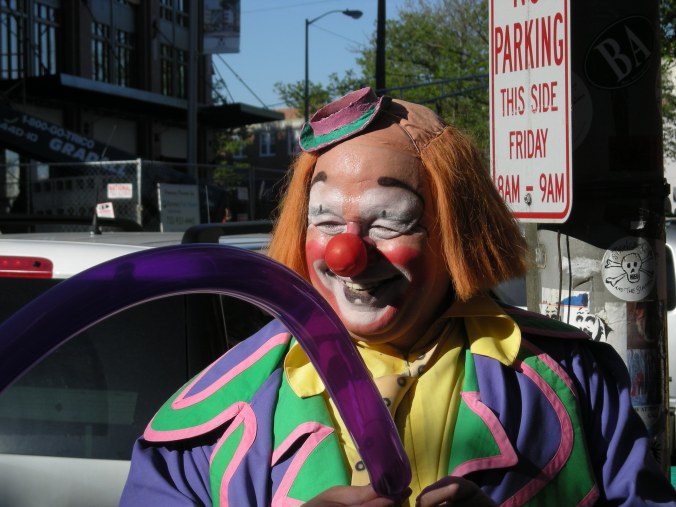
But the Clown Show in Washington

Goes on just as intense.