THE POST (2017)

Movie Review

The Post 2

I just love newspapers and movies about newspapers.   The Post (2017) rivals some of the best pictures from the past such as Citizen Kane (1941), The Front Page (1974), and All the President’s Men (1976). The Post probably has more in common with All the President’s Men than the others because both movies are about the same newspaper, the Washington Post, and the subject matter was similar; political intrigue. As a matter of fact, the Watergate break in happened the very next year after the publication of the Pentagon Papers and resulted in the resignation of an American president, Richard Nixon. But that is another story and another movie.  These movies show the power of the press and its importance in American society. Justice Hugo Black once said, “Only a free and unrestrained press can effectively expose deception in government.”

The Post gives us a nostalgic look back at what the newspaper business used to be like. From the loud, busy, bustling news room to the Linotype operators and the press room, it was a miracle they were able to get a paper out on time as it was such a huge undertaking. Things have changed in the world of journalism since the advent of computers and the internet, but I found it fascinating to see the actual operation of getting a paper out on deadline. I’ve seen it before in real life. As a young Loss Control Representative two of my accounts were the Louisville Courier-Journal and Standard Gravure. Together they published two daily newspapers. It was my job six times a year to inspect their entire operation. It was a fascinating and exciting process to witness.

The Post is concerned with the publication of the infamous and so-called Pentagon Papers. When American military analyst Daniel Ellsberg (Matthew Rhys) realizes the extent of the US government’s deception regarding the Vietnam War, he copies top-secret documents that would become the Pentagon Papers.  Ben Bradlee, editor of the Washington Post, played to perfection by Tom Hanks, discovers the New York Times has scooped them with an explosive expose on those papers. Nixon gains a court injunction on the New York Times prohibiting them from further publication of the Papers or what they have learned from them. Bradlees finds Ellsberg and obtains copies for himself and talks the owner of the Washington Post, Katherine Graham, into publishing them. Meryl Streep plays Katherine Graham in one of her best performances in years. The case goes before the Supreme Court and a ruling in favor the Times and the Post is rendered. One justice was quoted as saying, “The court rules in favor of the governed, not the governors.”

Steven Spielberg is not my favorite director, but that is just a matter of personal taste. He is unquestionably an American master filmmaker. I loved his Indiana Jones series and Close Encounters of the Third Kind. But His masterpiece, in my opinion, was and always will be, Schindler’s List. The Post comes in a close second.

THE SHAPE OF WATER

 Movie Review

Shape water 1

“Unable to perceive the shape of You, I find You all around me. Your presence fills my eyes with Your love, It humbles my heart, For You are everywhere.”

That line from an unknown poem pretty well defines the movie, The Shape of Water.

Written and directed by Guillermo del Toro, The Shape of Water is pure movie magic. It is hard to peg exactly where this genre movie falls, but since del Toro was heavily influenced by Creature From the Black Lagoon (1954)I’ll start there. This movie is much more than just a horror film. It is a period piece, a romantic thriller, and a spy movie, all wrapped into one. It explores the timeless themes of loneliness, alienation, isolation, being different from others in an intolerant society, and yes, falling in love with the other.

shape water 2

Sally Hawkins as Elisa Esposito

Sally Hawkins plays disaffected and lonely janitor Elisa Esposito. She works at a Aerospace research facility in Baltimore with her friend Zelda, (Octavia Spencer). Elisa is mute and communicates with the world in signs. The time is 1962 at the height of the cold war. Sometime while working her shift a specimen is brought into the lab that had been captured in the Amazon and is worshiped by the natives as a god.  The creature is described by the military as the “asset.”

shape water 4

This asset is a humanoid type creature that Elisa is able to befriend. She discovers that he is intelligent and communicates with him in sign language.  They develop quite a relationship together. When the creature becomes endangered Elisa plots to set him free in a rain canal in Baltimore. But first she smuggles him out of the facility and into her small apartment where she keeps him in her bathtub. While there they fall in love.

The creature has a curious way of glowing in blue colors when stimulated and is a marvel to watch.

shape 5

Spoilers ahead:  The military, in the form of Colonel Richard Strickland, is hot on their trail. He gets to the canal just as the creature is about to make his escape. Strickland shoots both the creature and Elisa. Miraculously the creature is able to heal himself of the gunshot wounds (he is a god after all) and also to heal Elisa. He grabs her up and leaps into the canal. He gives her gills so that she may breathe underwater and presumably they are able to live happily ever after.

shap 6

I just loved this movie. This is why you go to the movies. You keep going to see movie after movie, hoping you will see one that you can connect with, hoping to see a movie as good as the best movie you ever saw, wanting to hit that high mark one more time, but seldom ever making it. This is Guillermo del Toro’s love letter to Hollywood and he has copied it to the rest of us. It is genius.

The Shape of Water jumps to the top of my Best Movies of the Year list for 2017. I give it a 10/10. The only other movie that I rated that high this year was Blade Runner 2049. I am not sure which one will get the top slot, but I have to admit, I am a sucker for a good loves story.

Murder on the Orient Express (2017)

Movie Review

Orient express 1

A fun ride on the Orient Express. Old fashioned crime drama, based on the novel by Agatha Christie of the same name, with an all-star cast. Don’t expect any surprises here as this is a remake after all, but I am betting there are plenty of people who have not seen the original film directed by Sidney Lumet in 1974 , or have not read Christie’s novel.

Orient express 2

Kenneth Branagh as Hercule Poirot

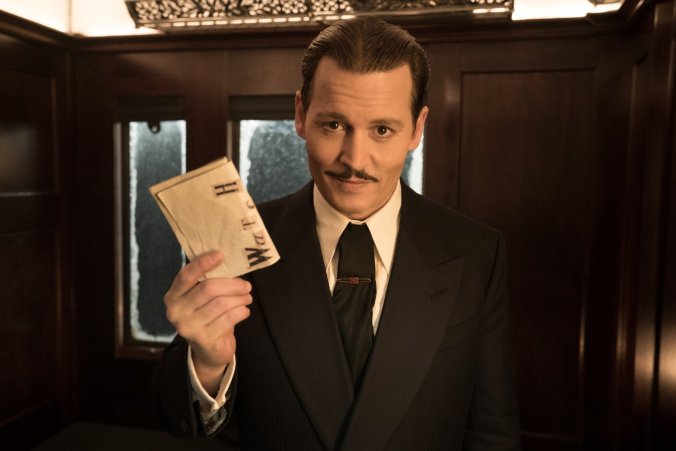
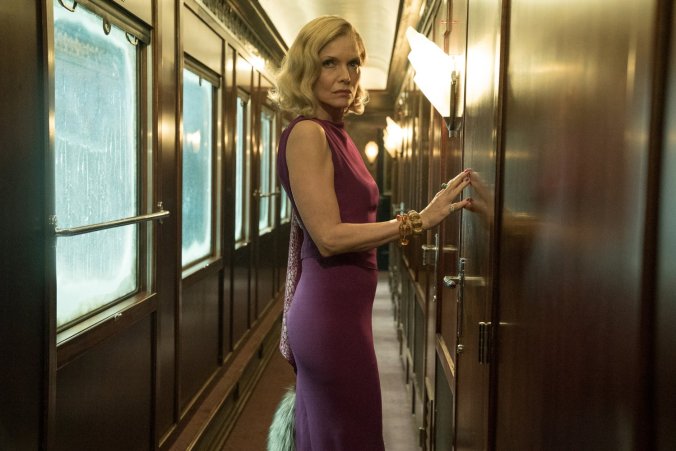
Kenneth Branagh has done a masterful job bringing this material to the screen. And what fun it is to watch your favorite stars strut and fret across the stage. Michelle Pfeiffer never looked more beautiful, so glad to see her back. Then there is Penelope Cruz, Willem Dafoe, Judi Dench and Johhny Depp to round out the cast. Kenneth Branagh stars as the inimitable detective, Hercule Poirot. He had to occupy two berths on the train, one for him and one for his mustache.

Johnny Depp

Johnny Depp as Edward Ratchett

The movie was shot on 65 mm film by Cinematographer Haris Zambarloukos and is quite beautiful to look at. The train is luxurious and the exteriors were fabulous! The film was shot first in Istanbul (actually Malta) then later in the mountainous region in Italy for the snow sequences. Each frame was composed and lit like a Renaissance painting.

Orient express 3

Michele Pfeiffer as Caroline Hubbard

There are worse things you can spend 114 minutes on and this film is a winner!


MOTHER!

Movie Review

Either this was pretentious crap or it was pure genius. Whatever it was I loved every minute of it. Best viewed as an allegory with plenty of religious references thrown in for good measure. Definitely a horror story based on a Kafkaesque nightmare. Aronofsky is said to have written mother! in a fever dream lasting five days.

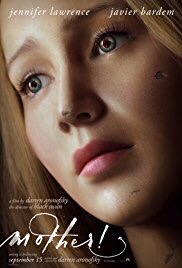
Known for such pictures as Black Swan (2010), Noah (2014), and The Wrestler (2008), writer-director Darren Aronofsky brings his apocalyptic vision to the screen. Him, played by Javier Bardem, is a poet who is suffering from writer’s block. His beautiful wife, half his age, played by Jennifer Lawrence, is restoring their Victorian home which was destroyed by a fire. She is the titular character known as “mother!” They are visited by a mysterious couple who show up out of nowhere: “Man” and “Woman,” played respectively by Ed Harris and Michelle Pfeiffer. Their two grown children (Brian Gleeson and Domhnall Gleeson) arrive soon after. They are known as “younger brother” and “oldest son.” A murder ensues and the house springs forth a stigmata. Pretty soon we begin to realize something pretty strange is going on here and paradise is not what it seems to be.

Spoiler Alert!

Inspired by Rosemary’s Baby and Luis Bunel’s, Exterminating Angel, I also saw echoes of Stardust Memory and 8 ½, but I may be projecting. The house represents earth, Javier Bardem is God the Creator, and Jennifer Lawrence is Mother Nature. Ed Harris and Michelle Pfeiffer are Adam and Eve, and The Gleason Brothers are Cain and Abel.

When He breaks through His writer’s block and completes his masterpiece mother gets pregnant and things really get interesting. The house is besieged by the writer’s fans and all hell literally breaks loose.

The acting is uniformly excellent. Javier Bardem plays his character with a smooth detached quality. Jennifer Lawrence carries the film with her close up reaction shots that fill the screen. Michelle Pfeiffer, still beautiful after all this time, plays her character with devilish delight.

This movie has garnered plenty of controversy. When it was shown at Cannes, half the audience stood up and clapped and half the audience stayed in their seats and booed. You either love it or hate it. If you take someone to see this movie one of you is going to love it and one of you is going to hate it, which will make for some good dinner conversation later. This, I think is a mark of a good film, one that makes you want to talk about it and one that stays in your mind long after you’ve seen it.

It’s not for everyone, but I highly recommend this thought provoking film. And to quote Mr. Aronofsky, “This serving is best drunk as a single dose in a shot glass. Knock it back. Salute!”

THEY LIVE BY NIGHT (1948)

Movie Blurb

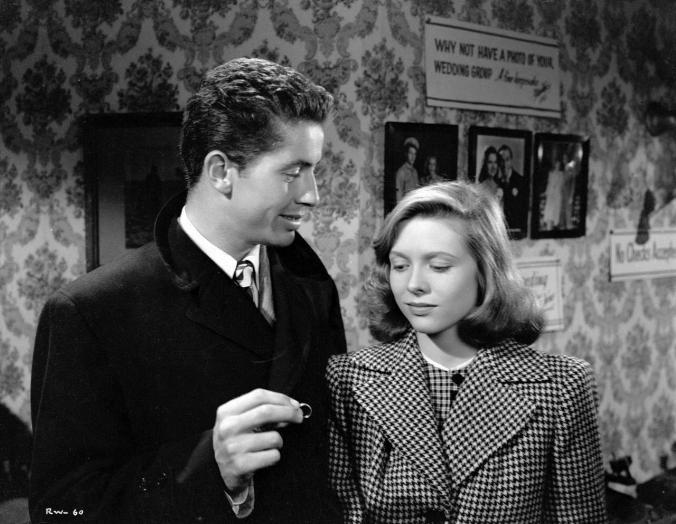
Debut film by Nicholas Ray. A film noir that is a cut above the rest. A genuine love story between two innocents that was bound to fail.

They live by night poster

Ray did some innovative things with sound and one of the earliest overhead shots shot from a helicopter. He went on to direct such films of note as, Rebel Without a Cause, Johnny Guitar, and King of Kings.

They Live By Night

They Live by Night was remade in 1974 by Robert Altman using the title, Thieves Like Us, which is the title of the novel the two movies was based upon. It was a pretty good flick as well.

Don’t confuse these two well made and entertaining movies with the execrable, Live By Night, directed by Ben Afleck in 2016. It is unwatchable.

They Live by Night (1948), I give it an eight out of ten.

STALKER (1979)

Movie Review


unnamed

Well, I’ve seen Stalker two times now and I had to ask myself both times, whoa! What was it I just saw?  It’s like watching a movie while on acid but without the acid. I can’t stop thinking about it. The movie definitely has a certain haunting quality about it

Stalker is a feature film by master Russian filmmaker Andrei Tarkovsky, based on the short novel, Roadside Picnic, written by Arkadiy Stugatskiy and Boris Stugatskiy. The brothers also wrote the screenplay along with Tarkovsky. I am relatively new to Tarkovsky, but better late than never. Having seen this film two times, I now I want to see every film in his oeuvre.

This is a film about a quest into a zone in search of a room that will grant you the one thing you desire most. The zone appears to be sentient and dangerous. It requires the skills of a stalker to enter the zone and locate the room. On this journey Stalker takes with him two characters from the Russian intelligentsia, a dispirited writer and a hopeless scientist. The job of a stalker is illegal and entering the zone is forbidden. The zone may have been created by a meteorite or it may be inhabited by aliens. This is never made clear as many things are never made clear in this very peculiar film.

The zone in the film was inspired by a nuclear accident that transpired near Chelyabinsk in 1957. But it presages a larger and more serious event that occurred at Chernobyl in 1986. At Chernobyl, following the disaster, an area extending 30 kilometers was cordoned off in all directions from the plant and designated the “Zone of Alienation.”

Evocative of the gulag with echoes of a nuclear disaster the zone is alive with possibilities and traps and most of them are deathtraps. It has been described as sentient and in one scene one can clearly see the ground breathing or at the very least undulating. There is water everywhere and submerged beneath the surface is the detritus of a civilization gone by.

The movie starts off in sepia tones then abruptly switches to color once the protagonists get to the zone, then switches back to sepia when they get back. There are more changes to color towards the end when we see Monkey,  Stalker’s crippled child.

The writer and professor meet up at a dingy bar at what looks like the edge of civilization and wait for the stalker. After Stalker arrives the trio leave the bar and go to a railway station. There ensues a chase scene of sorts as the travelers try to elude the armed guards and secure a small trolley car to ride the rails. They are shot at by the soldiers but manage to make it out through the gate of the barbed wire topped fencing and onto the tracks with the trolley car. What follows is a long tracking shot as Stalker, Writer, and Professor are transported in the direction of the zone. The rhythmic clanking of the car on the tracks has a lulling effect on the audience and the riders, then on a sudden, the sepia tone turns to color and we are in the lush green environs of the zone.

According to Tarkovsky, writing in his book, Sculpting in Time, “The setting of Stalker is a mysterious place that was reportedly created by an asteroid and may contain other world forces. It doesn’t symbolize anything. The zone is the zone. It is life. An allegory about human consciousness, the necessity of faith in an increasingly secular world, and the ugly, unpleasant dreams and desires that reside in the hearts of man.”  The writer and professor may be thought of as archetypes, but no, they are really flesh and blood characters into whose personalities we delve deeply for psychological insight. The movie examines the psychological , philosophical, metaphysical, and existential dimensions of life and man’s relation to it.

The film resists interpretation. It is quite literally anything you think it is, like the zone itself. The zone is always changing, adapting itself to what is going on in your head. The zone seems to have a consciousness of its own. When you step into the room your deepest wishes will come true. What will be revealed to you in the room is who you really are. Stalker says the most important moment of your life is when you enter the room. The main thing is to believe. Yet, when they arrive at the room nobody wants to go in. Stalker says stalkers are not allowed in the room (it is forbidden). The other two don’t want to go in. But, the camera ends up in the room and the audience is given a POV from the room into the anteroom where the Stalker, Writer, and Professor are sitting and ruminating.

Cut back to the bar where it all started. We are now once more in sepia. We don’t know how they got back. The trio disbands and go their separate ways. Stalker’s wife has appeared with their child, Monkey. They go home. The last sequence returns to color when we watch Stalker carry Monkey on his shoulders back home and again in the last scene where Monkey telekinetically moves glasses across a table. It turns out Stalker is the more cultured, educated, and intelligent one in the film, more so than the writer or the scientist. In the film’s finale a bookshelf appears stuffed with books.

According to Tarkovsky, the existence of the zone or the room in which wishes are realized serves only as a pretext to discover the personalities of the three protagonists of the film. Stalker is the last idealist. Writer declares, “A man exists in order to create works of art.” “The world is ruled by cast-iron laws, and it’s insufferably boring,” says Writer.” Tarkovsky further elucidates, “It seemed to me that one could make a film with the unity of place, of time, and of action. These classic Aristotelian unities allows one to arrive at an authentic cinema. The subject permitted me to express in a very concentrated manner the philosophy of the contemporary intellectual, or rather his condition.”

There are 142 shots in Stalker in 161 minutes of run time. The average film has between 2000 and 3000 shots. So that gives you some idea how slow it is compared to, say, an action flick of today. Some of the Russian distributors asked Tarkovsky if he could speed it up. He said no. If anything he would slow it down. That way it would eliminate the kind people who shouldn’t be seeing the film in the first place

There is much symbolism in the movie despite Tarkovsky’s claims to the contrary and his disavowal of the use of symbols. Symbols abound such as the dog, birds, a sand dune filled room, telekinesis and, the meat grinder. The writer at one point dons a crown of thorns. But, what some may call a symbol Tarkovsky may call a metaphor. “We can express our feelings regarding the world around us either by poetic or by descriptive means. I prefer to express myself metaphorically. Let me stress: metaphorically, not symbolically. A symbol contains within itself a definite meaning, certain intellectual formula, while metaphor is an image. An image possessing the same distinguishing features as the world it represents. An image, as opposed to a symbol.”

“In the end, everything can be reduced to the one simple element which is all a person can count upon in his existence: the capacity to love.”

References:

  1. Tony Guerra, Panorama, April 1979
  2. Nick Schager, Slant, April 2006
  3. Andrei Tarkovsky, Sculpting for Time, January 1989
  4. Geoff Dyer, Zona: A Book About a Film About a Journey to a Room, February 2012

ATOMIC BLONDE (2017)

Movie Review

Atomic Blonde

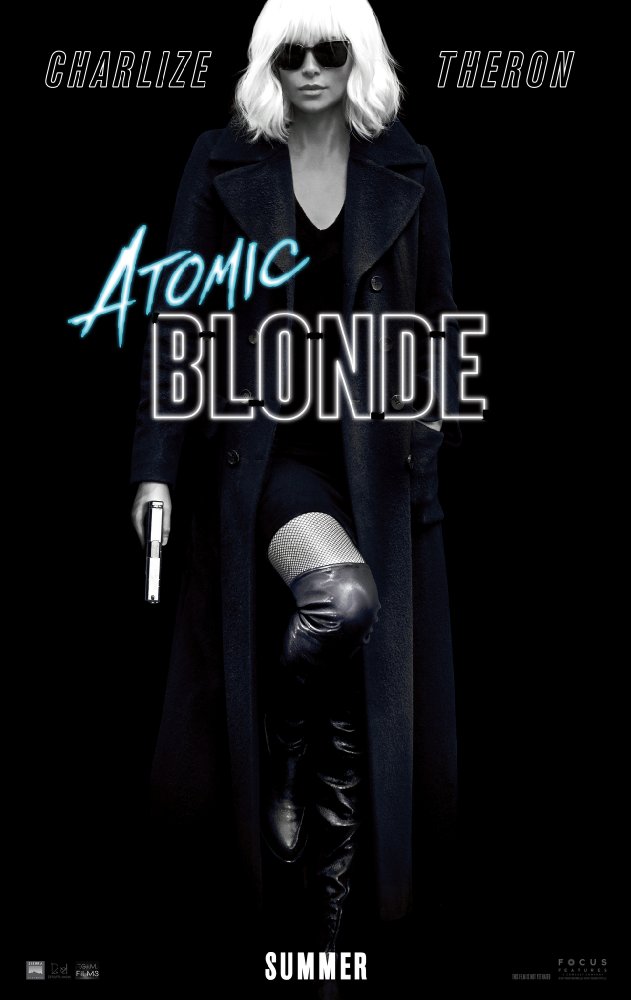
Atomic Blonde is long on style but short on substance. More art and less matter you might say. The plot is a little messy and hard to follow. But that didn’t seem to matter too much to me while watching it as it was gorgeous to look and riveted my attention throughout its 115 minute run time.

The movie takes place in Berlin, on the eve of the collapse of the Berlin Wall and the cold war among the shifting alliances of the various powers, super and otherwise. Charlize Theron plays Loraine Broughton, an MI6 spy, who is sent to Berlin to deal with an espionage ring that has recently killed an undercover agent. It is her mission to root out a suspected double agent. Plenty of mayhem and action sequences ensue.

I normally don’t like action thriller movies but this is a cut above the rest and is done extraordinarily well. The director, David Leitch,  was himself a stuntman on many movies and co-directed the cult classic John Wick. This is his directorial debut.

Charlize Theron is a wonder as the ice cold action hero of this thriller doing hand to hand combat with an assortment of Russian goons and East German Secret Police. She is gorgeous to look at and a sexual bombshell.

The action set pieces and stunts just keep on coming and are extremely well orchestrated as a finely tuned choreographed ballet of violence. They are clever, original, and brilliantly executed.

Great summer fun, two thumbs way up!

The Gambler (2014)

Movie Review

Gambler 2014

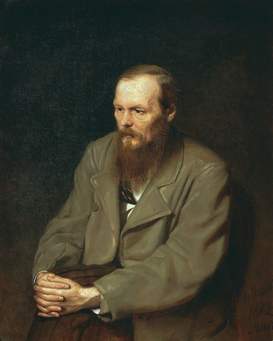
The Gambler (2014) is a remake of the classic 1974 film of the same name. That film, directed by Karel Reisz, was loosely based on Fyodor Dostoevsky’s novella, The Gambler. It is interesting how life imitates art and how art imitates life. The 1974 version was written by James Toback, who had a gambling addiction at the time, came from a wealthy family, and taught creative writing at New York City College. It was his first screenplay and he based it on his own true life experiences with more than just a nod to Dostoevsky.   Dostoevsky was addicted to gambling as well and wrote the novella, based on his own experiences, in 26 days to pay off a gambling debt.

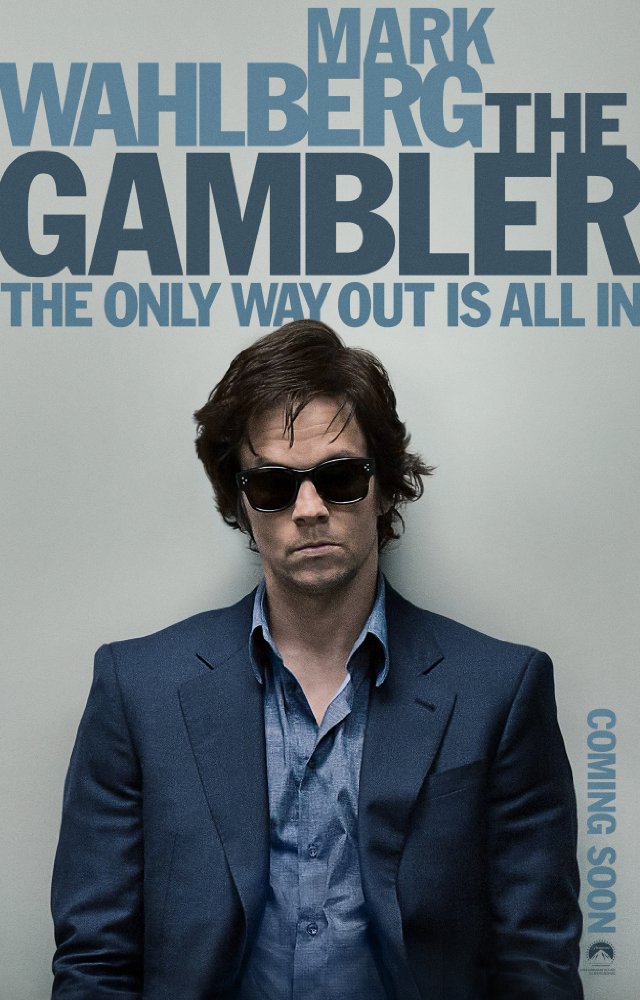
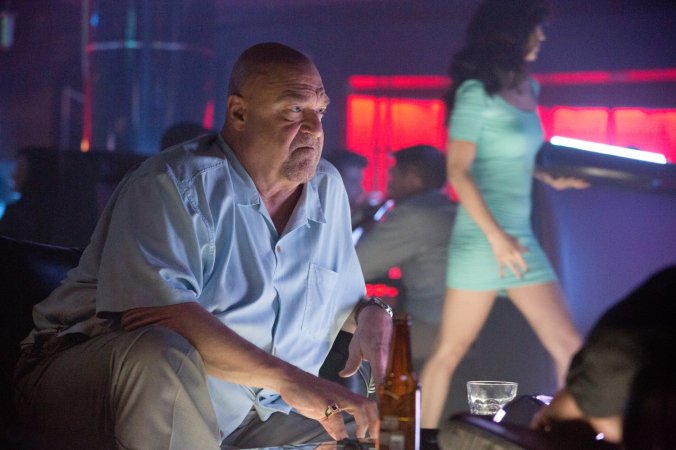
The 2014 version stars Mark Wahlberg as the college professor who teaches literature by day and gambles by night. Wahlberg gives a creditable performance as the gambling addicted professor Jim Bennett. Jim gets in trouble with not one but three different mob figures as he courts danger by getting deeper in debt with each one and staying only one step ahead of complete annihilation. At one point he is $240,000 in debt. One of these mob figures is Frank, played to near perfection by John Goodman, who takes a fatherly interest in Jim and drops philosophical axioms on him in every scene they play together. Still, you wouldn’t want to cross him or any of the others.

John Goodman as Frank

Jessica Lange plays the wealthy mother who bails him out one last time. Her performance is out sized, over the top, and a total delight to watch. We see where Jim may have gotten some of his issues. Brie Larson plays the girl. She is gorgeous to look at but doesn’t have much to do.

The 2014 film is directed by Rupert Wyatt who brought you Rise of the Planet of the Apes (2011).  The screenplay was written by William Monahan whose previous efforts include The Departed which was known for its crackling dialogue and starred once again, Mark Wahlberg. Not quite as successful here, but not bad. As already mentioned, this movie is a remake of the 1974 movie written by James Toback and starring James Caan.

The locations are different and the cinematic style is very different. The 2014 version takes place in the Los Angeles underworld and filmed in a very slick fashion in colors of cold dark blues and reds. The 1974 version was much grittier and took place in New York City.

Gambler 1974

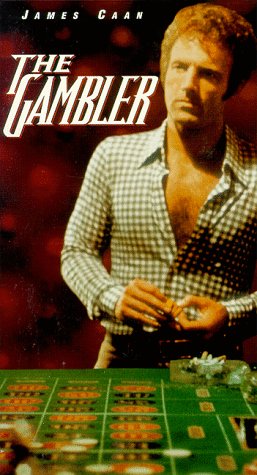
It is axiomatic to say that every film made in the 1970’s is better than any film made in the decades that followed. That is certainly true in this case. In my view the 1974 version was much better. James Caan sizzled as the main character, Axel, who strutted around with his shirt half unbuttoned and his hairy chest exposed as cocky as a bantam rooster, or more to the point like an actual erect cock throbbing with energy and enthusiasm. He exudes sexuality and cockiness. Lauren Hutton plays the girl and Paul Sorvino plays the mob guy, Hips.

Axel is into self-destruction and self-loathing.

“What do all gamblers have in common?”

“They’re in it to lose.”

I liked the ending in the 1974 version better as well. In the 2014 version, after Jim just barley pulls out a win at the last minute and squares all deals and saves his ass, he is seen running to meet up with Amy. This is a hopeful ending that, let’s face it, doesn’t make much sense. It is more of a Hollywood ending one might say. In the 1974 version, after Axel pulls off a last minute win and saves himself from certain disaster, we see him heading down into a dangerous section of New York.

“Don’t go down there Axel,” Hips warns, “they’re cannibals down there (which I guess is code for black people). They will eat you alive!”

Axel, following what must be a death wish, goes into a black whorehouse and picks up a girl and takes her to her room. He is followed by her pimp. Axel then tries to rip her off by not paying her. The whore screams for her pimp who crashes into the room brandishing a knife. A fight ensues and it looks like Axel is winning. He knocks the knife out of the pimp’s hand, the black whore picks up the knife and slashes Alex across the cheek with it. Alex flees the room clutching a rag to his bleeding face.

As he is leaving the flop house he catches a look at himself in a mirror and sees the bloody slash on his face that will no doubt be like a Heidelberg scar that he will carry around with him like a red badge of courage for the rest of his life. Roll credits.

In the novella, at the  end, the protagonist, Alexey, is down and out having lost most of his money on roulette. He meets an old friend who gives him news of his love interest, Polina. This gives Alexey hope as he learns from his friend that Polina is in Switzerland and that she does love him after all. But alas, it is a false hope because in the final analysis, Alexey is still a gambler at heart and cannot escape his fate.


is

Fyodor Dostoevsky

What all three characters have in common is a gambling addiction. In a letter to a friend Dostoevsky says the thing about his gambler, “… is that all his vitality, his strength, his impetus, his courage, have gone into roulette.” Gambling is not just an addiction, but an overwhelming compulsion that seizes its victims by the mind, body and spirit.

This magnificent obsession is on  fine display in both movies and the novella. For my money the 1974 version of the Gambler is the best. Do I get any bets?


Paterson (2016)

A Movie Review


PATERSON_D06_0133.ARW

One of the better movies to emerge out of  the 2016 crop of movies is the small slice of life film, Paterson, written and directed by Jim Jarmusch. Had I had a chance to see it earlier it would have appeared on my Top 10 List for best films of 2016. I happily add it now.

Paterson is a movie about the daily life of a bus driver named Paterson driving a bus in a town named Paterson, played by an actor named Driver. Oh, the irony abounds.

This is a small, quiet, little movie about the daily routine of the main character, Paterson as he goes through this daily rituals of getting up the same time every day, eating a bowl of Cheerios for breakfast and then walking to work. He is a city bus driver for New Jersey Transit. He stops for lunch everyday at the Great Falls located on the Passaic River in Paterson. Paterson eats from a lunch box prepared lovingly by his eccentric wife, Laura, and writes his poetry in a secret notebook that he has been composing in his head as he makes his rounds in the bus. The words flow like the waters from the falls. Paterson writes about the small, little, mundane things in life, but as the imagery picks up speed it sometimes explodes into a passionate torrent of love for Laura, his wife and muse.

Paterson comes home everyday after work and is greeted by his wife, a stay at home creative type who is into making strong and bold visual statements of black and white patterns, swirls, and circles as she designs and paints curtains and clothing and paints every available surface in their modest home with her bold designs. It is obvious that they love each other and accept each other for who they are. Laura encourages Paterson in his poetry and begs him to make copies so he can share them with the world.

After dinner Paterson walks Laura’s dog, Marvin, an English Bull Dog with a lot of personality. But Paterson and Marvin are not exactly best friends. Paterson stops each night on his walk at a neighborhood bar called, The Bar. He ties Marvin out front and goes in for exactly one beer. Here we meet more interesting characters from the city and learn more about Paterson. Posted on the wall behind the bar are pictures of famous people who are from Paterson or who are associated with Paterson in some way.

On the bus we and Paterson overhear snatches of conversations as the passengers talk about everything from historical events to famous people who hail from Paterson. There is an animated discussion about the boxer Hurricane Carter who was arrested for a triple homicide that took place in a bar in Paterson. Turns out the Hurricane was in the wrong place at the wrong time and was wrongfully convicted of the crime. Bod Dylan wrote a song about it and Denzel Washington played him in the movie.

This is a deceptively simple movie that actually has lots going on. Paying close attention to the background details will pay off in dividends. On Paterson’s night stand is an copy of Moby Dick with the name Melville splayed across the cover. In the basement we see the Earlier Collected Works of William Carlos Williams and many other books by other poets and writers.

Paterson, played to perfection by Adam Driver, is a basement poet who loves literature and observing the small details of everyday life and interacting with the interesting characters that inhabit Paterson, New Jersey. His favorite poet is William Carlos Williams, also from Paterson.

In the end, this movie is really a poem. A poem about the city of Paterson and the people who inhabit it as seen through the eyes of a bus drier. Brilliant!


Alien: Covenant (2017)

Movie Review

danils

The spaceship Covenant is on its way to a distant planet carrying as its cargo 2000 humans and embryos frozen in a state of suspended animation. The purpose of the trip is colonization. On the way an accident occurs which endangers the mission and creates a devastating loss of life. While repairing the ship a signal is encountered that causes the crew to chart a new course to investigate the source.

Alien Covenant picks up 10 years after Prometheus leaves off. Covenant hasn’t garnered many very good reviews, mixed I’d have to say, and I think I know why.  Most sophisticated movie goers who love movies usually don’t like sequels and prequels. I must admit I don’t either. So Covenant automatically loses points just for that. But come on, this is Alien, and it’s Ridley Scott in the director’s chair, so I am willing to cut it some slack. I love science fiction and I love horror films, there just aren’t too many good ones out there. So happens Alien is one of my favorite all time science fiction flicks and so is Blade Runner. Both Ridley Scott enterprises.

Now, back to the movie. I don’t often go to the movies for my philosophy. I usually go to philosophers for that, like Wittgenstein or Sartre. It’s nice if there is an element of philosophy in the movie, especially if it’s science fiction. But I am not going to get all worked up if it doesn’t deliver. The philosophy is only as good as the writer and there aren’t that many Philip K. Dicks or Issac Asimovs out there.  In science fiction horror films what you want and come to expect are  science fiction theories and horror film tropes. That’s what you get in Alien, and with Ridley Scott you get the best.  No one does it better.

With all that said, I loved this movie! The film was two hours long, but you didn’t notice as the time flew by. The aliens were scary and the atmosphere was dripping with human gore imbued. The encounters were exciting as the creatures picked off the married crew members one by one (they were all married.) There was even an obligatory sex scene in the ship’s shower. Yes, Virginia, there is sex in deep space, where the lovely couple is joined by an unwanted intruder.

The last man standing was actually a woman, Daniels, played convincingly by Katherine Waterston. Not quite Sigourney Weaver’s Ripley, but close enough. Strong female leads are a recurring theme of the Alien franchise which is a good thing. In an exciting battle with the alien on the deck of the freighter craft we are treated to not one but two climaxes : “Give a girl a hand?” Most satisfying.

Michael Fassbender plays the androids Dave and Walter in a neat bit of acting that is totally believable and uncanny . He truly runs away with the show. This is the heart of what Alien is all about and the real philosophy behind the film raising questions about creation, gods, and monsters in the fashion of Mary Shelley in Frankenstein.

While not perfect I give this film high marks. Ridley Scott remains at the top of his game. Can’t wait for Blade Runner 2049.