A lightening flash
on a darkened dash
a drop of dew on a blade of grass.
Blogroll
Tha Starving Masks

The starving masks dance lightly in the breeze
autumn will come soon
time flies like arrows.
The Swerve
 “The Swerve: How the World Became Modern” by Stephen Greenblatt is a book that holds special significance for me. It is a book about a book hunter who lived in the 15th century, Poggio Bracciolini. It resonates with me because I too am book hunter.
I know how Poggio Bracciolini must have felt when he came across a dusty scroll hidden away in the library of the Benedictine Abbey of Fulda in Germany. This scroll was one of the few remaining copies extant in the world and the only copy that had surfaced to that point. It consisted of an important poem, “On the Nature of Things,” written by Lucretius in 50 BCE. This book would change the course of human events.
“On the Nature of Things” is a poem about the philosophy of Epicurus. Epicurus, a Greek philosopher living in Athens in the third century B.C.E, was a proponent of the theory of atomism. This theory rests on the idea that the basic building blocks of matter are tiny invisible particles called atoms. Epicurus was also a proponent of the pleasure principle. He believed one’s primary aim in life should be enhancing one’s pleasure and avoiding pain. The pursuit of happiness should be the goal of life. Liberated from superstition, you would be free to pursue pleasure. Peace of mind is the key to enduring pleasure. The Church of the 15th century however, thought otherwise. “On the Nature of Things” was considered to be a radical and dangerous document.
“The Swerve: How the World Became Modern,” is a book about books. Greenblatt goes into the history of writing books and bookmaking, libraries, and book storage. He discusses the readers of books and the owners of books from antiquity. He describes these readers to be few in number and usually the wealthy elite. They were a cultivated society of men and women whose homes had rooms designated solely for the purpose of reading books.
“The Swerve” is also a history of the times in which Poggio lived. He lived in Florence during the 15th century. He became secretary to Pope John XXIII. These were wild times for the Church. There were actually three Popes at the time all claiming legitimacy. Pope John XXIII (Baldassare Cossa) was eventually deposed after being accused of simony, sodomy, rape, incest, torture, and murder.
After the Pope was deposed and imprisoned, Poggio unemployed, considered himself to be free. Free to hunt books. Free to read and free from all cares and worries of worldly affairs. He withdrew into the quarters of his private library in his castle. Books delighted him. According to Poggio, time spent with books takes our minds away from our troubles.
The most important impact the book had for me was to answer two burning questions: Is the world determined? And, do we have free will?
Determinism conflicts with the doctrine of free will. Lucretius suggests that atoms tend to swerve randomly (Clinamen). When atoms fall straight down through space they deflect a bit here and there, at uncertain times and places, slightly changing their motion. This swerving action creates the free will that we all take advantage of in our daily lives and allows us to have purpose.
The other important legacy Lucretius leaves us with is the idea that the highest goal of life is the enhancement of pleasure and the reduction of pain. Life should be all about the pursuit of happiness.
We find the echoes of these ideas in our own Declaration of Independence, written by Thomas Jefferson in 1776. In it he declared man’s right to life, freedom, and also to “the pursuit of happiness.” Jefferson owned many editions of “On the Nature of Things in various translations. It was one of his favorite books.
Justice and Freedom

Some things defy simplification the way Hamlet defies augury. The reconciliation between individual freedom and the collective organization of society is just such an example. To put it more succinctly, how does one reconcile justice with freedom? There some who say that these two principles are contradictory, therefore mutually exclusive. Individual freedom is for the Wall Street Banker while justice is for the Main Street crowd. Justice for all means a sacrifice of individual freedom for the good of all. This is the theory of utility ethics.
Christianity seems to suggest a solution since its essence is grounded on the sacrifice of the innocent. Justice, however cannot be obtained without rebellion. Main Street must barricade Wall Street.
There is nothing else more worth living for in this unjust and corrupt world than the daunting task of establishing justice and preserving freedom for those who are destined from birth to live a life of servitude.
When we think about social themes we should think about the individual. Whenever we think about the individual, we must think about the good of all.
Right Livelihood

Right livelihood is one of the 14 mindfulness trainings as defined by Thich Nhat Hahn. They were formerly known as precepts, but Thay changed the titles to align more with what he saw as the true meaning of the terms which he believes are meant to be more like guiding principles.
The trainings requires the practitioner to undergo certain vows to live a life and work in an occupation that is not harmful to sentient beings, one that emphasizes understanding and compassion. Occupations to avoid would include arms dealing, drug dealing, and the slaughtering and butchery of animals. As concerned and responsible citizens we must be aware of out interrelationship to the environment and not despoil it.
Right livelihood is also one of the Noble Eightfold Paths, which is one of the earliest teachings of the historical Buddha, Shakyamuni. According to Thich Nhat Hahn, writing in his book, “The Heart of the Buddha’s Teaching,” the Buddha, as he lay dying, said to one of his adherents, “… it is not important whether you are fully enlightened. The question is whether you want to liberate yourself. If you do, then practice the Noble Eightfold Path.”
The term right livelihood implies a choice. The burden of freedom we carry as human beings requires us to make choices. I have heard some say that because of the economy, “I really didn’t have a choice, I had to work in the meat packing industry, I had to work in this industry or that industry.” While each individual should be viewed with non-judgmental kindness and compassion, we must understand that we actually do have choices.
I can tell you from personal experience that I have had to make some hard choices along the way regarding how I was going to make my living. When I was a young man I worked in a tobacco factory for about six months. I was given the opportunity to go into management. The job paid well and the opportunity was great. I knew then that I couldn’t work for an industry that was basically a merchant of death, dealing out misery, and destruction. I couldn’t get out of there fast enough. A few years later, while living in Oklahoma and facing another life changing moment, I had the opportunity to go into hog raising business for the consumer market. Raising pigs for slaughter. I thought about that for about five minutes and said no. I knew it couldn’t be good for my karma. In both cases other opportunities became available to me and I thrived.
Our freedom as humans requires us to make hard choices and to be responsible for the choices we make. Choices lead to action, action creates karma. Life is propelled by the law of cause and effect. You make a good cause, you have a positive effect. You make a bad cause, you have a negative effect. This is how karma works.
By choosing the right livelihood, you follow the path that leads away from suffering, both for yourself and for others. The most important thing is if you can’t do good at least don’t do any harm.
Best First Lines
Can you guess the names of the novels and the authors from the first lines?
Best First Lines to Novels
1. “What’s it going to be then, eh?”
2. I get the willies when I see closed doors.
3. Call me Ishmael.
4. In my younger and more vulnerable years my father gave me some advice that I’ve been turning over in my mind ever since.
5. Many years later, as he faced the firing squad, Colonel Aureliano Buendia was to remember that distant afternoon when his father took him to discover ice.
6. It was a bright cold day in April, and the clocks were striking thirteen.
7. Mother died today.
8. All this happened, more or less.
9. It was a pleasure to burn.
10. The house was built on the highest part of land between the harbor and the open sea.
Answers
1. A Clockwork Orange -Anthony Burgess
2. Something Happened -Joseph Heller
3. Moby Dick -Herman Melville
4. The Great Gatsby -F. Scott Fitzgerald
5. One Hundred Years of Solitude -Gabriel Garcia Marquez
6. 1984 -George Orwell
7. The Stranger -Albert Camus
8. Slaughter-House Five -Kurt Vonnegut
9. Fahrenheit 451 -Ray Bradbury
10. Islands in the Stream -Ernest Hemingway
The Immigrant
Saw this film tonight. It was a 2013 release. This is what I go to the movies for. It had a terrific story and interesting characters who demonstrated the full range of emotion and transformation as they struggled to survive resulting in the triumph of the human spirit. If there is any actor alive today any better than Joaquin Phoenix I don’t know who it is. Marion Cotillard was radiant as the Immigrant. Two thumbs way up!
Maleficent
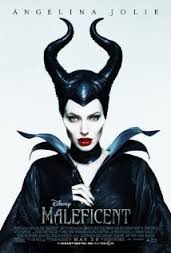 Angelina Jolie was magnificent as Maleficent in the retelling of Disney’s Sleeping Beauty, which itself was a retelling of the fairy tale by the Grimm Brothers and a short story by Charles Perrault. The screen play was masterly written by Linda Woolverton. The movie was directed by Robert Stromberg. Angelina’s beauty was breathtaking and her acting was first rate. She is truly a movie star of the first magnitude. The cinematography was stunning. I saw it in digital but it begs to be seen in 3-D. I will have to go back to see it as it was meant to be seen. I saw some parallels to Angelina’s own life but I won’t say anything further here for fear of spoiling the fun. I give it a 10 out of 10. Maleficent has moved into the best film I’ve seen this year category.
Is Beyonce a Terrorist?
I think it is quite extraordinary that author bell hooks and TV host Bill O’Reilly, could possibly come down in the same place on the same issue, but apparently that is what happened. Both have come out and criticized Beyoncé for her negative affect on young black girls. Bill from the point of view of an “imperialist, white supremacist, capitalist patriarch” and bell from the point of view of a radical black feminist. Bill accuses Beyoncé on his show, The O’Reilly Factor, on the Fox News Network, of providing a negative role model for black girls to follow with her so called libertine lyrics and sexual imagery in her videos and music which he says encourages black girls to engage in unprotected sex and by doing so become pregnant. bell calls out Beyoncé for perpetuating the stereotype of the young black woman who is always sexually available and asks the question, is she still a slave? She goes so far to say Beyoncé is an antifeminist terrorist. What gives? You know something is wrong when these two agree even if it’s for different reasons.
bell references the cover of Time Magazine by citing Beyoncé for wearing a white panties and bra set like what she used to wear when she was a young girl. It was actually a two piece bathing suit but it did have the intended illusion of looking like a white bra and panties and it was very sexy and provocative. Is it possible that Bill and bell cancel each other out? Or is it one of those you don’t get to make those kinds of criticisms unless you are one of us kind of things? I don’t know, but my head is spinning and about to explode.
I feel I must hazard a response and offer my opinion, such as it is. Full disclosure: I am a white male of a certain age. Now, I have a great deal of respect for bell hooks, but less so for Bill O’Reilly. I lost all respect for him years ago as he became the chief bloviator Fox News. I have read many of bell’s books, we are both from Kentucky, we share a name with each other, and I have actually met bell hooks, although I’m sure she probably wouldn’t remember. It was a few years ago, in Philadelphia, when I attended a lecture she gave and she was kind enough to autograph a book of hers I brought along for that purpose. It was a wonderful lecture and I remember thinking during the Q & A that she doesn’t much suffer fools. She was rather pointed with several of her questioners. But it was what you would expect from bell hooks.
I think bell has gone too far in describing Beyoncé an antifeminist terrorist and a slave. If anything Beyoncé is exploiting the slave mentality that still exists for her own personal gain. She demonstrates great personal agency in her creativity and has become rich in the process. bell asks the question, would we even be talking about her if she weren’t rich? Yes, I think so, because she is beautiful and talented, not to mention provocative.
Bill O’Reilly is off base with his comments because he is white and comes off sounding like a racist in the process. Actually, Beyoncé provides a positive role for black girls as an empowered, creative, talented, and successful black woman.
In my view there is nothing wrong with sexy or having sex. I need to take a long hard look in the mirror, however, at my own self to be sure my attraction to black women isn’t the product of my own master/slave mentality. I will have to give it some deep thought. Meanwhile, I will continue to enjoy Beyoncé and other talented black sexy women. For the record, I am a Rihanna man.
The Girl Who Played Go

The game of Go has long intrigued me. I learned how to play years ago from a wizard who lived down the stairs. We wiled away the hours playing the game of Go. I moved away and never played again until recently. I took it up once again and discovered it had never really left me. I became reacquainted with Go because of a novel written by a young Chinese girl that sparked my interest all over again.
When The Girl who Played Go first came out in 2003, I read a review about the book and was intrigued. I vowed to keep an eye out for it. In those days one didn’t just automatically add a book to one’s Amazon Wish list. One liked to find books the old fashioned way, serendipity. One liked to stumble across them by accident in some far flung and obscure bookstore somewhere in the midwest, or northeast, or wherever. Years went by and I never saw the object of my desire. By then it was locked away in the recesses of my memory and I was no longer consciously looking for it at all.
Then one day in, 2007, in a crowded book store in Philadelphia, I ran across a book entitled, The Master of Go. To my imperfect memory I thought this must be the book I had long sought. I picked it up, took it home and put in a shelf where it languished a few more years. When I finally got around to reading it, I thought, this is strange. This doesn’t seem like the book I had read about all those years ago. This book, written by Yasunari Kawabata, was about a modern day Go player, in Japan. While I enjoyed the book very much, it was a realistic depiction of an elderly gentleman who was a Go master and the rigors of tournament play in Japan. I read the book and put it away and started a new book and didn’t give the Master of Go another thought; until year 2012. I ran across another book on Go in Louisville, Kentucky at the Half Price Book store where I am wont to go. It was entitled, The Girl Who Played Go. Eureka! Sweet mystery of life, finally I found you! The Girl Who Played Go, written by Shan Sa, was my long sought after book. I immediately purchased the book and took it home and began reading. Friends it was worth the wait.
Go is a territorial contest. In Chinese the game is called, Wei Qi, which means, “surrounding game.” Go has roots in both China and Japan. Most Westerners are unfamiliar with the game of Go. It has simpler rules than chess but is far more subtle and takes longer to master. It is a game that is not structured around the theme of a small battle, like chess. Rather, it is more like a large scale war. In Go, every piece is identical: an ivory or ebony stone is played on a square grid by the contestants. Each piece has the power to turn the tide of a war. Go is powerful metaphor for the story told by Shan Sa in her novel, The Girl Who Played Go.
The Girl who Played Go is a wonderfully written novel set within the framework of the game of Go. It takes place in a small city in Japanese-occupied Manchuria in 1936. An unnamed Japanese soldier has been sent with his battalion to seek out the Chinese resistance movement within the region. Simultaneously, a bored Chinese schoolgirl finds solace obsessively playing Go in the local square eponymously name The Square of a Thousand Winds. In an attempt to infiltrate the enemy, the Japanese soldier joins the city’s Go players, and falls into a game and into love with the girl who played Go. The story of the soldier and the girl are told in alternating, short, chapters. Dramatic events in the lives of the protagonists are repeatedly brought together and interwoven.
The game of Go is a metaphor for the Japanese invasion of Manchuria and the resistance one young girl is able to mount by remaining undefeated at the game. Manchuria has been occupied by the Japanese for several years as the story opens, but there is an active insurgency movement. The girl, however, lives a relatively sheltered life. She is quickly maturing, and becomes sexually active during the unfolding events. The game of go symbolizes the play between man and woman, as well as the conflict between China and Japan.
The story is well presented with some scenes that are picture-perfect observations of life as illustrated by the following examples “A carp pirouettes in a large jar that serves as an aquarium.” “The appeal of a prostitute has the transient, furtive freshness as the morning dew. Prostitutes have no illusions and this makes them the soldier’s natural soulmates. Already damned, they dare not dream of eternity, and they cling to us like shipwrecked mariners clinging to flotsam. There is a religious purity to our embraces.” “The boys with white silk scarves around their necks, posture like tragic poets.” “In the game of Go, only aesthetic perfection leads to victory.’’ “He has the nobility of a man who prefers the turnings of the mind to the barbarities of life.” “It has taken many years for the game of go to initiate me into the freedom of slipping between yesterday, today, and tomorrow. From one stone to the next, from black to white, the thousands of stones have ended up building a bridge far into the infinite expanse of China.”
Shan Sa has an extraordinary background. She was born in Beijing, started writing at seven and enjoyed success as a teenage poet. At 18 she moved to Paris to study philosophy. She worked for a time with the artist Balthus . Writing in French, she won a Goncourt with her first novel. Her novel, The Four Lives of the Willow won the Prix Caze. In 2001, she was again awarded the Prix Goncourt des Lycéens for her novel, The Girl Who Played Go. Her works have been published in 30 languages worldwide. Since 2001, Shan Sa has continued to write literature and paint. Her works have been shown in Paris and New York, and Japan. In 2009, Shan Sa was awarded by the French Cultural Ministry, Knight of Order of Arts and Letters. In 2011, she was awarded by the French President, The Knight of National Order of Merit.
 Ghost Dog