Night at the Museum

My last afternoon in New York was a quiet one, or so I intended. The Frick Art Gallery, tucked into Henry Clay Frick’s mansion on Fifth Avenue, is a sanctuary from the city, and I had come to see the Vermeers. But as often happens in great museums, my feet led me away from the popular rooms toward a smaller, dimly lit alcove dedicated to works of attribution.

The piece itself was small, a single panel, but the quality was undeniable. It was clearly Italian, perhaps Florentine, circa 1505. The texture of the paint, the specific sfumato effect on the skin tones, and the deep, rich pigments—that distinct Renaissance blue and the vibrant velvet—spoke of a master. Yet the brass plaque beneath it read: Unknown Painter.

When I raised my eyes to the composition, it was as if the room had suddenly shifted. It wasn’t just a shock; it was a physical sensation of disorientation.

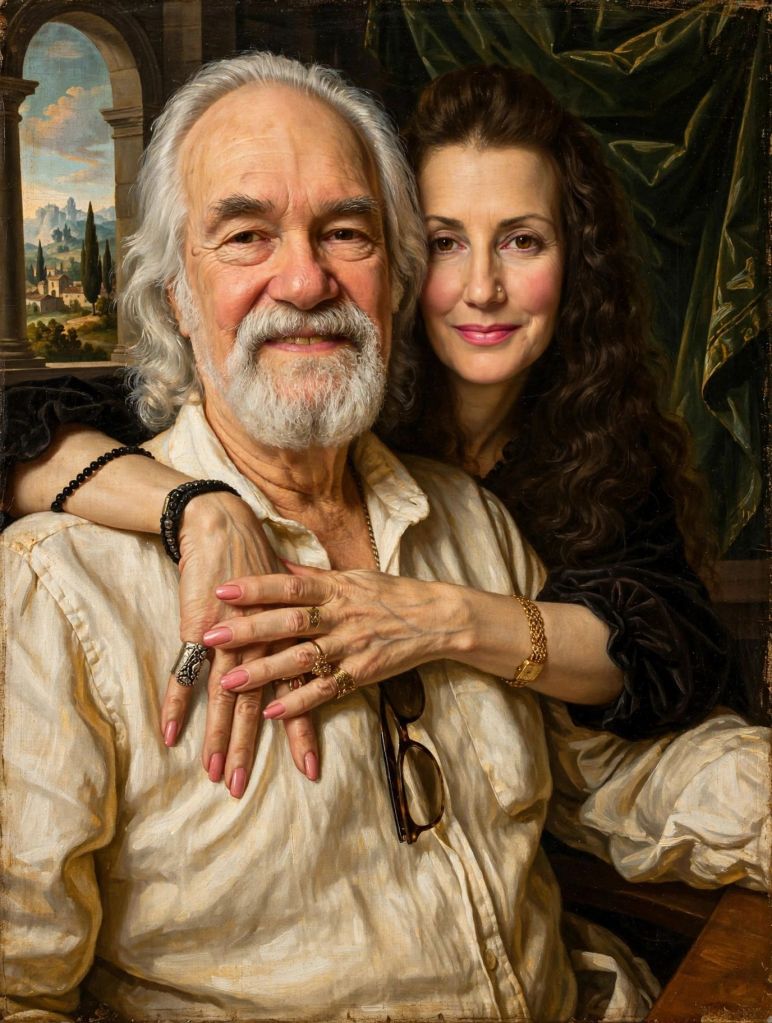
I stood before a double portrait. The figures, captured in that precise moment of the 16th century, were seated closely. One was a figure with long, flowing silver hair and a full, neatly kept beard, wearing a cream-colored doublet. The other, a woman with voluminous, dark cascading curls, was dressed in a sumptuous velvet robe. Her arm was draped around his neck, and her hands rested over his chest, adorned with a collection of rings and an ornate, decorative chain bracelet that the artist had captured in meticulous detail.

I knew those faces. I knew the specific lines around the man’s smile, the gentle but direct gaze in the woman’s brown eyes, and even the unique curvature of her nose. I knew them with an intimacy that a history textbook or even a photo gallery couldn’t provide. I pulled my smartphone from my pocket and navigated to my photo roll.

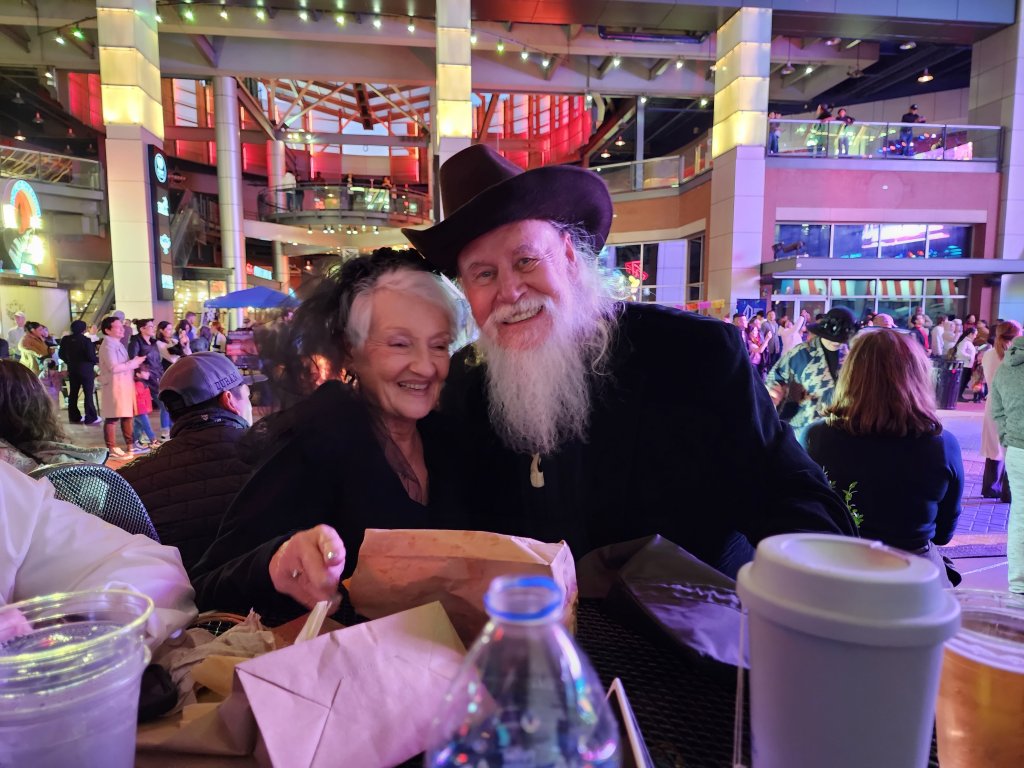
I scrolling through recent images and selected a picture from the image_0.png file—the portrait of me and Robin.

There was no mistake. It was beyond likeness. The artist, painting five hundred years ago, had rendered the identical, specific features of our faces. The contours, the proportions, and the subtle, individual expressions had been painted with such precision that it defied mere coincidence. I looked back and forth, from the image_0.png file in my palm to the painting on the Frick’s wall.

The sensation was not just uncanny; it was time-altering. To see our own visages, so familiar and immediate, rendered as a priceless, centuries-old masterwork, felt like having a dream of someone and then meeting them in an ancient, sun-dappled courtyard. Robin would never believe me. The painting was not a mirror; it was a revelation of continuity I wasn’t prepared to receive. I snapped a photo of the unknown Renaissance double portrait, the Frick plaque below it, and my own hand holding the reference photo from image_0.png next to the canvas. I would need every bit of proof.

Virginia Breaks

Road Trip

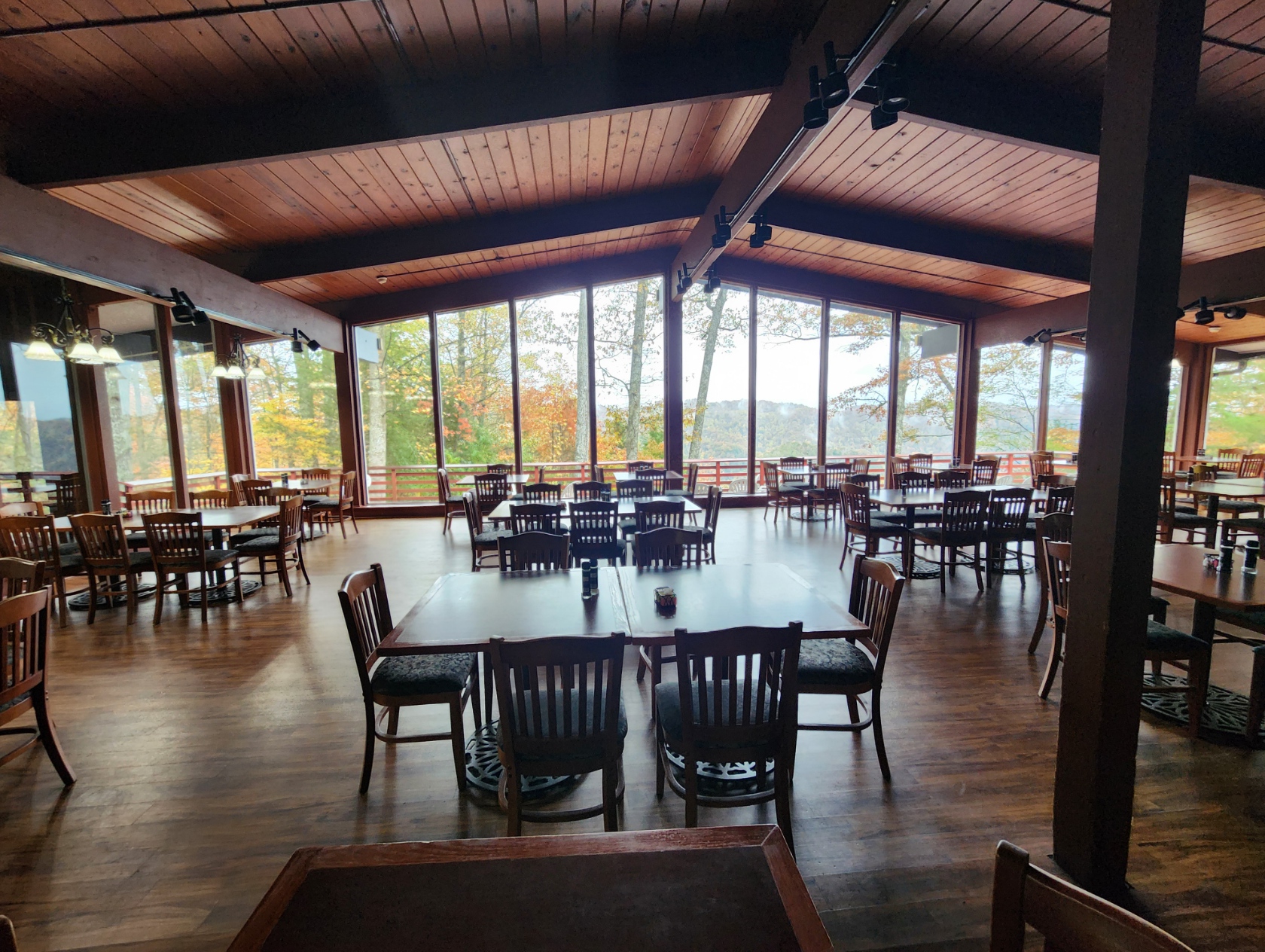
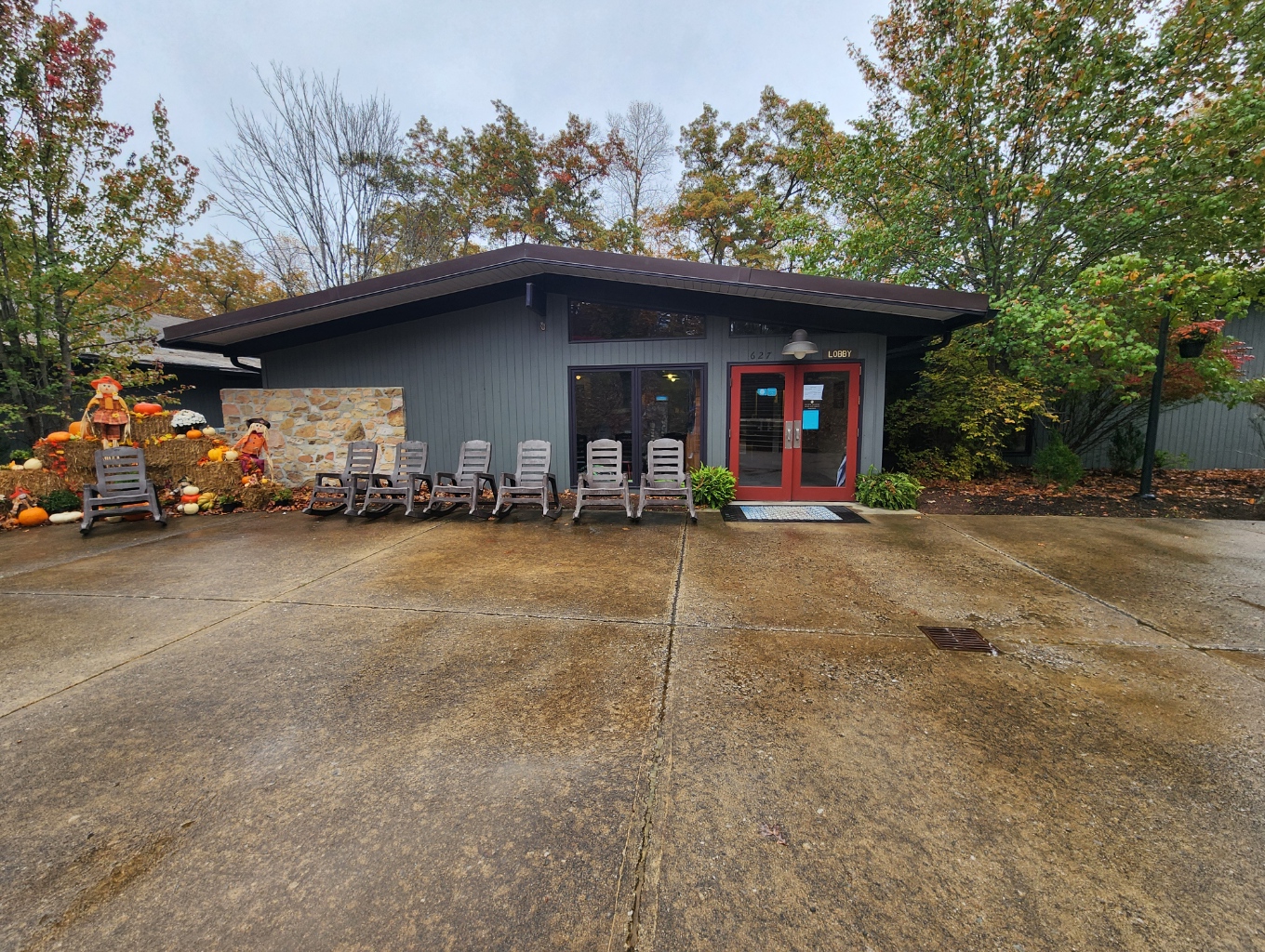
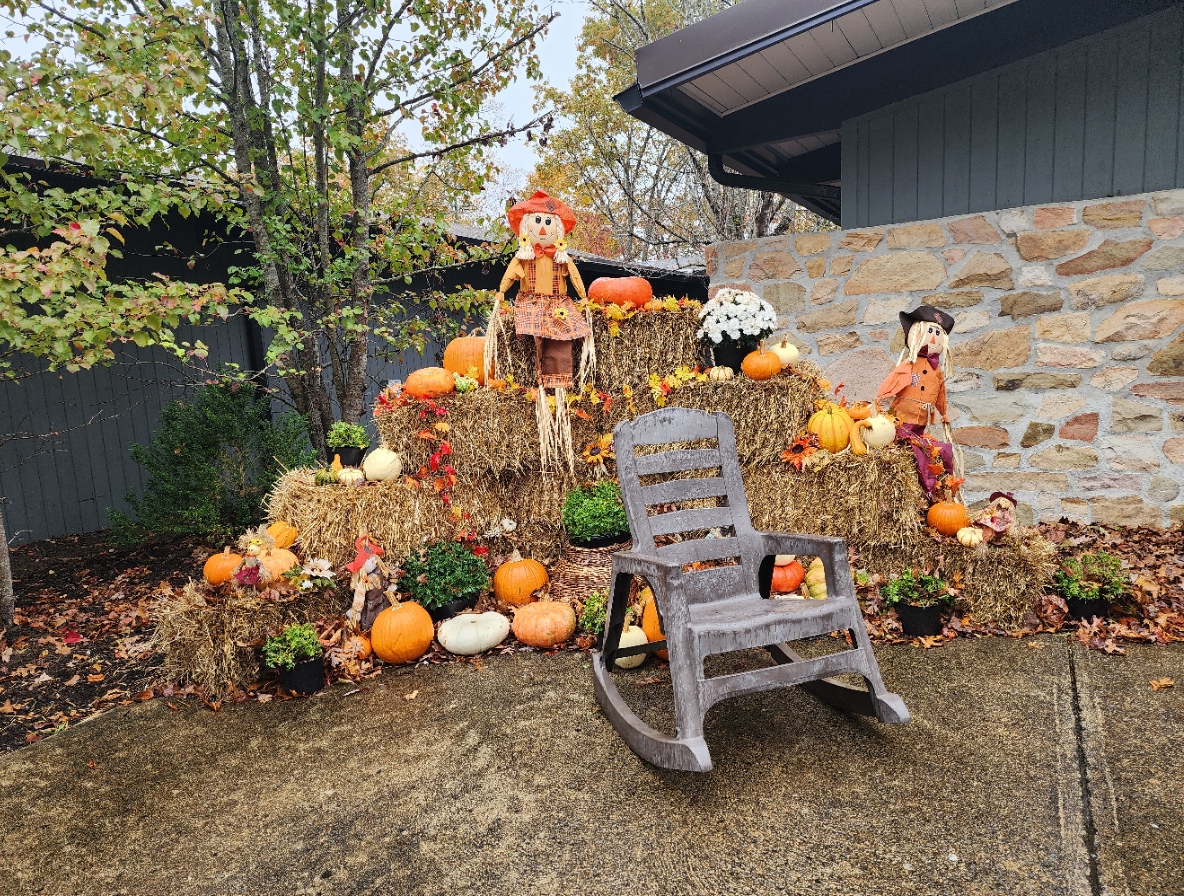
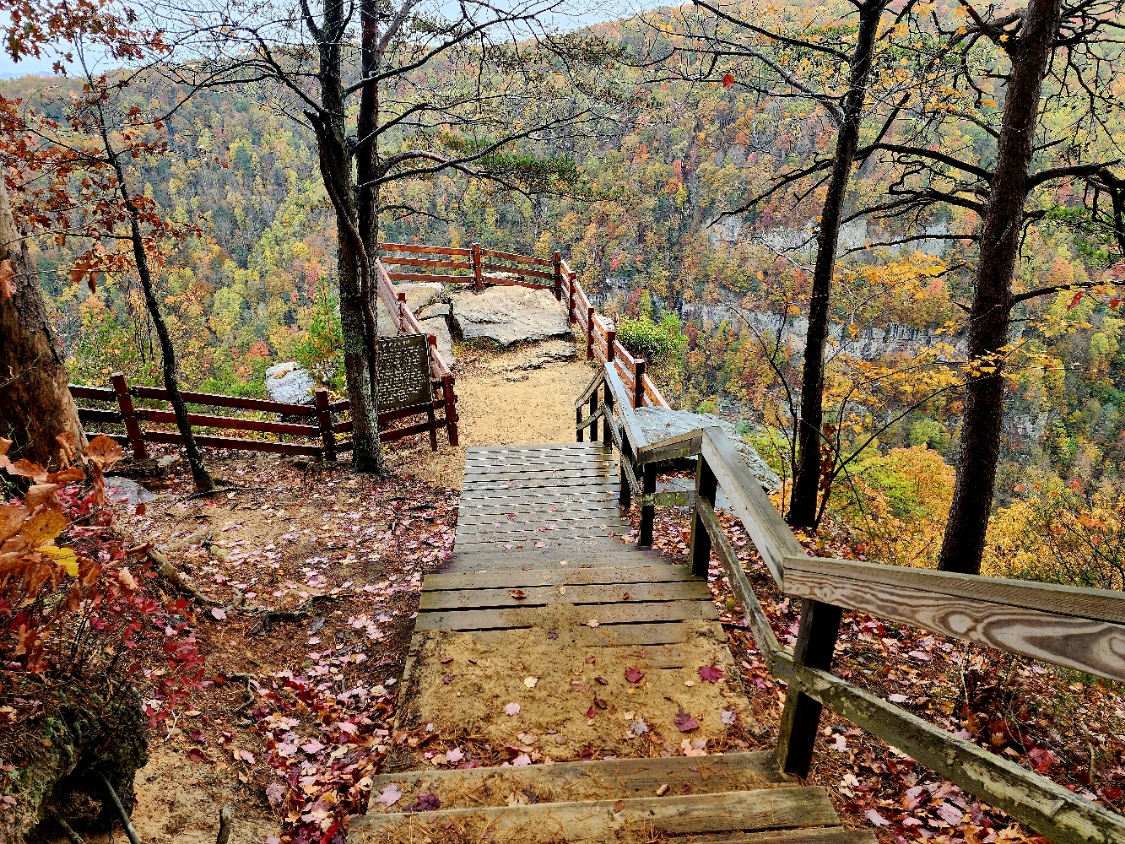
Robin and I recently made a trip to Eastern Kentucky to look at some property. We stayed two nights at the lodge at The Breaks Interstate Park, in Virginia, just across the border from Kentucky. Here are a few snaps from the trip.

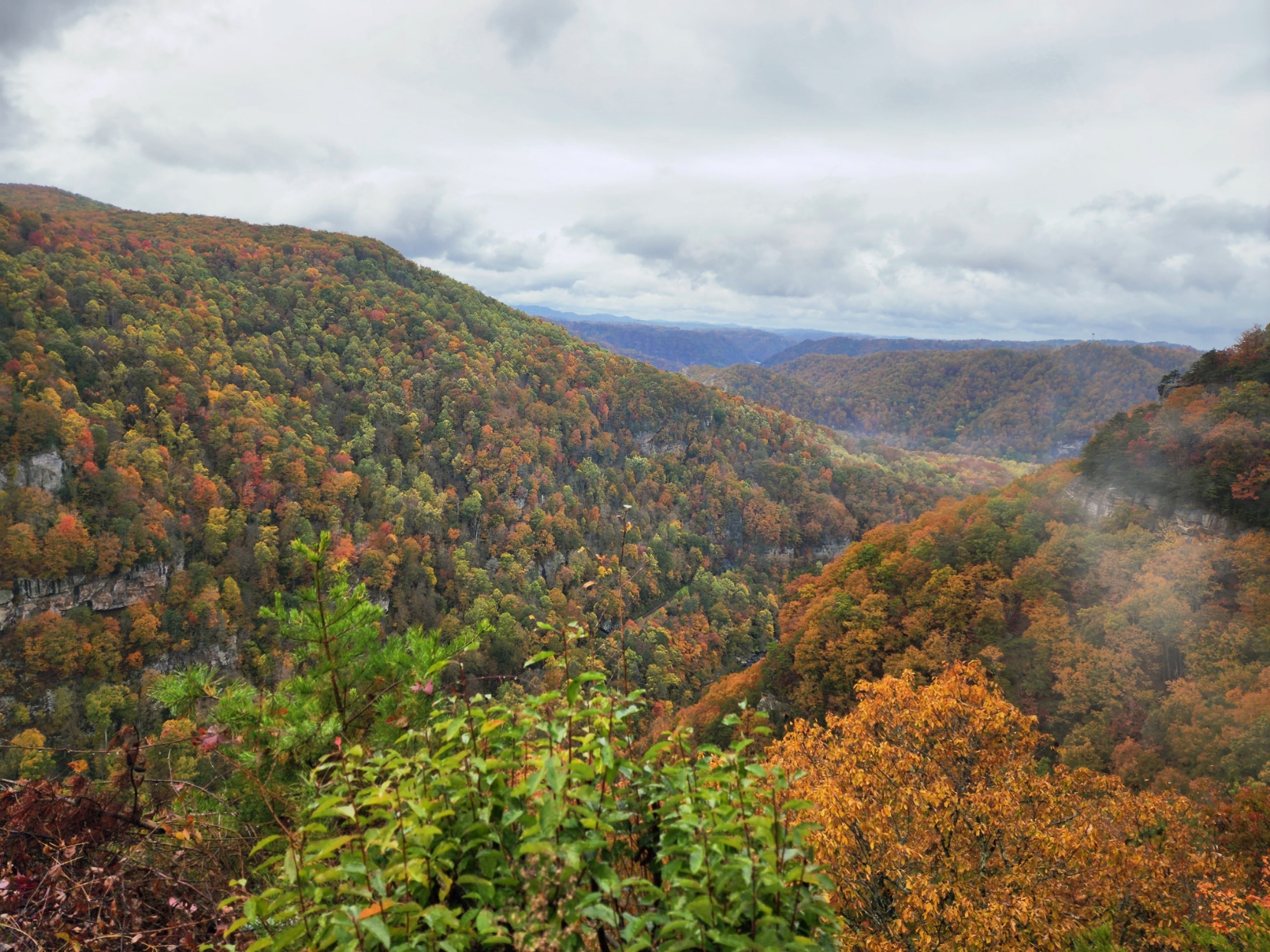
The name “Breaks” was derived from the break in Pine Mountain created by the Russell Fork of the Big Sandy River as it carved a 1000-foot deep gorge on its way to join the Ohio River.

View from behind the Banquet Hall

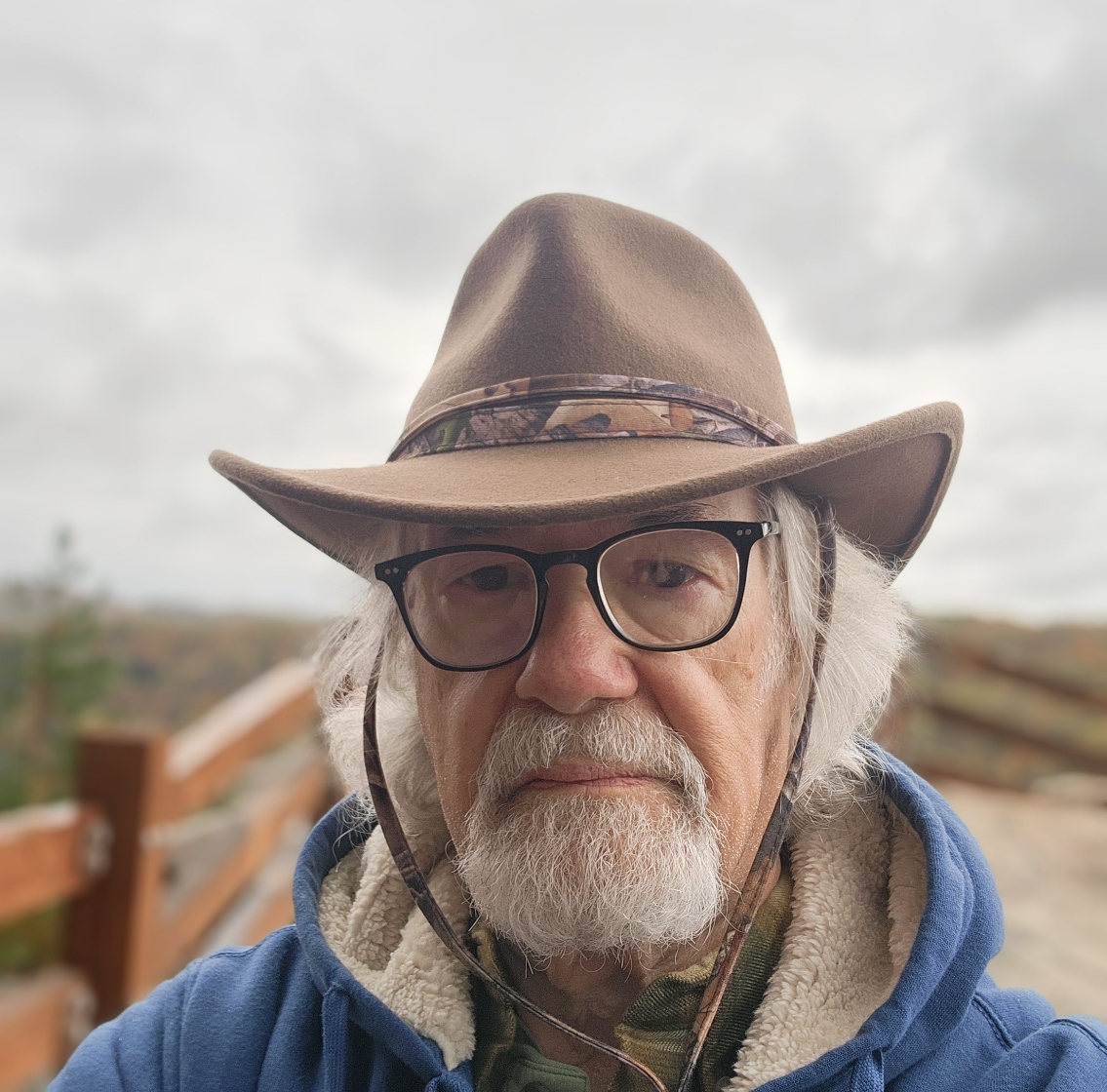
Yours truly

Banquet Hall

Front Office

I’m climbing the stairway to heaven

Tis the season

The deer were abundant

LOOK OUT

Portrait of the Artist

Those are the Breaks

On the Edge

TS Motherfucking A

Jerusalem (1988)

Who packed your bag?

I packed my bag

Where was your uncle’s sister born?

Have you ever met an Arab?

-James Fenton

TS Motherfucking A

Philadelphia (2023)

Any electronics in your bag?

Yes.

Take it out.

Take that phone holder off.

Take your shoes off.

I don’t have to take my shoes off.

Why?

I’m 75.

You’re 75?

Yes.

Ok. Step aside through here.

Any metal on you sir?

Yes, on my hat.

Step through the scanner.

Ding ding ding…

Rescan him.

Why do you have to rescan me?

Rescan him.

Any soreness here?

No.

OK. I’m going to pat you down.

Pat pat patty pat.

Thank you.

Enjoy the rest of your day.

-Ghost Dog

Way Down in Mexico

Back in Ajijic Again

I have now made my third foray onto this enchanted isle of beautiful sunsets, gorgeous senioritas, and delicious margaritas. I am talking of course, of the magical town of Ajijic, Mexico located on the shores of Lake Chapala nestled in the shadows of the Sierra Madre mountains.

Ajijic is an Indian name meaning the place where the water flows. In 2021 Ajijic was appointed Pueblo Magicio (Magic Town) by the Secretary of Tourism of Mexico for the work of this town in protecting and preserving its cultural heritage. It is a sight to behold and welcoming place to visit. While we are here we will be looking at property and seriously considering joining the already large expat community that currently lives here.

We already have friends who live here and we are making more every day. Many of our friends and acquaintances make regular pilgrimage here. It is a wonderful place to visit and I hope to live.

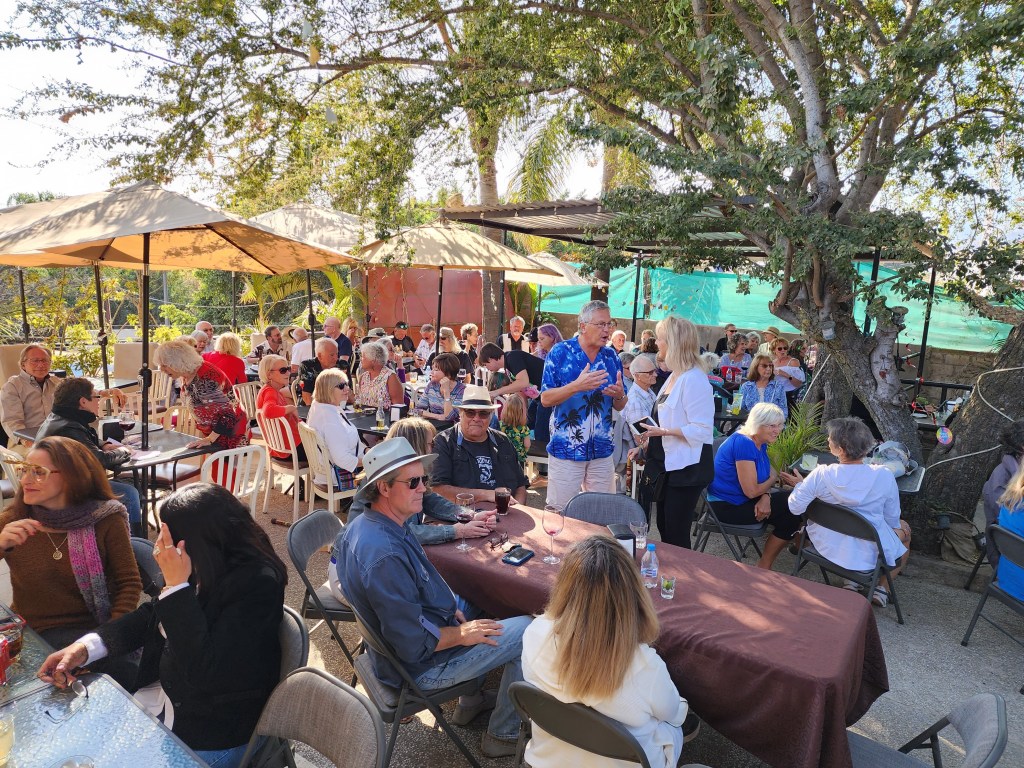
Yesterday we went to a musical event at a local hang out called El Bar Co. They had a rooftop band called The Romeos and it was packed. Here included are a few snaps from the event.

Having Fun at El Bar Co
Crowd Control
The Romeos
San Antonio Rose
Making New Friends
What’ll you have?

Buddha Deep in his Thoughts
A cutie, a real Mexican Beauty
A happy camper
Every picture tells a story. Should I ask her to join me in a hot tub or should I ask her out to dinner?

Buddha and I go back many years and I love him like a brother. But you know how I feel about my brother. And it’s because of this guy that I started coming down here in the first place.

Buddha brings a little chaos with him everywhere he goes. Like the other night. We went to a dive bar called El Chameleon. On the way there he was on a video call with a friend from Louisville and showing her the way. He was walking 20 paces ahead of me. I asked him where this place was and he said he knew how to find it. Is it past Colon, I asked. I don’t know, he answered. So he took a left on some street and we walked two blocks to a dead end. Oh! This is a dead end he says. Well, why did you turn down this street, I asked. Because I don’t know what I’m doing, he said. Then he took off again retracing his steps and gabbing to the woman in louisville the whole time while I am trailing along behind him and wondering why.

Finally we get to El Chameleon and I call him out on the video call and he tells the lady, I got to go. So we go in and have a couple of drinks and he settles down a bit and we have a nice conversation. Turns out he was in there the previous night with another friend of ours and he meets this beautiful Mexican Chick who tells him to ditch the blonde. That’s why I wanted to come back here tonight to see if she shows up again. The truth comes out.

The next day He tells me he has slowed down a lot and is not so much always in a hurry. Yes you are! I say, and I remind him of the events of the previous evening. He says, and I quote, “Fuck you! And for now on, The first thing I’m going to say to you when I see you is fuck you, just to save time.” Maureen is falling out her chair laughing. With that, Buddha gets up and walks over to a beautiful Mexican woman sitting at another table and whispers in her ear. She turns her head to look at him and smiles. Then Buddha exits the restaurant.

All par for the course way down in Mexico.

Blood and Sand

Streets of Pamplona Before the Run

I went to Pamplona to run with the bulls and catch a couple of bullfights. I had never been to a bullfight before and didn’t know what to expect. I had rather a detached and academic approach towards the whole affair but I must admit I was fascinated by what I saw and emotionally moved.

To prepare for my journey I brought with me to read, Death in the Afternoon by Ernest Hemingway. I have prepared some quotes from the book to accompany the pictures I took. No on can quite explain the experience of bullfighting like Ernest Hemingway. He is the master.

Here I am getting ready to run
Here come the bulls!
Here I am after the Run celebrating with a Hot Milk and Brandy

There are three acts to every bullfight. They are always the same. The first act is where the bull charges the picadors and the matador distracts the bull with his cape. The picador drives the steel of the pic into the neck muscles of the bull to weaken it.

Act two is the banderillas. They are a pair of sticks about three feet long tipped with a harpoon-like shaped steel point at on the end four centimeters long. They are placed two at a time in the humped muscles at the top of the bulls neck as the bull is charging the matador. They are designed to complete the work of slowing the bull down. Four pair are usually put in.

The Bull charges the horse and Picador
The Picador weakens the bull by stabbing it in the neck muscles.
The matador protects the picador by distracting the bull with his cape

“So, I went to Spain to see bullfights and to try to write about them for myself. I thought they would be simple and barbarous and cruel and that I would not like them, but that I would see certain and definite action which would give me the feeling of life and death that I was working for. I found the definite action, but the bullfight was far from simple and I liked it so much that it was too complicated for my then equipment for writing to deal with, and aside from four very small sketches, I was not able to write anything about it for five years and I wish I would have waited ten.”

-Ernest Hemingway, Death in the Afternoon

The moment of truth

The last act is the sword and the muleta. The muleta is a red cloth folded over a stick. With the muleta the matador masters the bull before going in for the kill. Finally the matador kills the bull by thrusting the sword high between the shoulder blades of the bull.

The coup de grace

“The bullfight is not a sport, that is it is not an equal contest or an attempt at an equal contest between a man and a bull. Rather it is a tragedy, the death of the bull, which is played more or less well by the bull and the man involved, and in which there is danger for the man, but certain death for the bull.”

-Ernest Hemingway, Death in the Afternoon

Death in the Afternoon

“So far, about morals, I only know what is moral is what makes you feel good after, and what is immoral is what you feel bad after and judged by those moral standards, which I do not defend, the bullfight is very moral to me because I feel very fine while it is going on and have a feeling of life and death and mortality and immortality, and after it is over I feel very sad but very fine.”

-Ernest Hemingway, Death in the Afternoon

Blood and Sand
The bull is dragged off by a team of horses
Hemingway’s presence was felt everywhere

All photos by the author except the photos of himself which were taken by his wife, Maureen

Dancing in the Birmingham Jail

Going to Alabama with a banjo on my knee

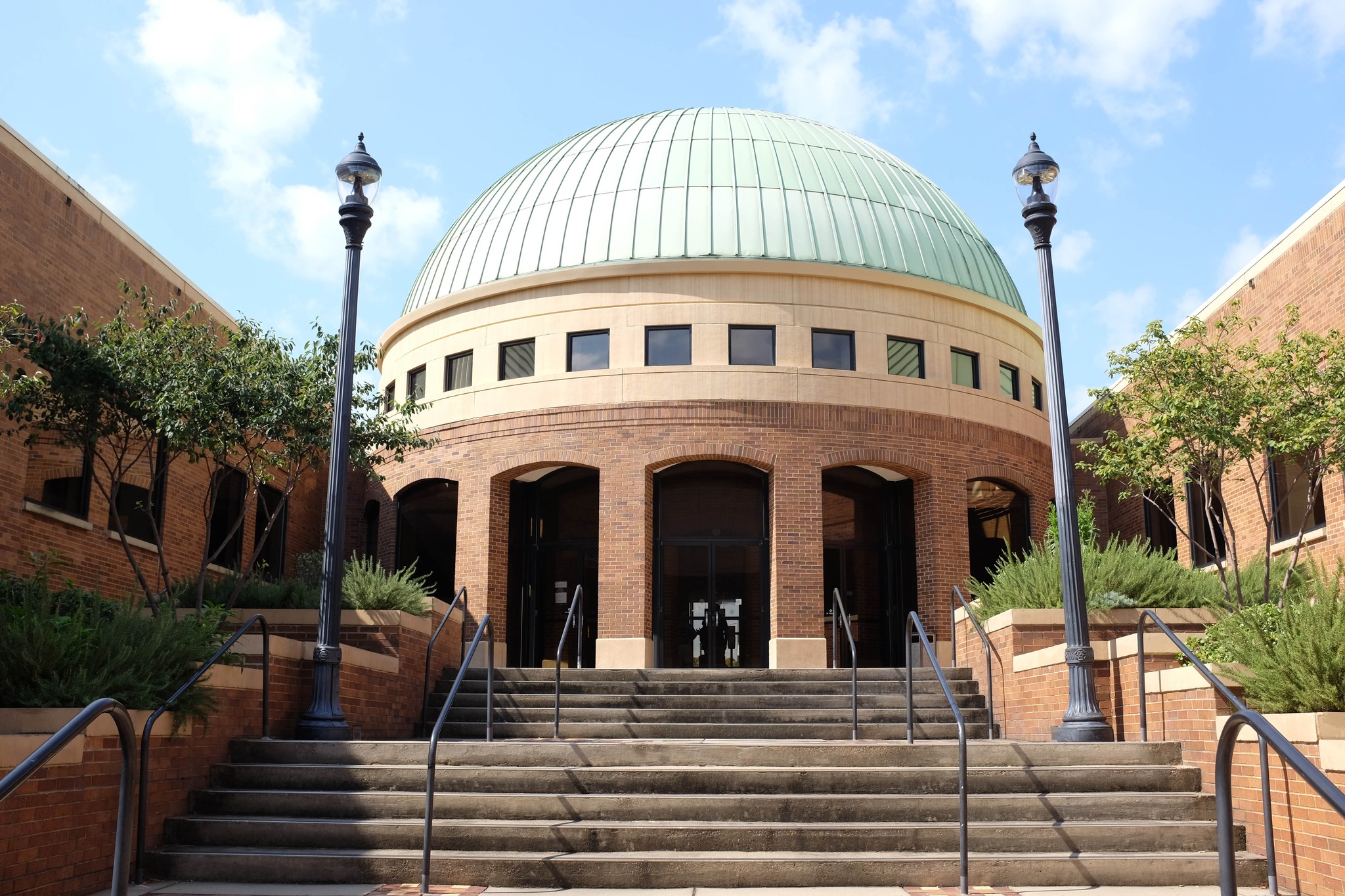
Entrance to the Birmingham Civil Rights Institute

On a recent trip to Birmingham I visited the Birmingham Civil Rights Institute. Across the street from the Institute on the side is the 16ths Street Baptist Church. Directly across the street on the front side is Kelly Ingram Park. This complex is steep in the history of Birmingham and the Civil Rights movement in this country.

16th Street Baptist Church

The 16th Street Baptist Church in Birmingham, Alabama, was bombed by white supremacist terrorists on September 15, 1963. Four members of the Ku Klux Klan planted 19 sticks of dynamite attached to a timing device beneath the steps on the east side of the church.

There were four girls were killed in the attack: Addie Mae Collins, Cynthia Wesley, Carole Robertson, and Carol Denise McNair, and between 14 and 22 other people were injured.

Martin Luther King Jr. described the bombing as “one of the most vicious and tragic crimes perpetrated against humanity.”

The 16th Street Baptist Church bombing marked a turning point in the United States during the civil rights movement and contributed to support for the passage of the Civil Rights Act of 1964 by Congress.

In the years leading up to the 16th Street Baptist Church bombing, Birmingham had earned a national reputation as a tense, violent, and racially segregated city, in which racial integration was met with violent resistance. Martin Luther King Jr. described Birmingham as “probably the most thoroughly segregated city in the United States.”

Four Spirits

The Four Spirits sculpture was unveiled at Kelly Ingram Park on September 2013 to commemorate the 50th anniversary of the 16th Street Church bombing. The sculpture was crafted by Birmingham-born sculptor Elizabeth MacQueen and designed as a memorial to the four girls killed in the bombing. It depicts the four girls in preparation for the church sermon at the 16th Street Baptist Church in the moments immediately before the explosion. The youngest girl killed in the explosion (Carol Denise McNair) is depicted releasing six doves into the air as she stands tiptoed and barefooted upon a bench another barefooted girl (Addie Mae Collins) is depicted kneeling upon the bench, affixing a dress sash to McNair; a third girl (Cynthia Wesley) is depicted sitting upon the bench alongside McNair and Collins with a book in her lap. The book depicts a refrain from William Butler Yeats’ poem, The Stolen Child. The fourth girl (Carole Robertson) is depicted standing and smiling as she motions the other three girls to attend their church sermon. At the base of the sculpture is an inscription of the name of the sermon the four girls were to attend prior to the bombing—”A Love that Forgives.”

Birmingham, the world is watching
Klan Robe
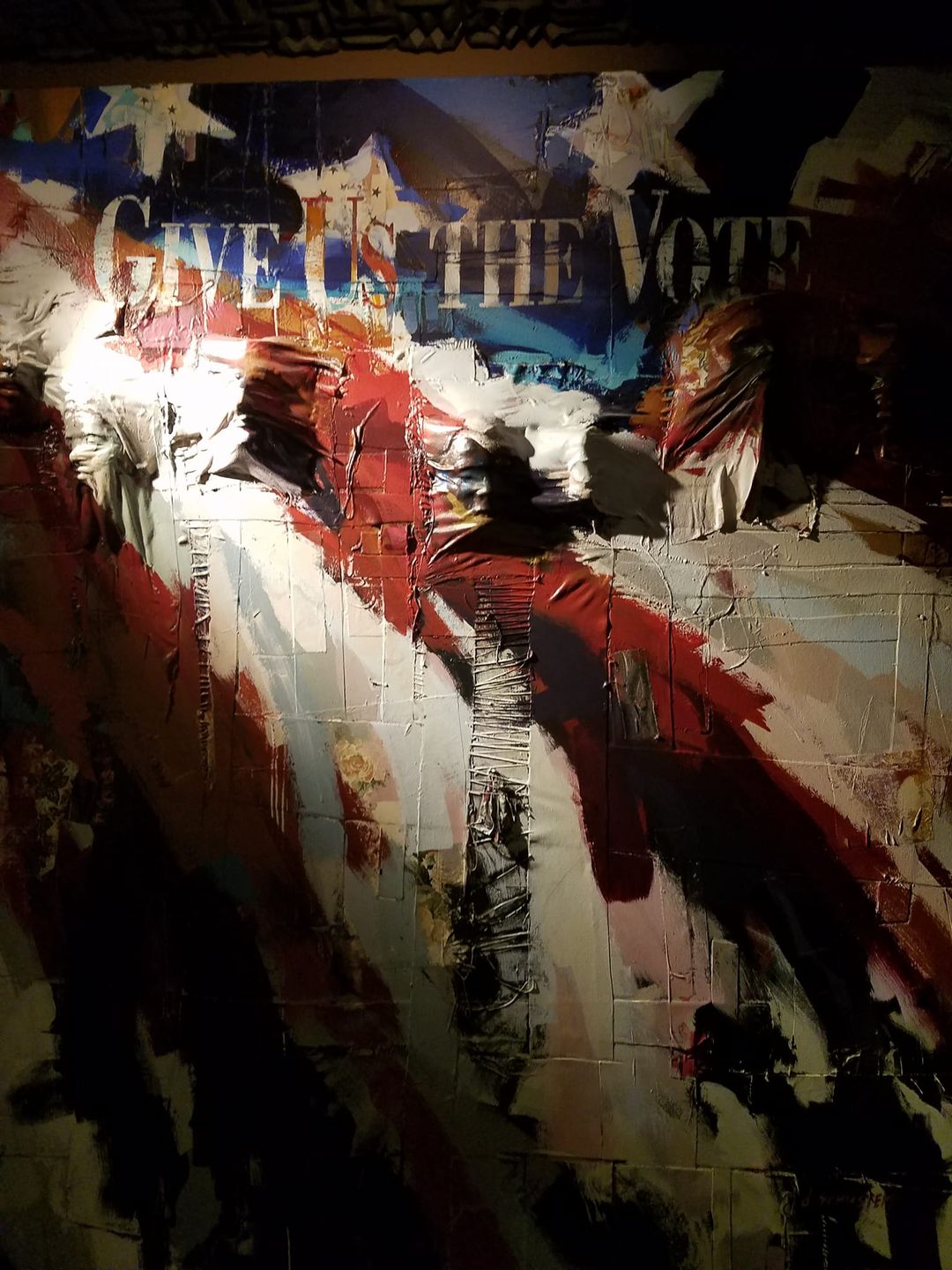
Give us the Vote!
White People Only – Rosa Parks
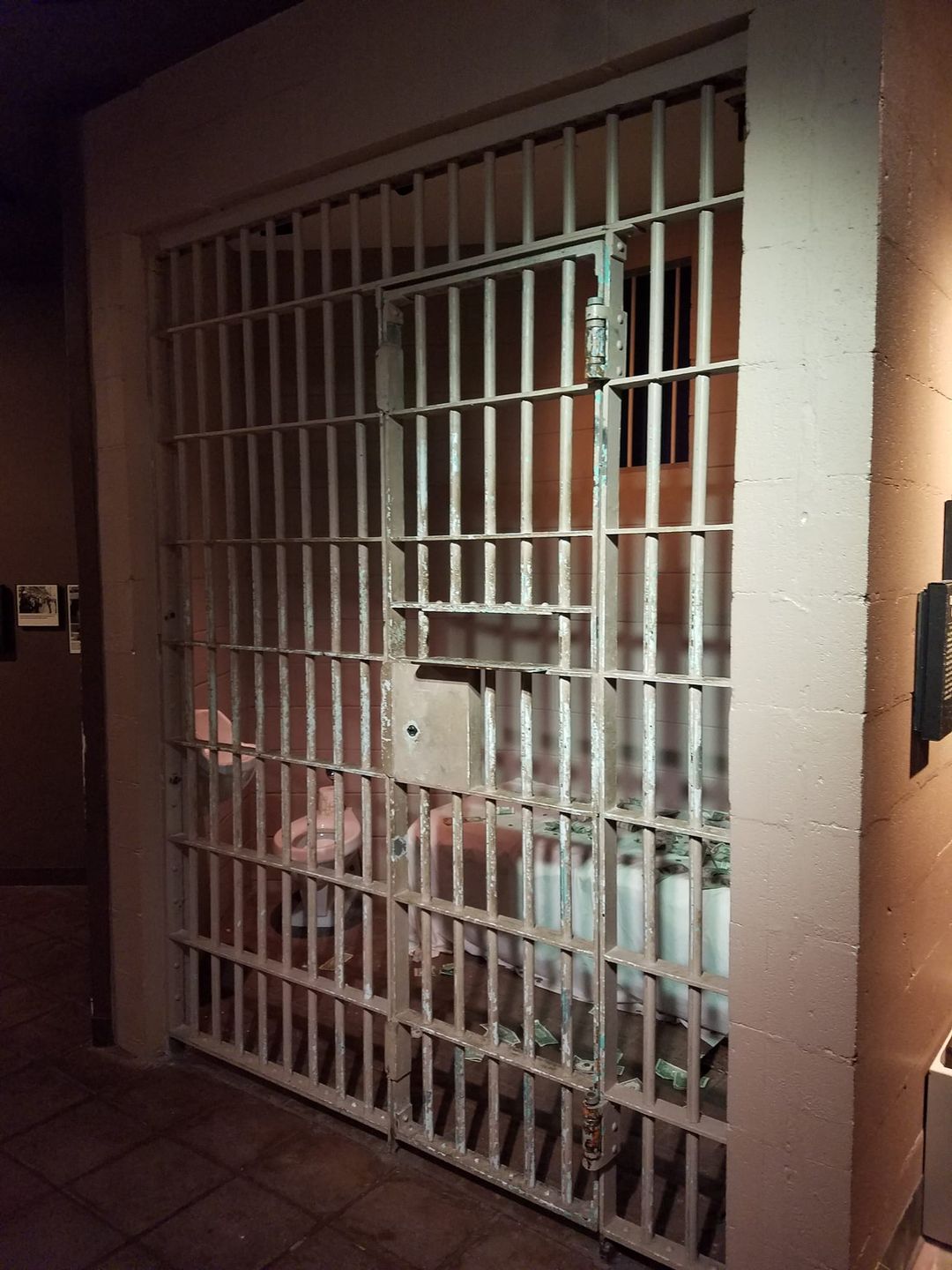
Birmingham Jail
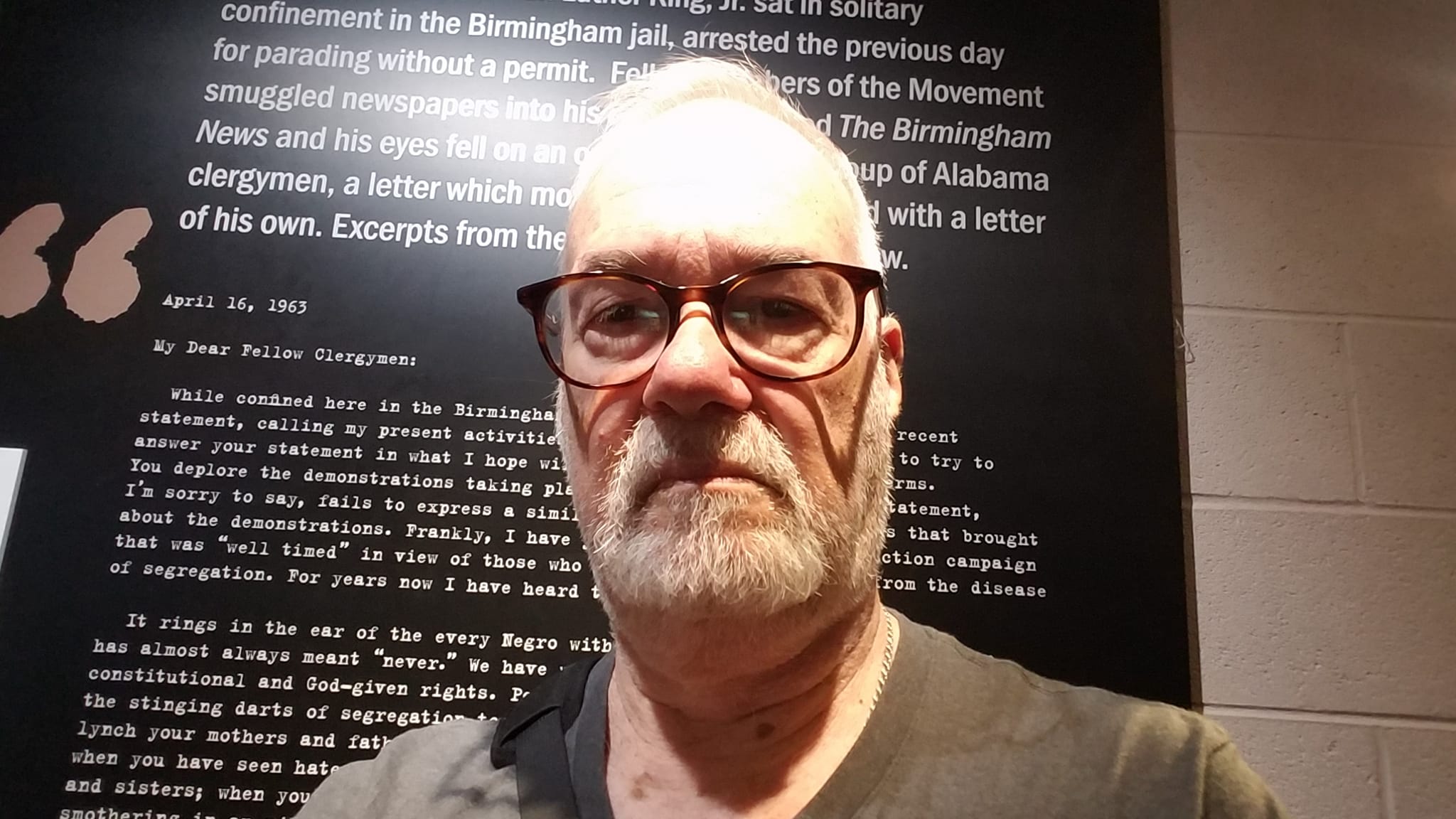
Letter from the Birmingham Jail written by Martin Luther King Jr.
Telling the Tale
Joy to the World

My visit was quite a history lesson. It is one I believe everyone should be aware of and, in my opinion should be taught in schools all across America and not covered up. Those who do not learn history are doomed to repeat it.

References: Wikipedia

All photographs by the author

Lake Chapala Society

Lady Gaga Show

Entrance to the Lake Chapala Society Compound
The Lake Chapala Society, Ajijic, Mexico

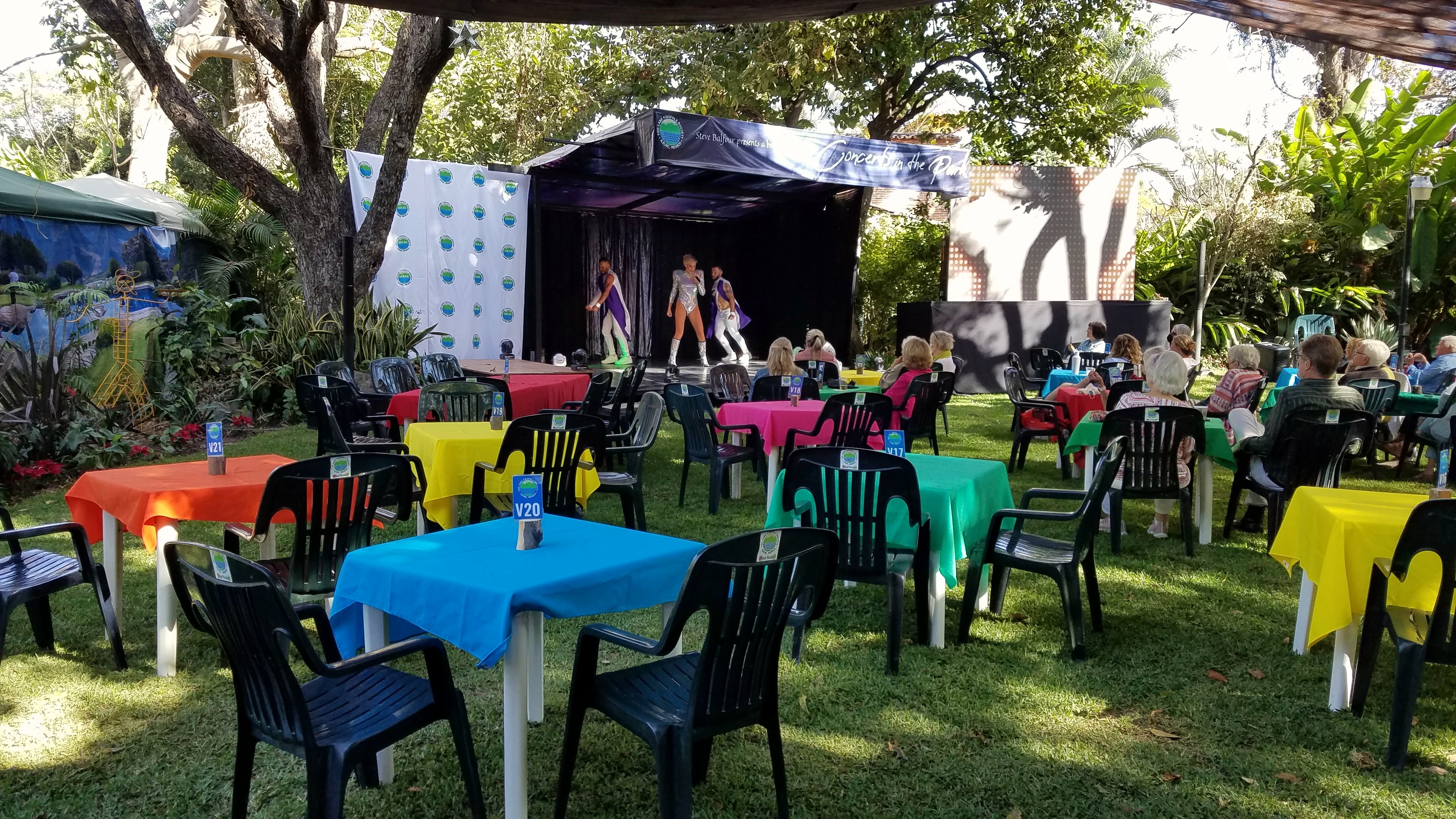
On the 16th we went to the Lady Gaga Show sponsored by the Lake Chapala Society. This is a club for ex-pats. They put on shows and have a beautiful compound with many attractions for members and guests. The show was quite entertaining and the performers were excellent.

The Lady Gaga Show
The Lady Gaga Revue
As Freddie Mercury and Lady Gaga
As Freddie Mercury
Maureen and Al

A conversation with Al Mitchell. While waiting for the Show to start Al and Maureen were conversing. I was just half-listening and sipping my red wine and enjoying the beautiful day.

Maureen: When I broke my foot, I had to wear the black boot of death.

Al: I know people who when they had to wear a boot on one foot would wear one on the other foot just to keep their balance.

Me: Whoa! Wait a minute there, Al! Who do you know that wore two boots?

Al (laughing): Well, I can’t remember their names.

Maureen: It sounds feasible.

Me: Give me a name. Name me one person who wore two boots.

Al (laughing): Well, I might have made that up.

Me: You damned right you did! That is preposterous! Your whole story is preposterous!  Caught you, didn’t I?

Me and Al both laughing. We “clink” out plastic cups of wine together and let it drop. So it goes.

On the grounds

Frida Kahlo’s image was everywhere
Dinner at the Peacock Garden Restaurant

Later that evening had dinner at the Peacock Garden Restaurant. Al Mitchel, Maureen, and a few others who were at the Lady Gag Show. Later Cindy Joined us.

What I like about Ajijic is the number of fine restaurants it has to offer and the chance to socialize with friends and meet new people.

All photographs by the author.

To be continued…

Another Day in Paradise

Day 2 in Ajijic, Mexico

Ajijic is a great place to wander around to get to know the area and its inhabitants. It is a charming little village of about 11,000 people. Many expats live there and others from around the globe travel to Ajijic frequently. We had friends that were there so we were able to socialize with them while on our visit.

Below is a working farm just around the corner from where we were staying at La Casa Campbell. We walked by it everyday.

The other pictures depict some of the streets near where we were staying . We were walking distance of Lake Chapala so we usually walked there everyday.

Working Farm
Revolution Road
Grocery Store at the corner of Revolution and Zapata
Corona
Revolution Road
Calles Cardenas
Calle Cardenas
In the Dog House

On the Malecon
Al Mitchell, one of our friends from Kentucky who was already in Ajijic when we got there. Al is one happy guy!

Lake Chapala

All photos by the author

← Back

Thank you for your response. ✨

On the Road to Ajijic

Casa Campbell

Lake Chapala

Earlier this year, my partner Maureen and I made another pilgrimage to the land down under (the border) to visit the charming village of Ajijic, Mexico. This was my second visit and her first. In order to get to Ajijic one flies into Guadalajara then taxis the rest of the way from there to Ajijic. It’s 54 kilometers and the trip takes about an hour costing 500 pesos with tip.

Waiting for us at our destination was the owner of the Airbn we were staying at, Lupita Campbell. We were very happy with the accommodations which, to say the least, exceeded our expectations. We had an entire guest house, La Casita, at our disposal which was beautifully furnished and full of art. We also had a fenced in yard with a fountain and a cabaña in the back. From the roof we had a magnificent view of lake Chapala.

Back porch at La Casa Campbell

Ajijic is wedged between the mountains on one side and the lake on the other. Lake Chapala is the biggest lake in Mexico and is quite beautiful to look at and to visit. It has a wonderful malecon where you can take an evening stroll and watch the sun go down.

The weather is perfect. We were there in January and it was a little cool in the morning but by noon it was quite warm. No need for heat or central air. The hot water heater was warmed by solar power so we had to wait a bit to get a hot shower.

There is a large expat community living in Ajijic supported by the Lake Chapala Society. They are mainly American and Canadians. The locals sometime refer to Ajijic as “Gringo Land.” We have friends who live there and some who travel there quite frequently and we were planning on catching up with them on this visit.

There are many fine restaurants and shops in the village and is a fun place to visit and socialize.

Dan “Buddha” Hildebrandt, Al Mitchell, and Maureen Bacon at Scallion’s Restaurant.

All photographs by the author.

More to come….