Louisville, Kentucky
The NO KINGS rally of October 18, 2025, was the largest single protest in American history. What did we demand? Freedom and Liberty.
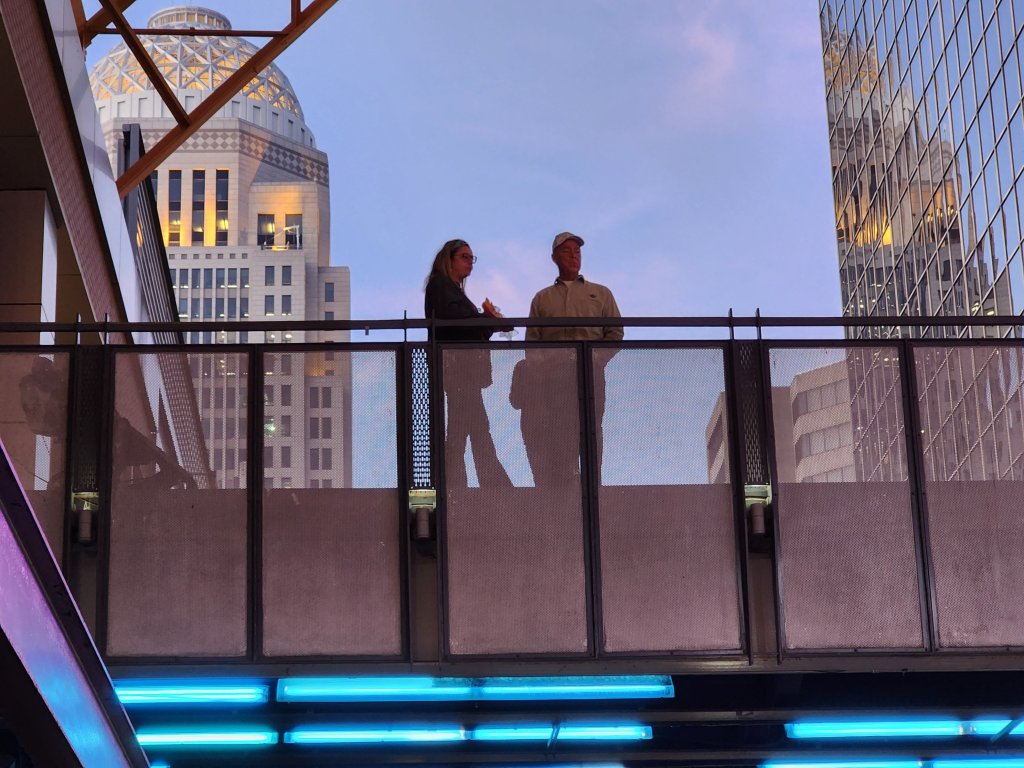
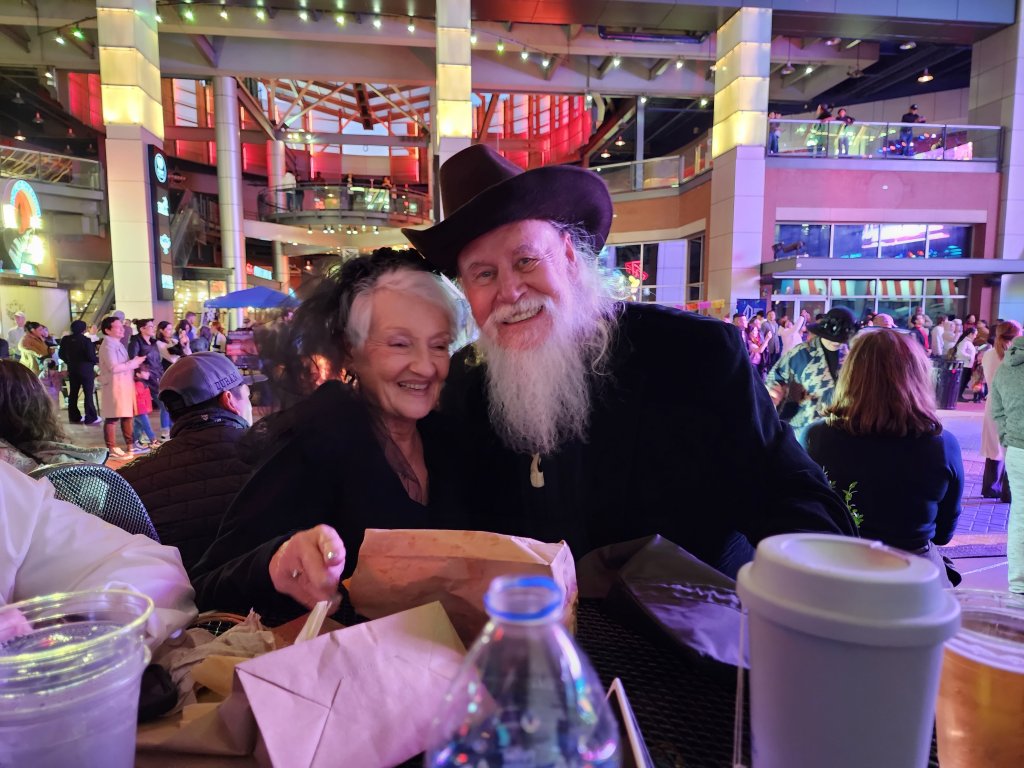
Here are my pictures from that day in Louisville, Kentucky.





The NO KINGS rally of October 18, 2025, was the largest single protest in American history. What did we demand? Freedom and Liberty.
Here are my pictures from that day in Louisville, Kentucky.














The Red Room, A satirical novel written by Strindberg in 1879. It is not a far cry to go from Red Room to Redrum to Murder. Just saying.
“Strindberg’s naturalism is not a slice of life, but rather the intense, immediate drama associated with what he called, ‘the battle of the brains.’ This is fought, not with theatrical swords or daggers, but with the equally lethal mental cut and thrust of two implacably hostile minds, bound to each other by desire and hatred. It is a battle in which one of them ultimately destroys the other’s will and commits ‘soul murder.’” One is immediately put in mind of Edward Albee’s, Who’s Afraid of Virginia Woolf?
Indeed, Translator Michael Robinson makes the very same observation writing about, The Dance of Death, a play written by August Strindberg in 1900, as a depiction of a marital inferno. He cites the numerous critics who regard it as the forerunner to Eugene O’Neill’s, Long Day’s Journe into Night and Edward Albee’s, Who’s Afraid of Virginia Wolf?
Why read Strindberg today? Because he is as relevant today as he was in 1887.
Strindberg was one of the most extreme theatrical innovators of the late 19th century and ultimately the most influential. The five plays presented here mark his transition from naturalism to modernism.
In The Father, Strindberg shifts away from social and political questions towards more psychological writing. Strindberg was more concerned with the discussion going on in Scandinavia at the time about the “woman question,” sexual morality, marriage, and the shifting psychological states of his characters (Robinson).
The Father is a three-act play with eight characters. The two principal characters are the Captain and his wife, Laura. It is a naturalistic tragedy about the struggle between parents over the future of their child.
The Captain is a scientist and freethinker whose marriage has gone south. He is engaged in a power struggle with his wife, Laura, over their daughter who wants to keep the girl home under her own influence whereas he wants to send the girl away to school. In an attempt to dominate her husband and get her way, Laura decides to drive her husband insane by first insinuating that he is not the girl’s father. The mother (Laura), uses her cunning to subdue and finally destroy the father (The Captain).
Strindberg is a great purveyor of naturalism, but in The Father, he is reaching for “greater naturalism” which is intense, immediate, and associated with a battle of the brains. (Battle of the sexes, battle of wills). The two main characters can be seen as representing the male and female principles.
Strindberg believed that life is a series of struggles between weaker and stronger wills.
What initially brought me to revisit Strindberg were the films of Ingmar Bergman. Always a big fan of Bergman I began to realize what an influence Strindberg had on the filmmaker. I began to do a little research and it turns out in his lifetime Bergman directed eleven Strindberg plays for the stage, eight for radio and two for television. He was responsible for altogether twenty-eight Strindberg productions. He often returned to the same plays, producing A Dream Play and The Ghost Sonata four times, The Pelican three times and Miss Julie, Playing with Fire and Stormy Weather twice.
My favorite Bergman movie is The Seventh Seal. It has many similarities to the play, The Saga of the Folkungs. They are both set in the 14th century, the plague is present and religion is a major component.
Sources:
Editors note: This is a story that I have previously published which I have rewritten and revised. I hope you enjoy it.

A few months ago, I had the good fortune to move to Old Louisville. As fate would have it, I moved into an apartment building on Third Street just four houses down from a house I used to live in as a young man during the turbulent ’70s. As a matter of fact, my family actually owned that building and sold it in 1993.
Fast forward to the present.
My friend Victoria was looking for an apartment and I have long been encouraging her to look in Old Louisville. It was a very interesting place to live with a lot of old Victorian Mansions which have been subdivided into apartments. And there was Central Park nearby.
One day she was over at my place and we went out apartment hunting together. She had several picked out over on Fourth Street to look at. It was raining so we took our umbrellas.
We walked down Hill Street over to Fourth and as we were about to round the corner, I noticed a “For Rent” sign in the front yard of a house that I had long admired. I called it the House of Lions and Pineapples. It was a beautiful three-story red brick Victorian with two stone lions and pineapples sitting outside the black wrought iron gate.
I said, “Why don’t you give them a call?”
She did and we were able to see it right then. They had just put it on the market and were in the process of cleaning it and painting it when we went in. Victoria fell in love with it immediately and I did too.
After looking at a couple of other places in the area Victoria decided that the house of pineapples and lions was the one for her, so we called the owner and asked for a meeting. Sure, come on over they said. They lived on Third Street, just a few doors down from where I am living now. They gave us their address and we headed over there.
“Hey! Wait a minute! What’s that address again,” I asked Victoria. “1461? Why I used to live in that house back in the ’70s. As a matter of fact, my family owned that very building back then!”
When we got there and knocked on the door, a little old lady, round and short, answered the door. She was all smiles. I introduced myself and told her I used to live in this building back in the ’70s and wasn’t it ironic that we were here?
“Oh, did you know Dr. Bell?”
“Why yes! I am his son!”
We sat down and had a nice talk. Joe and his wife Arden bought the house in 1993 from my parents. At that time, I was part-owner of the house myself and received some of the proceeds from the sale. Arden gave us a tour of the house.
“I bet it looks a lot different now than it did then,” she said.
Yep, it sure did!
So, there we were. My friend Victoria was about to rent an apartment from a couple who owned the house I used to live in when I was a kid but was sold to them in 1993, the same year she was born. What kind of alignment of the planets was necessary to bring us to this point? By what chance occurrences was Victoria destined to cross my path and rent this apartment in the building of the lions and pineapples?
It put me in mind of a story I once heard when I was living in Philadelphia.
It seems there was this college professor living in my building, The Marine Club Apartments, who sent his servant to the Italian Market for supplies. In a very little while, the servant came back, shaking and trembling. It was clear he had been greatly disturbed by something that had happened at the market.
He said, “Mister Coffer, sir, just now when I was in the marketplace I was jostled by a woman in the crowd. I turned to look to see who it was and I saw it was Death staring me in the face. She looked at me and made a threatening gesture. I ran from the market and came back here. Mister Coffer, will you please lend me your car so that I can ride away from this city and avoid my fate? I will go across the river to Salem and there, Death will not find me.”
The college professor gave him the keys to his Mustang, and the servant rode away as fast as the car could drive, not without leaving a stretch of burning black rubber behind him as he peeled out of the parking garage. Later that day the professor went down to the Italian Market and he saw Death standing in the crowd and he went over and asked her, “Why did you make a threatening gesture to my servant this morning when you saw him?”
“That was not a threatening gesture,” she said, “I was just surprised to see him in here in Philly, as I had an appointment with him tonight in Salem.”
Thomas Wolfe wrote in his book, Look Homeward Angel, “Through chance, we are each a ghost to all the others, and our only reality; through chance, the huge hinge of the world, and a grain of dust; the stone that starts an avalanche, the pebble whose concentric circle widen across the seas.”
Although chance may have something to do with our lives and though we might make a move this way or that we are still bound like an ant on a leaf rushing down a river to the sea. And there is precious little we can do about it but enjoy the ride.
Victoria rented the apartment and she is living there now one block away in the building of the lions and pineapples. And if you squint your eyes and hold your mouth in a certain way you can almost see the flapping wings of the butterfly in the rainforest that made it all possible.

The air was soft, the stars so fine, the promise of every cobbled alley so great, that I thought I was in a dream.
-Jack Kerouac
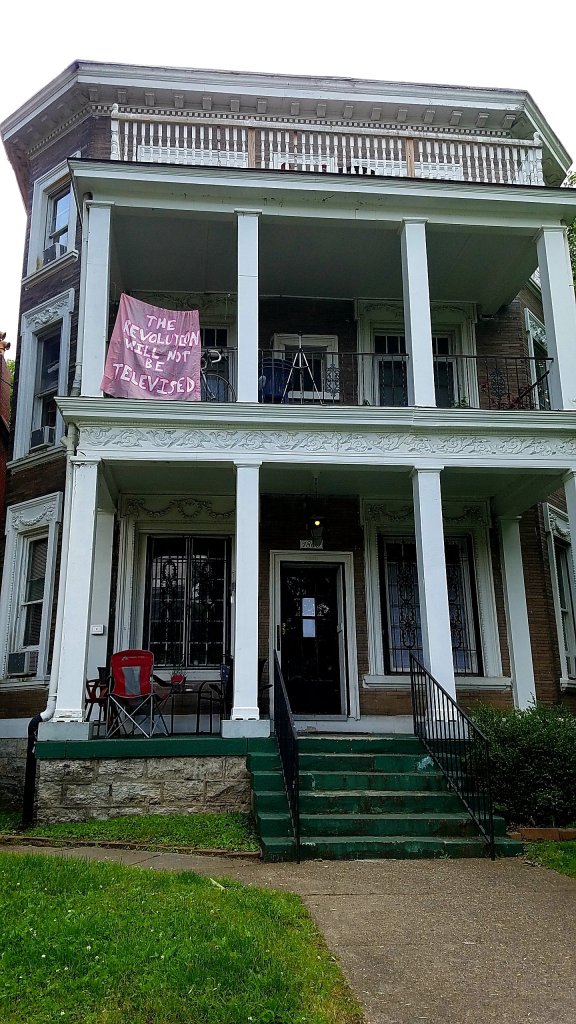
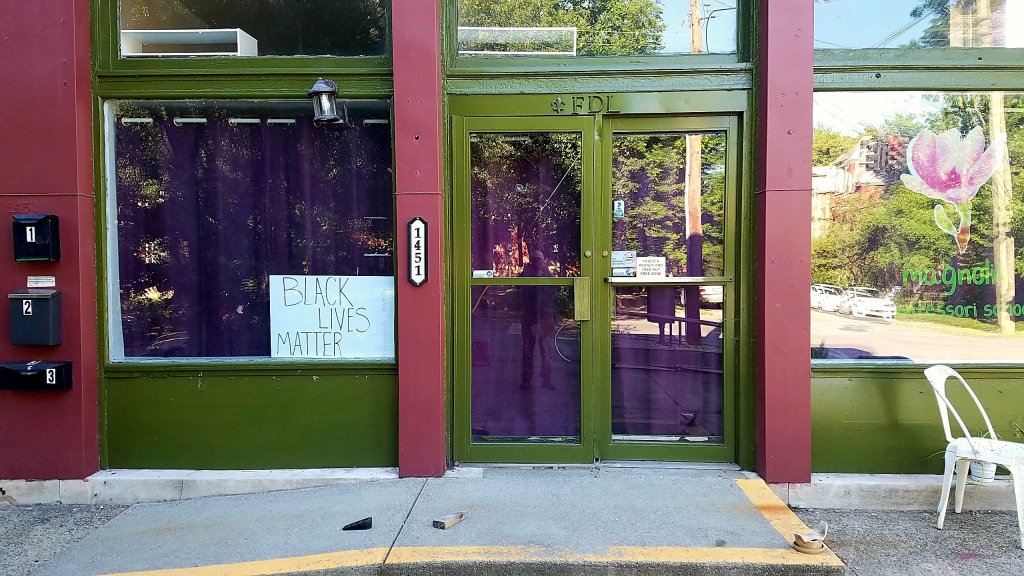
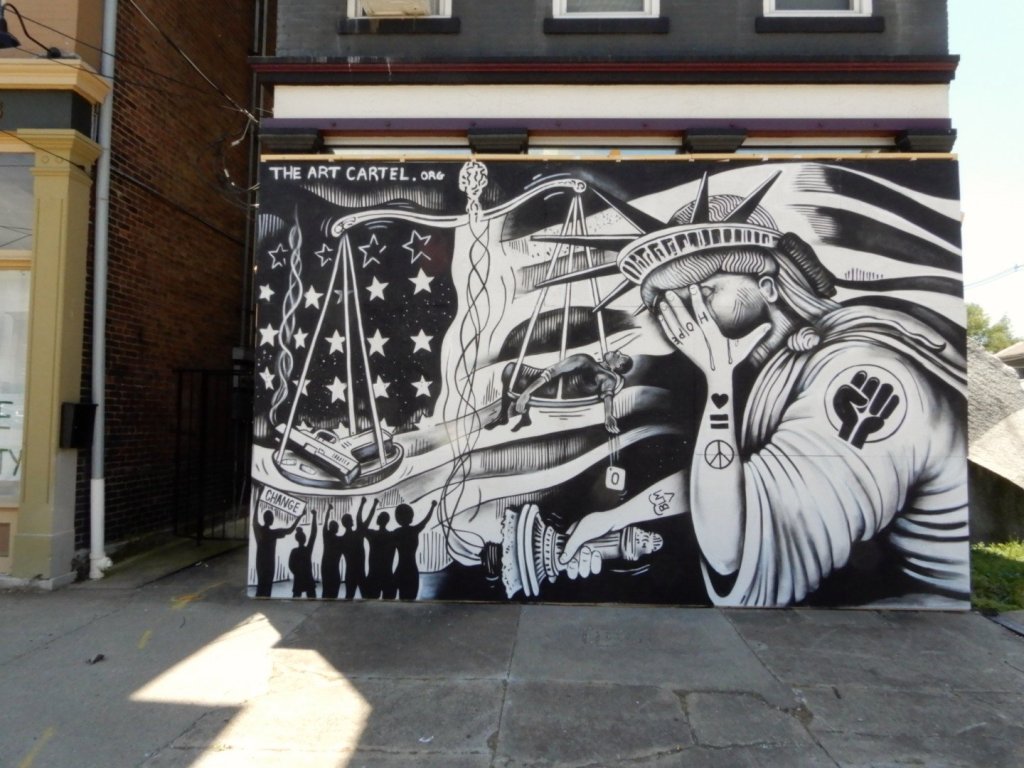
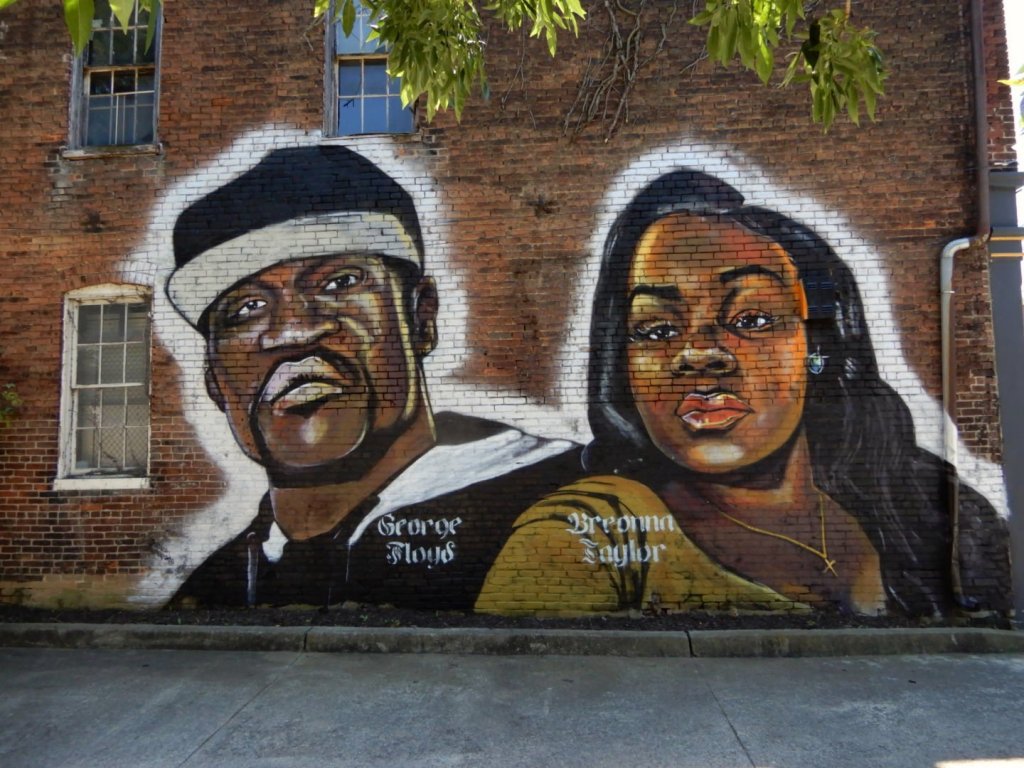
Black Lives Matter. All lives matter is frequently clapped back. All lives most certainly do matter. Emphatically, unquestionably, indubitably. But right now, we are focused on the Black Lives lost and the injustice that has been visited upon the black community for 400 years. We are focused on the lives lost by George Floyd, Breonna Taylor, Rayshard Brooks, Ahmaud Arberry, and many more. There have been protests in the street for weeks across the nation against police brutality and the extrajudicious killings of black folk and white folk alike. Here, in a photo essay are some of the expressions of the protests and the outrage. All pictures were taken by me in Louisville, Kentucky where Breonna Taylor was gunned down in her own apartment by police who executed a “no knock warrant.” One of the officers who participated in the raid has been fired. No one has been charged. There still is no justice for Breonna.






Johnny Applegate grew up in the sleepy little river town of Louisville, Kentucky, the gateway to the south. Louisville is primarily known for Churchill Downs and Bourbon, but it had its fair share of pretty girls too.
When he was eighteen-year-old, Johnny bought his first car. He ventured downtown to a dealership by the name of Broadway Motors. His salesman was a guy name of Grundy Hayes. Grundy was a flashy dresser. He wore a green sharkskin suit and sported brown pork pie straw. He always wore a wide smile to greet the customers that lit up his face.
The car Johnny picked out was a 1959 two tone Chevy Bel Air, white over green. It had a manual transmission with a three-speed shift lever on the column. The car had huge tail fins that flattened over like the fin of a great white whale. Johnny paid $800 dollars cash for the car. He had been saving up the money for months. Grundy was only too happy to accommodate and they struck a deal and Johnny drove the car home that day.
Now the car was fine, the only thing it lacked was a radio. So, one day when he had saved up a little more money, Johnny went down to the local junk shop and bought a radio for the car. He had to go out on the lot and find another wrecked Chevy like his so he could harvest the radio and put it in his car. He was in luck and found the one he was looking for. It took him about an hour to uninstall the radio from the wrecked Chevy. When he got it out, he took it up to the front office and made his purchase then went home to install the radio in his own car. While he was at it, he installed two speakers in the rear of the car and surrounded the speakers with a colorful bright orange cloth. Now he was cooking!
Johnny was very happy with the car. He would wash it and polish it in his drive way every Saturday morning. On Saturday night he would pick up his girlfriend, Lynn and some of their other friends and drive out to Cox’s park down on the river. There they had a little party. It was sort of a precursor to the tailgate parties you see today.
Cox’s park was located down along the banks of the Ohio River. In the summertime the grass was of a vivid blue green color and on this particular hot summer night they could smell the fragrance of the freshly mown lawn. It delighted the senses. Johnny parked the car in the spacious parking lot under the spreading leaves a large chestnut tree. From there you could watch the river roll by and the sun go down as the day turned to twilight. Johnny popped the trunk of the car and played the radio real loud. The sound came booming from the rear mounted speakers. Johnny and his friends drank beer and danced in the parking lot. They whooped and hollered and howled at the moon while they were listening to the tunes broadcast from WAKY, a local AM radio station. Bill Bailey, who billed himself the King Kong of the Kilocycles, was the DJ. He played such tunes as Born to be Wild, Dance to the Music, and Those Were the Days. Later, after it got dark, they climbed back into the car and watched the submarine races.
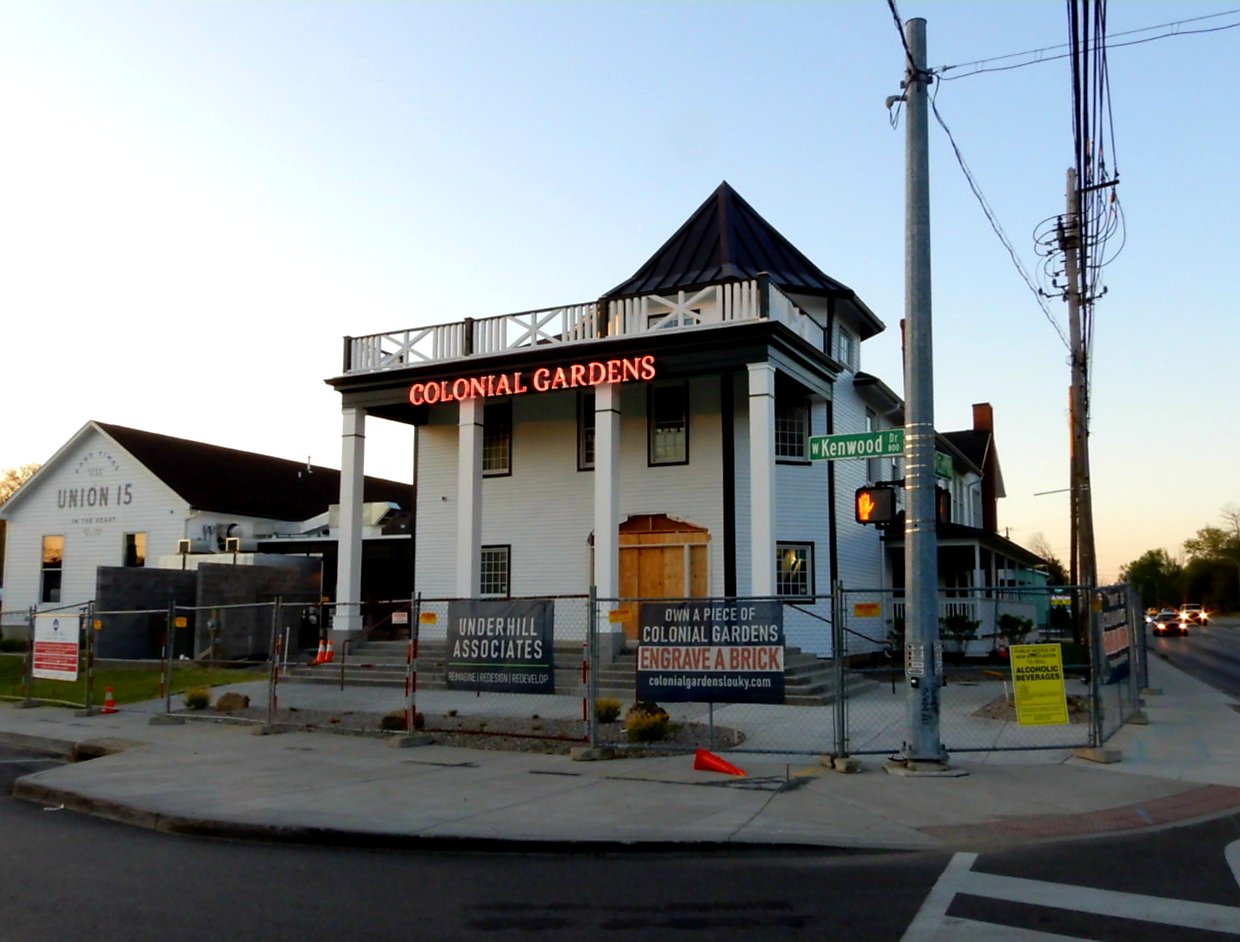
This is Colonial Gardens. I used to come her when I was a teenager to drink and listen to the music. One summer I fell in love with the the lead singer who used to sing the song, Summer Wine. Whenever I hear that song I think back to that summer…

This is Cox’s park down on the Ohio River. I used to come here as a teenager in a battered old 1959 Chevy Bel Air. I had installed a radio I got from a junk yard and put in speakers in the rear window. We would open up the trunk turn the radio on and dance to the music in the parking lot. Later we would watch the submarine races.

Ohio River from Cox’s Park
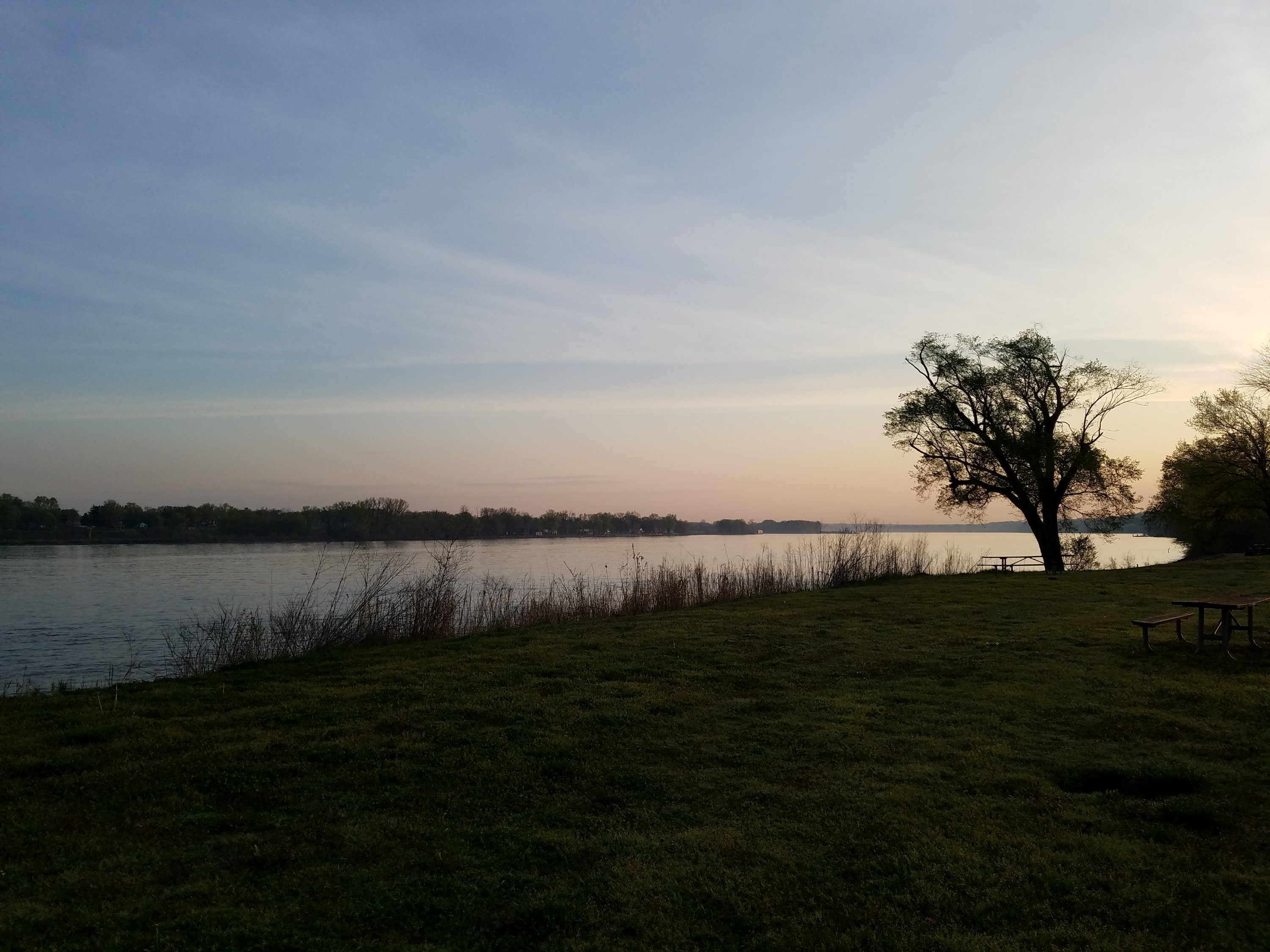
Old Man River

Keeps Rolling Along

In the Autumn of my years






 Ghost Dog