Little Sister

Top 10 Best Lines from Raymond Chandler’s Little Sister

wp-1499803664182.jpg

  1. She had a low lingering voice with sort of a moist caress in it like a damp bath towel.
  2. She looked almost as hard to get as a haircut.
  3. She smelled the way the Taj Mahal looks by moonlight.
  4. She picked a cigarette out of a box, tossed it in the air, caught it between her lips effortlessly and lit it from a match that came from nowhere.
  5. “Shut up, you slimy, blackmailing, keyhole peeper!”
  6. She put a couple of cold blue bullets into me with her eyes.
  7. She looked as if it would take a couple of weeks to get her dressed.
  8. She reached up and pulled a fingertip down the side of my cheek. It burned like a hot iron.
  9. Marlowe, a private detective. Not the brainiest guy in the world, but cheap. He started out cheap and he ended cheaper still.
  10. It could have been a beautiful friendship. Except for the ice pick, of course.

Bonus Dialogue

“Do you always wear black?”

“Yes. It is more exciting when I take my clothes off.”

“Do you have to talk like a whore?”

“You do not know very much about whores, amigo. They are always most respectable. Except of course the very cheap ones.”


The Gambler (2014)

Movie Review

Gambler 2014

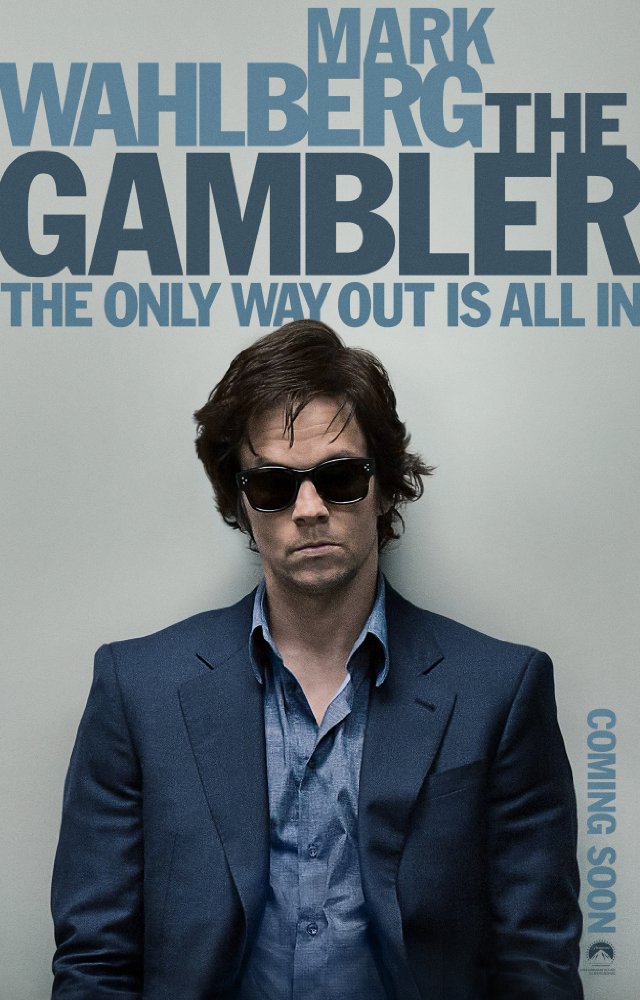
The Gambler (2014) is a remake of the classic 1974 film of the same name. That film, directed by Karel Reisz, was loosely based on Fyodor Dostoevsky’s novella, The Gambler. It is interesting how life imitates art and how art imitates life. The 1974 version was written by James Toback, who had a gambling addiction at the time, came from a wealthy family, and taught creative writing at New York City College. It was his first screenplay and he based it on his own true life experiences with more than just a nod to Dostoevsky.   Dostoevsky was addicted to gambling as well and wrote the novella, based on his own experiences, in 26 days to pay off a gambling debt.

The 2014 version stars Mark Wahlberg as the college professor who teaches literature by day and gambles by night. Wahlberg gives a creditable performance as the gambling addicted professor Jim Bennett. Jim gets in trouble with not one but three different mob figures as he courts danger by getting deeper in debt with each one and staying only one step ahead of complete annihilation. At one point he is $240,000 in debt. One of these mob figures is Frank, played to near perfection by John Goodman, who takes a fatherly interest in Jim and drops philosophical axioms on him in every scene they play together. Still, you wouldn’t want to cross him or any of the others.

John Goodman as Frank

Jessica Lange plays the wealthy mother who bails him out one last time. Her performance is out sized, over the top, and a total delight to watch. We see where Jim may have gotten some of his issues. Brie Larson plays the girl. She is gorgeous to look at but doesn’t have much to do.

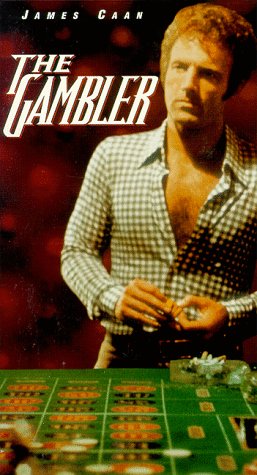
The 2014 film is directed by Rupert Wyatt who brought you Rise of the Planet of the Apes (2011).  The screenplay was written by William Monahan whose previous efforts include The Departed which was known for its crackling dialogue and starred once again, Mark Wahlberg. Not quite as successful here, but not bad. As already mentioned, this movie is a remake of the 1974 movie written by James Toback and starring James Caan.

The locations are different and the cinematic style is very different. The 2014 version takes place in the Los Angeles underworld and filmed in a very slick fashion in colors of cold dark blues and reds. The 1974 version was much grittier and took place in New York City.

Gambler 1974

It is axiomatic to say that every film made in the 1970’s is better than any film made in the decades that followed. That is certainly true in this case. In my view the 1974 version was much better. James Caan sizzled as the main character, Axel, who strutted around with his shirt half unbuttoned and his hairy chest exposed as cocky as a bantam rooster, or more to the point like an actual erect cock throbbing with energy and enthusiasm. He exudes sexuality and cockiness. Lauren Hutton plays the girl and Paul Sorvino plays the mob guy, Hips.

Axel is into self-destruction and self-loathing.

“What do all gamblers have in common?”

“They’re in it to lose.”

I liked the ending in the 1974 version better as well. In the 2014 version, after Jim just barley pulls out a win at the last minute and squares all deals and saves his ass, he is seen running to meet up with Amy. This is a hopeful ending that, let’s face it, doesn’t make much sense. It is more of a Hollywood ending one might say. In the 1974 version, after Axel pulls off a last minute win and saves himself from certain disaster, we see him heading down into a dangerous section of New York.

“Don’t go down there Axel,” Hips warns, “they’re cannibals down there (which I guess is code for black people). They will eat you alive!”

Axel, following what must be a death wish, goes into a black whorehouse and picks up a girl and takes her to her room. He is followed by her pimp. Axel then tries to rip her off by not paying her. The whore screams for her pimp who crashes into the room brandishing a knife. A fight ensues and it looks like Axel is winning. He knocks the knife out of the pimp’s hand, the black whore picks up the knife and slashes Alex across the cheek with it. Alex flees the room clutching a rag to his bleeding face.

As he is leaving the flop house he catches a look at himself in a mirror and sees the bloody slash on his face that will no doubt be like a Heidelberg scar that he will carry around with him like a red badge of courage for the rest of his life. Roll credits.

In the novella, at the  end, the protagonist, Alexey, is down and out having lost most of his money on roulette. He meets an old friend who gives him news of his love interest, Polina. This gives Alexey hope as he learns from his friend that Polina is in Switzerland and that she does love him after all. But alas, it is a false hope because in the final analysis, Alexey is still a gambler at heart and cannot escape his fate.


is

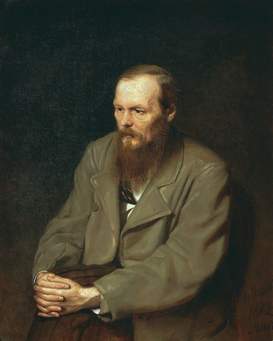
Fyodor Dostoevsky

What all three characters have in common is a gambling addiction. In a letter to a friend Dostoevsky says the thing about his gambler, “… is that all his vitality, his strength, his impetus, his courage, have gone into roulette.” Gambling is not just an addiction, but an overwhelming compulsion that seizes its victims by the mind, body and spirit.

This magnificent obsession is on  fine display in both movies and the novella. For my money the 1974 version of the Gambler is the best. Do I get any bets?


The Poetry of William Butler Yeats (1865-1939)

A Critical Review

wp-1492866262901.jpg

William Butler Yeats is widely considered to be one of the greatest poets of the 20th century. He was the winner of the Nobel Prize for Literature 1923. He had the gift for enchanting the ear. His themes were: Life and Death, Love and Hate, man’s condition, and the meaning and patterns of history.

The poems present images and magical incantations that resonate deeply with the reader apart from their literal meaning.  Hear the music…visualize the pictures they project. Yeats considered himself to be one of the last Romantic poets. The element of song is always present in his works. Everywhere the theme of music and singing recurs constantly.

He believed that certain patterns or cycles of civilization existed throughout history, the most important being what he called gyres, interpenetrating cones representing mixtures of opposites of both a personal and historical nature portrayed as rotating gyres forever whirling into one another’s centers, merging, and then separating. Yeats used the term “gyre” in his most famous poem, “The Second Coming.”

“Turning and turning in the widening gyre

The falcon cannot hear the falconer”

He contended that gyres were initiated by the divine impregnation of a mortal woman, first, the rape of Leda by Zeus, then later, the immaculate conception of Mary. Yeats found that within each 2000 year era, certain symbolic moments of balance occurred at the midpoints of the 1000 year cycle designating moments of high achievement in the culture. Yeats cited as examples the glory of Athens at 500 B.C., Byzantium at 500 A.D., and the Italian Renaissance at 1500  A.D.

Certain patterns of history recur that are entirely indifferent to human suffering. History, like art, teaches us that only through identification with the impersonal can we transcend human suffering and limitations. A symbol of this transcendence for Yeats was the Byzantine Civilization. Byzantium became for Yeats the purest embodiment of the union and subsequent transfiguration through art of the fleshly condition and the ideal of holiness. (Byzantium is the name given to both the state and the culture of the Eastern Roman Empire in the middle ages. Istanbul is now the name of what was formally called Constantinople, the empire’s capital city).

He was a symbolist poet, using allusive imagery and symbolic structures throughout his career. He chose words that, in addition to a particular meaning, they suggested abstract thoughts that may seem more significant and resonant. His use of symbols is usually something physical that is both itself and a suggestion of other  possibly immaterial and  timeless qualities.

Yeats employed the continental stanza and used straightforward syntax. He wrote in iambic pentameter which is a line of verse with five metrical feet, each consisting of one short (unstressed) syllable) followed by one long (stressed) syllable. For example: “Two households, both alike in dignity.” He also used what is known as the heroic couplet, which is a pair of rhyming iambic pentameters. This is a traditional form of English poetry used for epic and narrative poetry.

Yeats was 62 when he wrote, “Sailing to Byzantium.”

Sailing to Byzantium, by William Butler Yeats

I

That is no country for old men. The young

In one another’s arms, birds in the trees,

—Those dying generations—at their song,

The salmon-falls, the mackerel-crowded seas,

Fish, flesh, or fowl, commend all summer long

Whatever is begotten, born, and dies.

Caught in that sensual music all neglect

Monuments of unageing intellect.

II

An aged man is but a paltry thing,

A tattered coat upon a stick, unless

Soul clap its hands and sing, and louder sing

For every tatter in its mortal dress,

Nor is there singing school but studying

Monuments of its own magnificence;

And therefore I have sailed the seas and come

To the holy city of Byzantium.

III

O sages standing in God’s holy fire

As in the gold mosaic of a wall,

Come from the holy fire, perne in a gyre,

And be the singing-masters of my soul.

Consume my heart away; sick with desire

And fastened to a dying animal

It knows not what it is; and gather me

Into the artifice of eternity.

IV

Once out of nature I shall never take

My bodily form from any natural thing,

But such a form as Grecian goldsmiths make

Of hammered gold and gold enamelling

To keep a drowsy Emperor awake;

Or set upon a golden bough to sing

To lords and ladies of Byzantium

Of what is past, or passing, or to come.

Allusions and terminology

“Perne in a gyre”- a perne is a bobbin. A gyre is a circular motion. A perne in a gyre is your life spinning out before you.

“No Country for Old Men”, a title to a popular book by Cormac McCarthy and a popular movie by the Cohen Brothers

“The Dying Animal”, the title to a popular book by Philip Roth, and a popular movie made from the book.

“The Golden Bough” is from Roman Mythology. It was a tree branch that allowed Aenas to travel safely through the underworld guided by Sybil so that he could learn of the fate of his people. It is referenced in the epic poem he Aeneid by Virgil.

“God’s Holy Fire” is a miracle that occurs every year at the Church of the Holy Sepulchre in Jerusalem on Holy Saturday, the day preceding Easter. A blue light emanates within Jesus’ tomb which forms a column of fire from which candles are lit.

Byzantium, by William Butler Yeats

The unpurged images of day recede;

The Emperor’s drunken soldiery are abed;

Night resonance recedes, night-walkers’ song

After great cathedral gong;

A starlit or a moonlit dome disdains

All that man is,

All mere complexities,

The fury and the mire of human veins.


Before me floats an image, man or shade,

Shade more than man, more image than a shade;

or Hades’ bobbin bound in mummy-cloth

May unwind the winding path;

A mouth that has no moisture and no breath

Breathless mouths may summon;

I hail the superhuman;

I call it death-in-life and life-in-death.


Miracle, bird or golden handiwork,

More miracle than bird or handiwork,

Planted on the starlit golden bough,

Can like the cocks of Hades crow,

Or, by the moon embittered, scorn aloud

In glory of changeless metal

Common bird or petal

And all complexities of mire or blood.


At midnight on the Emperor’s pavement flit

Flames that no faggot feeds, nor steel has lit,

Nor storm disturbs, flames begotten of flame,

Where blood-begotten spirits come

And all complexities of fury leave,

Dying into a dance,

An agony of trance,

An agony of flame that cannot singe a sleeve.


Astraddle on the dolphin’s mire and blood,

Spirit after spirit! The smithies break the flood,

The golden smithies of the Emperor!

Marbles of the dancing floor

Break bitter furies of complexity,

Those images that yet

Fresh images beget,

That dolphin-torn, that gong-tormented sea.


 The Second Coming, by William Butler Yeats

Turning and turning in the widening gyre

The falcon cannot hear the falconer;

Things fall apart; the centre cannot hold;

Mere anarchy is loosed upon the world,

The blood-dimmed tide is loosed, and everywhere

The ceremony of innocence is drowned;

The best lack all conviction, while the worst

Are full of passionate intensity.


Surely some revelation is at hand;

Surely the Second Coming is at hand.

The Second Coming! Hardly are those words out

When a vast image out of Spiritus Mundi

Troubles my sight: somewhere in sands of the desert

A shape with lion body and the head of a man,

A gaze blank and pitiless as the sun,

Is moving its slow thighs, while all about it

Reel shadows of the indignant desert birds.

The darkness drops again; but now I know

That twenty centuries of stony sleep

Were vexed to nightmare by a rocking cradle,

And what rough beast, its hour come round at last,

Slouches towards Bethlehem to be born?

References

 Information for this article was gleaned from the flowing sources:

  1. William Butler Yeats, Selected Poems and Plays, Edited with and Introduction by M. L. Rosenthal
  2. The Poetry Foundation
  3. Wikipedia


Demons

Demons

Upon my life, the tracks have vanished,

We’ve lost our way, what shall we do?

It must be a demon’s leading us

This way and that around the fields.

-Alexander Pushkin

Demons, by Fyodor Dostoevsky, is 700 page pamphlet detailing the rise of the Russian proletariat and presaging the revolution of 1917. It’s about nihilism, anarchy, and atheism. It is a complicated novel detailing Russian society as it descends into chaos, anarchy, and madness. The demons referred to are actually ideas, emanating from the west, that infect the characters minds and causes them to take extreme actions such as suicide, murder and arson. The action takes place in a fictitious small town in provincial Russia but is based on a true story that Dostoevsky took from the newspapers.

Pesky Dostoevsky. Every time I say I am not going to read another 700 page book I get pulled back in! I say pamphlet because that is how it is described in the critical literature.  Only thing is, last time I checked, there are not that many 700 page pamphlets lying around. A few manifestos, no pamphlets.

I had to read 500 pages before I got to the part that inspired me to read this behemoth in the first place. The part that Camus refers to in his Myth of Sisyphus. “If there is no God life is meaningless. And without meaning, men and women will go stark, raving mad.” Camus described the novel’s importance this way: “The Possessed is one of the four or five works that I rank above all others. In more ways than one, I can say that it has enriched and shaped me.”

According to Camus all of Dostoevsky’s characters ask themselves about the meaning of life. Kirlov feels that God is necessary and that He must exist, but he knows that He cannot exist. “Why do you not realize that this is sufficient reason for killing oneself?” he asks. “If God does not exist, I am God.”

The book title was originally translated as, The Possessed. This is not the title Dostoevsky originally had in mind. The Russian title, Besy, does not refer to the possessed but rather to the possessors. Therefore the new title, Demons, refers to some of the characters in the book (from the foreword by Richard Pevar) and is more in line with Dostoevsky’s thinking.

All the characters have three names and each name has three syllables and each time a character is mentioned or introduced all three names are used except when they aren’t and then they are referred to by their nick names or their shortened names which we the reader have not been given fair warning and have absolutely no idea who the author is referring to. I had to take to underlining each character’s name each time they made an appearance and by page 500 or so I finally figured out who was who. I must say, the last 200 pages were page turners and my eyes were so glued to each page I couldn’t look away. The novel had to be good or I would not have stuck with it to the end.  I did and I am glad I did.

There is a missing chapter in the book which was censored by the Russian authorities when it was first published due to it’s salacious nature. I almost didn’t read it as it was included in the appendix and I didn’t realize how important it was. It is absolutely key to understanding the central character Stavrogin. It is called at At Tikhon’s and in it Stavrogin confesses to a horrible crime.

One of the most important takeaways from the novel for me were the revolutionary ideas of the intellectual of the revolutionary group, Shigalyev: “My conclusion stands in direct contradiction to the idea from which I started. Proceeding from unlimited freedom, I end with unlimited despotism. Ninety percent of society is to be enslaved to the remaining ten percent. Equality of the herd is to be enforced by police state tactics, state terrorism, and destruction of intellectual, artistic, and cultural life. It is estimated that about a hundred million people will be needed to be killed on the way to the goal.” This is oddly prophetic of what actually occurred in Russia under the dictatorship of Joseph Stalin.

I see strains of some of these ideas in modern day writers such as George Orwell who admonished us that if we want you want a vision of the future, imagine a boot stamping on a human face – forever. These currents have resurfaced again today in American politics and it is pretty frightening.

Like Camus, I can say that this novel has enriched and shaped me.