LABOR DAY

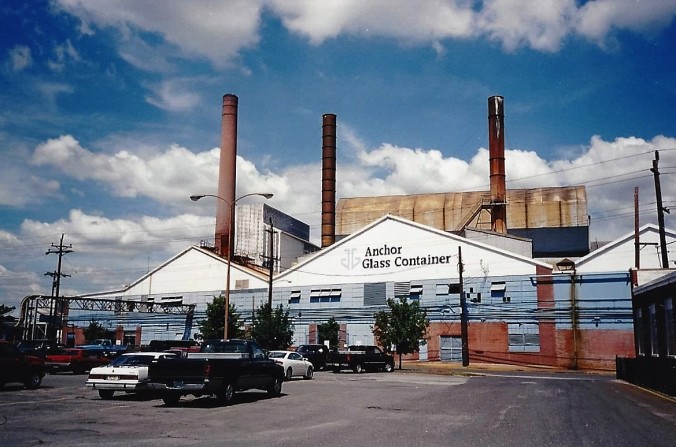
Anchor Salem (2)

I worked in the glass industry for 35 years. I was the Human Resoureces Manager for the above pictured factory in Salem, New Jersey for over 10 years. This factory is now closed. The workers have now retired or gone to other glass factories in the area or have gone on to other endeavors. When it was fully operational we had three glass melting furnaces, eight glass forming machines and employed 350 workers including 34 supervisors and managers. We operated 24 hours a day, seven days a week 360 days of the year. We made over two million bottles a day.

DSCN0544

We were a union shop with two unions and four locals. Each local had a president. I am extremely proud of the men and women who worked at Anchor Salem and I am proud of my service there.

I would like to salute them on this labor day and remember them with this essay I wrote some time back regarding work:

There is nothing more disheartening that endless futile labor or doing something you absolutely loathe or have a fundamental problem with. As you might recall, Sisyphus was condemned to an eternity of rolling a rock up a steep mountain incline only to have it roll back to the valley again once he got it to the top. On his way back down the mountain, he had to think about his existential position.

Looked at in another way, work is applied effort. It is what we put ourselves into…whatever we expend our energy on for the sake of accomplishing something. Work in this fundamental sense is not what we do for our living, but what we do with our living.

Happiness resides in activity, both physical and mental. It resides in doing things that one can take pride in doing well. Those who have missed the joy of work, of a job well done, have missed something very important.

All work can be done well or it can be done poorly. All work can be done cheerfully and with pride or grudgingly and with distaste. Whichever way we do it is really up to us. It is a matter of choice. There are no menial jobs. Only menial attitudes. In the theater we say there are no small parts, only small actors.  Our attitudes are up to us. A laborer is worthy of his hire.

As Sisyphus presses his face against the rock, each atom of the stone, each mineral flake of that night-filled mountain itself forms a world. The struggle itself towards the heights is enough to fill a man’s heart. One must imagine Sisyphus happy.

Believe me, there was no one who worked harder, or with greater joy than the employees at Anchor Glass Container, Salem, New Jersey.


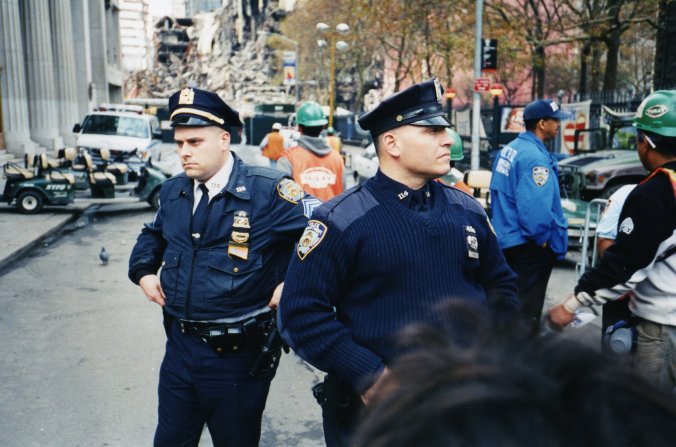
Philly PD

wp-1472672858973.jpeg

When I moved back to Kentucky a few years ago I got into the car business for a while to make some quick easy money. I did this for a few years with a little time off to do some teaching in the Jefferson County School System.

20630612238_7c39845180_o

One day while I was at the car lot a customer came in and said he wanted to take a look at that Land Rover we had on our lot. I said sure and proceeded to show it to him. During the course of our conversation I noticed a medallion hanging around his neck from a gold chain. I recognized the symbols on the medallion and I asked the man, “Say, were you ever a Philadelphia Police Officer?”  “Why, yes,” he answered, “But I retired from the force to move down here.”

wp-1472672963384.jpeg

“Oh, I see. Well, I lived in Philly for 18 years and I recognized the medallion. What made you decide to move to Kentucky?”

“The cost of living is much cheaper here,” he answered. Which is true. “And I got a job teaching kids with learning disabilities here in Louisville. It’s an easy $50,000 a year. You should give it a try.”

“I just might,” I answered. Little did he know he was the inspiration for my short lived career as a teacher.

As we got to know each other a little better during the demonstration process he let me know that he also did a couple of tours in Iraq.

“Wow!” I said. “Let me ask you, I just have to know, what was more dangerous, Philly or Iraq?”

wp-1472672910541.jpeg

Without an instant’s hesitation he said Philly. I smiled because I was pretty sure I knew the answer to the question. I thanked him for his service. I didn’t sell him the car, but I got a good story out of the deal.


Trenton Makes


16560403906_250a973e87_o


Trenton makes, the world takes.

I woke up this morning nine stories tall to

the sounds of jack hammers and back up alarms.

Tolling church bells joined the cacophony of

wailing sirens that screamed like demented demons.

The sounds of a city come to life

Trenton, a city of broad backs and stiff pants.

My building is a cuckoo’s nest.

Ah Trenton, ah world, ah so!


CAFE SOCIETY

Cafe_Society

I caught a matinee today oh boy! It was Café Society, Woody Allen’s latest. It was just the thing I needed to lift my spirits. It had me smiling all the way through. I thought the acting was very good. Even Steve Carell, who I never really cared for, is starting to grow on me a little bit. Kristen Stewart, who is everywhere, was believable as the love interest. Blake Lively was lively as Veronica, the other love interest. And Jessie Eisenberg sure plays a mean Woody Allen. But the real star of the show was the cinematography. And the cities. It was essentially a tale of two cities. Los Angeles and New York in the 1930’s. Guess who won? New York. Complete with that iconic shot of Manhattan from the Brooklyn side framed lovingly by the Brooklyn Bridge. Not since Manhattan have we been graced by such a beautiful image.

It was photographed by acclaimed cinematographer Vittorio Storaro, favored cinematographer of Bernardo Burtolucci, for whom he photographed Last Tango in Paris. Mr. Storaro has won Oscars for Apocalypse Now, Reds, and The Last Emperor. This was Woody’s first foray into the digital world.

The plot was pretty standard stuff. Jewish boy goes to Los Angeles to work with his uncle in the movie business, falls in love with a secretary, things don’t work out; he goes back to New York and gets into the nightclub business. Falls in love another beautiful girl by the same name.  Complications ensue. What sets this material apart is the scintillating dialogue which is by turns clever, funny, and hilarious. Music to my ears. Oh, and speaking of music, the sound track is a master compilation of some of the best music from the era, Just wonderful.

Here is an example of some of the tete-e-tete between the characters and or other funny lines.

Bobby: What are you doing later?

Veronica: There is no later. It’s 1:30 am. I am usually in pajamas by 2.

Bobby: I like pajamas. What kind of beds do you like?

The narrator, who is the Woodman himself, occasionally muses: Socrates said the unexamined life is not worth living. The examined live is no bargain either. Or how about this one:  Life is a comedy written by a sadistic comedy writer.

Bobby’s big brother Ben is a gangster who gets convicted of murder and is sentenced to be executed in the electric chair. While in prison he converts to Christianity because there is no afterlife in the Jewish tradition. Ben’s mother is lamenting this fact when she says to her husband, “Ben is going to be executed in the electric chair and he has converted to Christianity and I don’t know what’s worse!” Pure genius!

In the last scene Bobby, is celebrating New Year’s Eve at his club while Vonnie and Phil are at a Hollywood party. Bobby and Vonnie in are in New York. Bobby in New York and Vonnie in LA are staring wistfully into the middle distance. More people die of unrequited love each year than of tuberculosis.

Demons

Demons

Upon my life, the tracks have vanished,

We’ve lost our way, what shall we do?

It must be a demon’s leading us

This way and that around the fields.

-Alexander Pushkin

Demons, by Fyodor Dostoevsky, is 700 page pamphlet detailing the rise of the Russian proletariat and presaging the revolution of 1917. It’s about nihilism, anarchy, and atheism. It is a complicated novel detailing Russian society as it descends into chaos, anarchy, and madness. The demons referred to are actually ideas, emanating from the west, that infect the characters minds and causes them to take extreme actions such as suicide, murder and arson. The action takes place in a fictitious small town in provincial Russia but is based on a true story that Dostoevsky took from the newspapers.

Pesky Dostoevsky. Every time I say I am not going to read another 700 page book I get pulled back in! I say pamphlet because that is how it is described in the critical literature.  Only thing is, last time I checked, there are not that many 700 page pamphlets lying around. A few manifestos, no pamphlets.

I had to read 500 pages before I got to the part that inspired me to read this behemoth in the first place. The part that Camus refers to in his Myth of Sisyphus. “If there is no God life is meaningless. And without meaning, men and women will go stark, raving mad.” Camus described the novel’s importance this way: “The Possessed is one of the four or five works that I rank above all others. In more ways than one, I can say that it has enriched and shaped me.”

According to Camus all of Dostoevsky’s characters ask themselves about the meaning of life. Kirlov feels that God is necessary and that He must exist, but he knows that He cannot exist. “Why do you not realize that this is sufficient reason for killing oneself?” he asks. “If God does not exist, I am God.”

The book title was originally translated as, The Possessed. This is not the title Dostoevsky originally had in mind. The Russian title, Besy, does not refer to the possessed but rather to the possessors. Therefore the new title, Demons, refers to some of the characters in the book (from the foreword by Richard Pevar) and is more in line with Dostoevsky’s thinking.

All the characters have three names and each name has three syllables and each time a character is mentioned or introduced all three names are used except when they aren’t and then they are referred to by their nick names or their shortened names which we the reader have not been given fair warning and have absolutely no idea who the author is referring to. I had to take to underlining each character’s name each time they made an appearance and by page 500 or so I finally figured out who was who. I must say, the last 200 pages were page turners and my eyes were so glued to each page I couldn’t look away. The novel had to be good or I would not have stuck with it to the end.  I did and I am glad I did.

There is a missing chapter in the book which was censored by the Russian authorities when it was first published due to it’s salacious nature. I almost didn’t read it as it was included in the appendix and I didn’t realize how important it was. It is absolutely key to understanding the central character Stavrogin. It is called at At Tikhon’s and in it Stavrogin confesses to a horrible crime.

One of the most important takeaways from the novel for me were the revolutionary ideas of the intellectual of the revolutionary group, Shigalyev: “My conclusion stands in direct contradiction to the idea from which I started. Proceeding from unlimited freedom, I end with unlimited despotism. Ninety percent of society is to be enslaved to the remaining ten percent. Equality of the herd is to be enforced by police state tactics, state terrorism, and destruction of intellectual, artistic, and cultural life. It is estimated that about a hundred million people will be needed to be killed on the way to the goal.” This is oddly prophetic of what actually occurred in Russia under the dictatorship of Joseph Stalin.

I see strains of some of these ideas in modern day writers such as George Orwell who admonished us that if we want you want a vision of the future, imagine a boot stamping on a human face – forever. These currents have resurfaced again today in American politics and it is pretty frightening.

Like Camus, I can say that this novel has enriched and shaped me.


Highway 109

At day’s end I climb into my auto gleaming

And like a silver salmon swimming

I move along the concrete streams of

Interstate highway 109

Drawn by unseen demons dancing

Ever splashing onward dashing into rays yellow slanting

On I go swiftly moving navigating smoothly

Through white waters in my head and in my soul

Alpha beta delta theta waving pulsing and convulsing

Extolling precious price for previous postures

Whipping weakened weary body

Into flagging frazzled frenzy likely shocking sons and daughters

And ladies of innocence

But before all is lost control is gained and once

More forward moving I gather speed and momentum

Falling headlong into Revelations

Breaking through seals one through seven

I scream with pain to the terrible crushing roar

Of the silence in the dark of the deep

Heavy impenetrable void of the black

Silent mystery we know as God-

Let us pray.