Don’t Get Triggered

Daily Wisdom.

As part of my daily Buddhist practice, I study the scriptures and the writings of other Buddhist teachers. Every once in a while, I run across a teaching that really resonates. Today’s bit of wisdom comes from Pema Chodron and is called “shenpa.” Loosely translated it means, “attachment.” Attachment in this sense means, “taking the hook.”

Example: Let’s say someone criticizes you for something. You immediately feel a tightening sensation as the blood rises in your body and you want to strike out and take revenge. Then you speak or act. This is taking the hook.

If we catch this shenpa early enough we can deal with it through patience and not react on autopilot. We can develop patience through meditation. If we acknowledge the feeling early on and equate it with loving kindness, we can avoid being triggered into acting out against the person who criticized us.

Meditation teaches us how to open up and relax with whatever comes our way. When we learn patience, we learn how to interrupt the chain reaction of habitual responses that tend to rule our lives. This is a hard lesson to learn and is something I strive for every day.

Be Here Now

Buddhist Quote of the Day


Do not pursue the past. Do not lose yourself in the future. The past no longer is. The future has yet to come. Look deeply at life as it is in the very here and now. The wise person knows how to live in mindfulness day and night.

-Shakyamuni Buddha

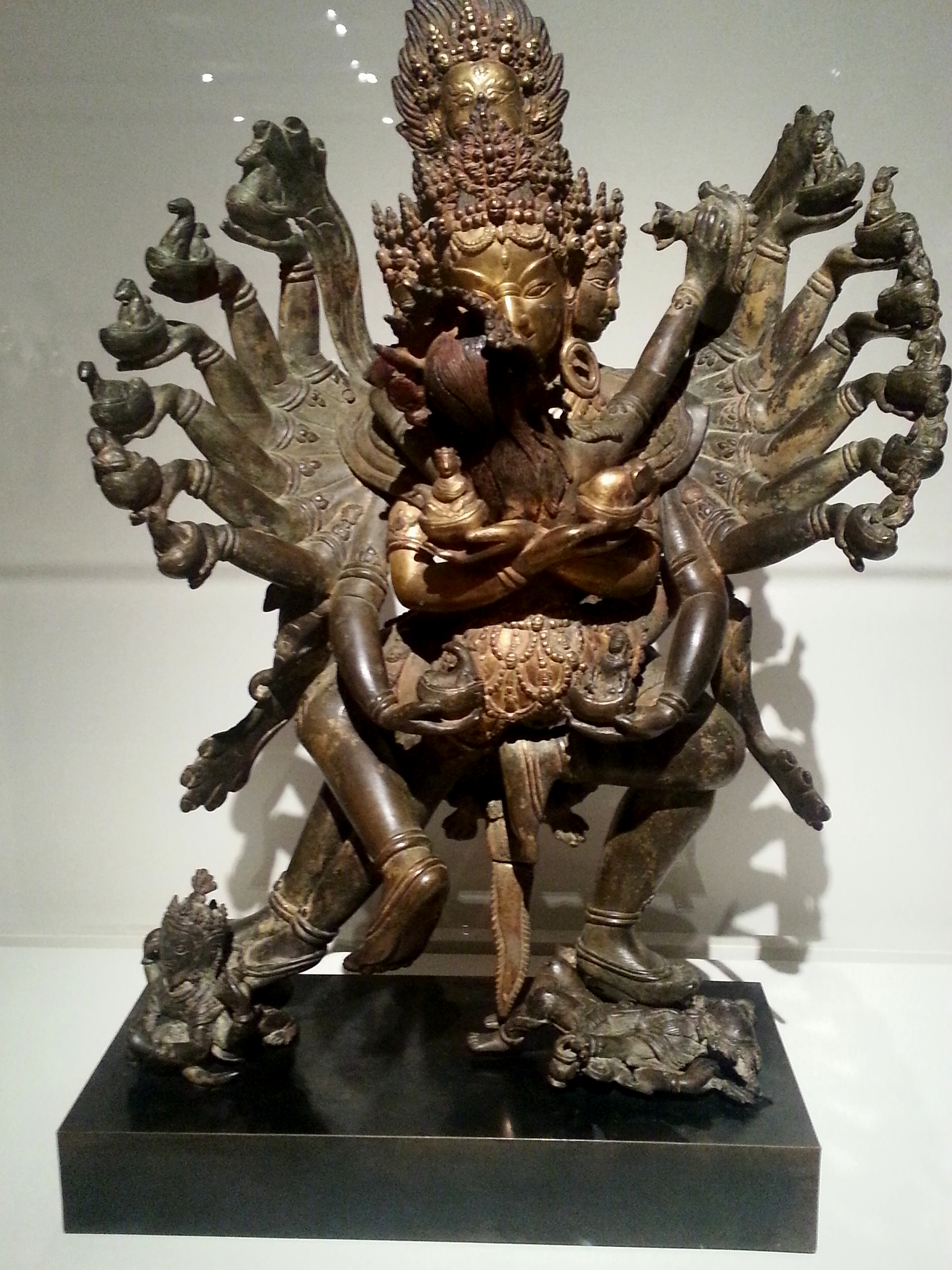
Yab-Yum

Yab-Yum. Mother-father. Yin-yang. The mystical union of the active force (masculine) with wisdom (prajna or the feminine force). A fusion that is necessary to overcome the false duality of appearances in the striving toward spiritual enlightenment.

Lotus Flower

Photo by the author

The lotus symbolizes the simultaneous nature of cause and effect or the Laws of Karma because it blossoms and produces seeds at the same time.

We can create our own happiness under any circumstances. This is also symbolized in the lotus.

The lotus grows and blossoms in the muddy swamp yet remains utterly free of any defilement.

The Three Poisons

Buddhism by the Numbers

Photo by the author

Three Poisons (The cause of all suffering)

  1. Greed
  2. Anger
  3. Ignorance

The antidotes are love and compassion.

The Noble Eight-fold Path is the path that leads us away from suffering.

Twelve Links in the Chain of Interdependent Co-Arising

Buddhism by the Numbers

Photo credit: Benn Bell

Twelve Links in the Chain of Interdependent Co-Arising

  1. Ignorance
  2. Volitional action
  3. Consciousness
  4. Mind/Body
  5. Six sense organs (Eyes, ears, nose, tongue, body, mind)
  6. Contact
  7. Feeling
  8. Craving
  9. Grasping/attachment
  10. Coming to be, being, becoming
  11. Birth
  12. Old age (decay) and death

Each link contains the other links. All teachings of Buddhism are based on interdependent co-arising. If a teaching is not in accord with interdependent co-arising it is not the teaching of the Buddha. Buddha taught that everything is both cause and effect. Interdependent co-arising goes beyond our concepts of time and space. The one contains all.

The presence of light means the absence of dark. The presence of day means the absence of night. The presence of ignorance means the absence of understanding. The Buddha said, “When ignorance comes to an end, understanding arises.”

Based on the teachings of Thich Nhat Hanh

The Seven Factors of Awakening

Buddhism by the Numbers

Japanese Gardens, Birmingham, Alabama. Photo by Benn Bell

The Seven Factors of Awakening

  1. Mindfulness
  2. Investigation of phenomena
  3. Diligence
  4. Joy
  5. Ease
  6. Concentration
  7. Letting go

“At least once every 15 minutes, we need to practice letting go. Bear in your heart no hatred, utter no unkind words, remain always compassionate, with no hostility or ill will. The Seven Factors of Awakening are the practices of love.” – Thich Nhat Hahn

The Six Paramitas

Buddhism by the Numbers

Photo credit: Benn Bell

The Six Paramitas

  1. Giving
  2. Precepts
  3. Inclusiveness
  4. Diligence
  5. Meditation
  6. Understanding

Giving

Offer to all joy, happiness, and love. The greatest gift we can offer anyone is our true presence.

Give the gift of stability. The one we love needs us to be solid and stable. We can cultivate our stability by breathing in and out, practicing mindful walking and sitting, and enjoying livening deeply in every moment.

Other gifts we can offer: Freedom, Space and Peace.

Cross over to the other shore…the other shore of peace non-fear, and liberation.

The Five Powers

Buddhism by the Numbers

Photo by Benn Bell

The Five Powers

  1. Faith
  2. Diligence
  3. Mindfulness
  4. Concentration
  5. Insight

Mindfulness leads to concentration, and concentration leads to insight and to faith.

According to the Lotus Sutra, all sentient beings have the Buddha nature.

“Buddha” comes from the root verb “budh”, which means wake up.

Every moment is the opportunity to water the seeds of happiness in yourself.

Based on the teachings of Thich Nhat Hanh