Sad Stories of the Death of Kings

Sad Stories of the Death ogf Kings

Sad Stories of the Death of Kings is a book of vignettes by Barry Gifford about a boy growing up in Chicago in the 1950’s and 60’s. I’m sure the boy,  Roy is a stand in for the author himself.

I liked the stories very much and I can relate to Roy in many ways as we are roughly the same age now. Barry Gifford is a talented writer who has penned some of my favorite stories which later  became movies: Wild at Heart and Lost Highway (both David Lynch Films).

Gifford is reminiscent of two other writers I love: Nelson Algren and Charles Bukowski.

I am a great believer of synchronicity and love to connect the dots. In the story, “Roy’s First Car,” Barry details a 1955 Buick Century with a Dyna-Flo transmission which the boy Roy purchases for  $300. My own first car was a 1955 Buick Century with a Dyna-Flo transmission which I purchased for $300 from a salesman by the name of Grundy Hayes at Broadway Chevrolet in 1965, in Louisville, Kentucky. I will never forget that day or that purchase. Now it shows up again in another man’s book of stories in a different time and place.

How’s that for a coincidence?  When I read that passage it about blew my mind! It gets weirder but that’s grist for the mill for another story.

For God’s sake, let us sit on the ground and tell the sad stories of the death of kings.

Suspended Sentences

Suspended Sentences

Suspended Sentences is a book of three novellas, written by Paul Modiano and translated into English by Mark Polizzotti.
Modiano is a French writer who in 2014 was awarded the Nobel Prize for literature. This book was my first exposure to this gifted writer with the exception of watching the film Lacombe Lucien in 1974 directed by Louis Malle. Modiano co-wrote the screenplay. At the time, frankly, I had no idea who Paul Modiano was.

The stories are set in Paris in a time gone by. Many of the buildings referred and streets referred to have been razed to make room for something else. This contributes to the dreaminess of the vision we are given of the mis-en-scene.
Modiano writes in an off handed style that is vague in its presentation. These stories are imperfect memories seen through a soft focused lens with a backward glance through time that seems to have a faded to a yellowish color not unlike sepia. It is an attempt to see into the past and is therefore an afterimage of the past and just as imprecise. In fact the first story is entitled, Afterimage. These stories or novels, were published separately over a period of five years. But they have the feeling of part of a whole. They fit well together. The other two books are, Suspended Sentences, and Flowers of Ruin.
The original title of the second story was Remise de peine. The literal translation of this phrase is a stay of sentence, but also it means a deferral of pain. The translator chose well the title Suspended Sentences as it seems to evoke both these attributes. A further resonance for me is the idea of written sentences literally hanging in midair, suspended so to say, which very much captures the style in which Modiano writes.
Here is an example of a suspended sentence that I particularly liked:
“Certain objects disappear from your life at the first lapse of attention, but the cigarette case has remained. I knew it would always be in reach in a night stand drawer, on a shelf in a clothes closet at the back of a desk, in the inner pocket of a jacket. I was so sure of its presence that I usually forgot about it. Except when I was feeling down. Then I would ponder it from every angle. It was the only object that bore witness to a period in my life that I couldn’t talk to anyone about, and whose very reality I sometimes doubted.”
I know exactly where he is coming from here as I have several objects I feel the same way about, almost talisman like in their quality in that they ground me to the earth and hold me fast to reality when in fact most of my life has been a blur.
My favorite story of the three is in fact Suspended Sentences. Who could not fall in love and become enchanted by the first sentences of the novel? “It was in the days when theater companies toured not just France, Switzerland, and Belgium, but also North Africa. I was ten years old. My mother had gone on the road for a play, and my brother and I were living with friends of hers, just outside of Paris.”
Hooked yet? I was.

Work

DSCN0544

There is nothing more disheartening that endless futile labor or doing something you absolutely loathe or have a fundamental problem with. As you might recall, Sisyphus was condemned to an eternity of rolling a rock up a steep mountain incline only to have it roll back to the valley again once he got it to the top. On his way back down the mountain, he had to think about his existential position.

Looked at in another way, work is applied effort. It is what we put ourselves into…whatever we expend our energy on for the sake of accomplishing something. Work in this fundamental sense is not what we do for our living, but what we do with our living.

Happiness resides in activity, both physical and mental. It resides in doing things that one can take pride in doing well. Those who have missed the joy of work, of a job well done, have missed something very important.

All work can be done well or it can be done poorly. All work can be done cheerfully and with pride or grudgingly and with distaste. Whichever way we do it is really up to us. It is a matter of choice. There are no menial jobs. Only menial attitudes. In the theatre we say there are no small parts, only small actors.  Our attitudes are up to us. A laborer is worthy of his hire.

As Sisyphus presses his face against the rock, each atom of the stone, each mineral flake of that night-filled mountain itself forms a world. The struggle itself towards the heights is enough to fill a man’s heart. One must imagine Sisyphus happy.

Shades of Gray

DSCN0544

I was a Safety Manager in manufacturing for 20 years and a Human Resources Manager for 15. While I was a Human Resources Manager I had a chance encounter with a Safety Manager who was visiting my site. We had a discussion about the difference between the two professions.

“I could never be a Human Resources Manager,” he said. “Everything is a shade of gray. I like things to be black and white. In the safety profession, everything is black and white. Something is either safe or it isn’t.”

“Well, that’s where you and I are different.” I answered. “That’s why I got out of the safety business and into the human resources business. Because I see everything in shades of gray.”

Boom!

Place for Politics, 8-19-2015: Bobby Jindal

Bobby Jindal was born but not bred in Baton Rouge, LA. on June 10, 1971. His full name is Piyush Jindal. He was born six months after his parents arrived from Punjab, India. He is an american citizen by reason of his birth as is so prescribed by the 14th amendment to the US Constitution. I think it ironic, to say the very lesat, that our Mr. Jindal would be anti-immigration or that he would support the repeal of the 14th amendment.

Bobby Jindal

Mr. Jindal is a very smart man and once accused the Republicans of being memebrs of the “Stupid Party.” He is not acquitting himself very well of late for someone who has come so far and risen so high.

Quote of the Day 8-16-2015

957894

The fate of all nations will not be settled until the problems of peace and world organization have been solved…the effectiveness of the people’s action depends on their finding the courage to give up some of their dreams for now in order to save lives. Before it is all over, it will, perhaps, be necessary to raise our voices.

Albert Camus, 11-29-1946, Combat

My Books are Never so Happy as When they are all Together

wpid-20150705_171758.jpg

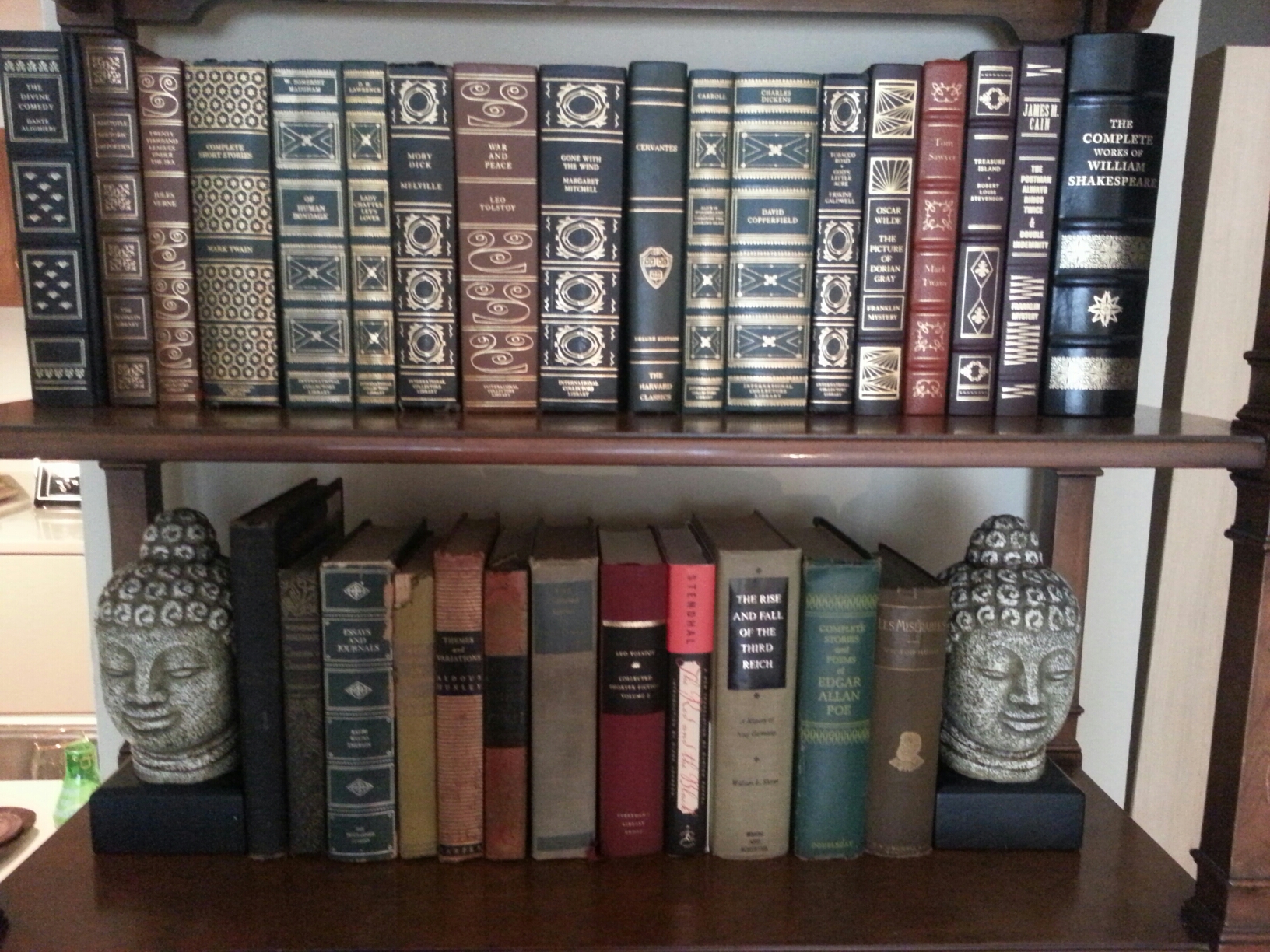
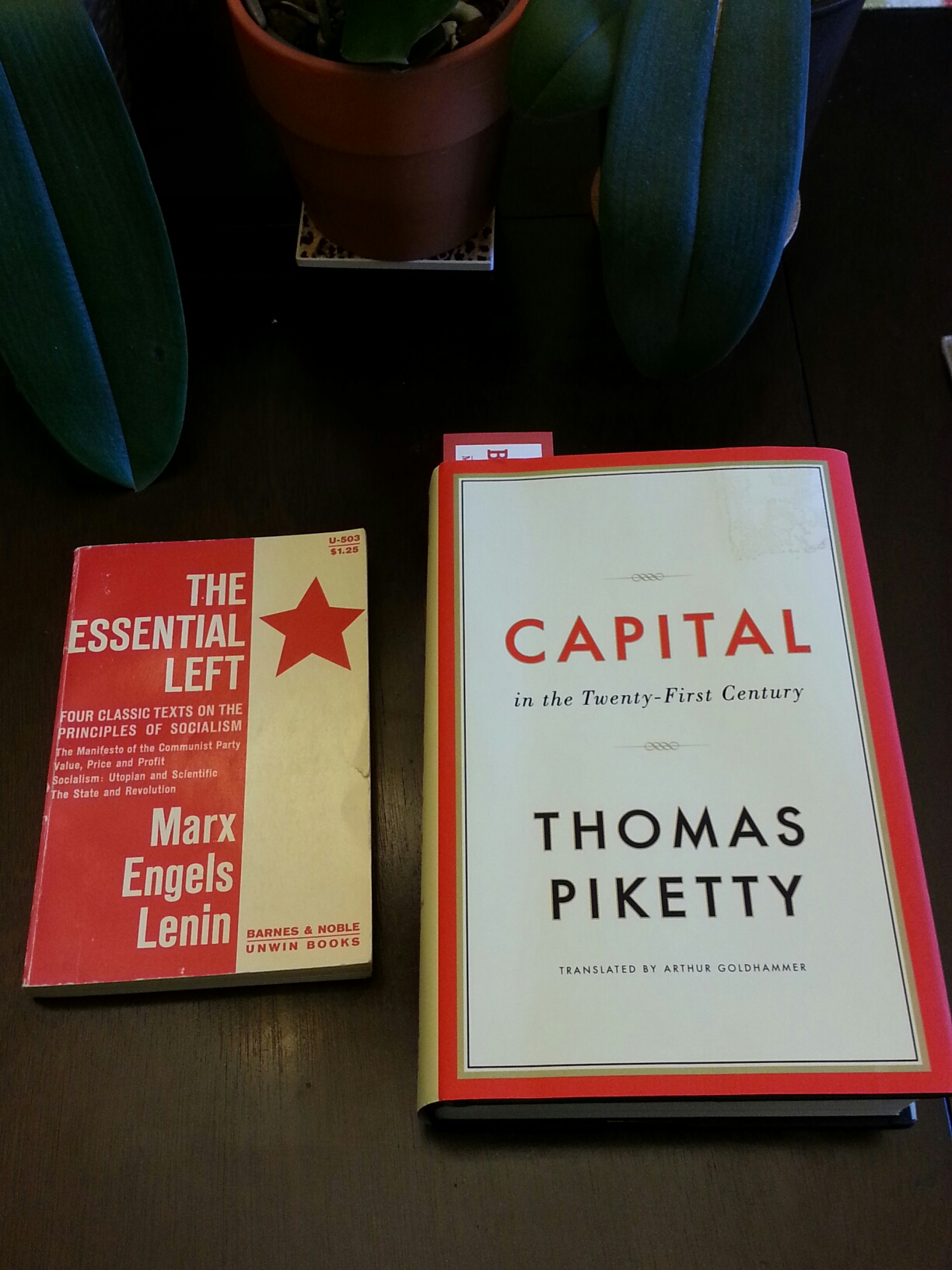
I have moved recently and whenever I move I am always fretting over how much stuff I have. Not the least of which is a rather large collection of books. My library as it were. I have been hauling this collection of books around the country with me for some 50 years. Every time I make a move I try to winnow it down to a core number, but giving away books is a little like giving away children. It is an agony.

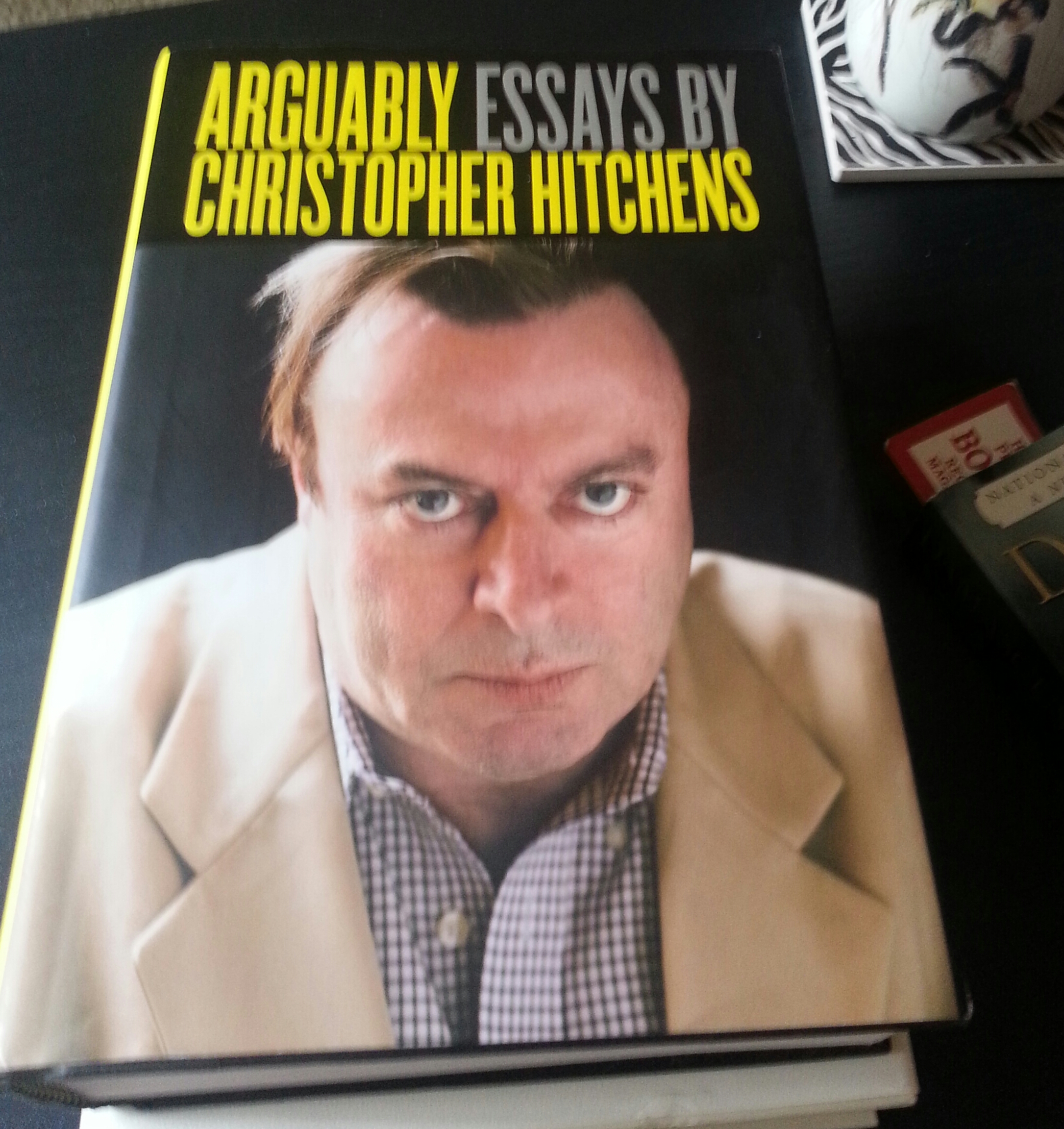
I discovered Christopher Hitchens

wpid-20150705_180055-1.jpg

had a similar problem as he described in his essay, Prisoner of Shelves: “I try to cull them out but the closer I get to the center the harder it is to cull. I can’t throw out a book that has been with me for years and is like an old friend. Or a book that has been written by an acquaintance or who knows when I will need a reference to a subject however obscure. I never lend my books, I am compulsive about not letting them out of my sight.”

I feel the same way. In fact I composed this little ditty to describe my feelings:

Neither a lender nor a borrower be
For borrowing dulls the edge of husbandry
With this in mind then, if you still want to borrow
I’ll expect the book back by tomorrow.

wpid-20141028_065834.jpg

When I moved from Trenton to Louisville three years ago I gave away literally 20 cases of books and downsized five bookcases. It gets harder each time. I just moved from a three bedroom house to a two bedroom apartment and once again find myself downsizing. At least now they are all together and they couldn’t be happier.

wpid-20140724_192007.jpg

Free Will?

Ingmar_Bergman-The_Seventh_Seal-01

The question, do we live in a determined universe, and if so do we have free will, is frequently asked and one I have often wrestled with. My conclusion is yes, the universe is determined and, yes we do have free will but, it is limited. I call this limited modified free will. This idea is best illustrated by the following analogy. We are like an ant traveling down a rushing stream of water on a leaf. The ant can turn the leaf a bit this way or that way, but it cannot change the direction of the traveling leaf or its final destination.
Because we are men and women and not ants, we have a bit more control of our lives, and can make choices which creates causes. As the world operates by cause and effect these causes can change the course of lives. But some circumstances are beyond our control and are indeed determined. Such as when and where we were born, who our parents are, our genetic makeup, our intelligence, and the color of our skin. All of these things play a role in determining our existence in spite what free choices we make.
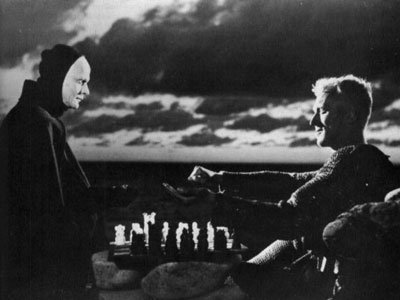
And then there is the question of fate. Sometimes, it seems, no matter how hard we try, no matter what choice we make, we still cannot avoid what seems to be our fate. I am reminded of the story of the servant who had an appointment in Samarra. There was a merchant in Baghdad who sent his servant to market to buy provisions and in a little while the servant came back, white and trembling, and said, Master, just now when I was in the marketplace I was jostled by a woman in the crowd and when I turned I saw it was Death that jostled me. She looked at me and made a threatening gesture, now, lend me your horse, and I will ride away from this city and avoid my fate. I will go to Samarra and there Death will not find me. The merchant lent him his horse, and the servant mounted it, and he dug his spurs in its flanks and as fast as the horse could gallop he went. Then the merchant went down to the marketplace and he saw me standing in the crowd and he came to me and said, “Why did you make a threatening gesture to my servant when you saw him this morning?” “That was not a threatening gesture,” I said, “It was only a start of surprise. I was astonished to see him in Baghdad, for I had an appointment with him tonight in Samarra.”