Blogroll

LEAF

Elephant Ears, Delray Beach, Florida

Under the Tree of Forgetfulness, Delray Beach,Florida
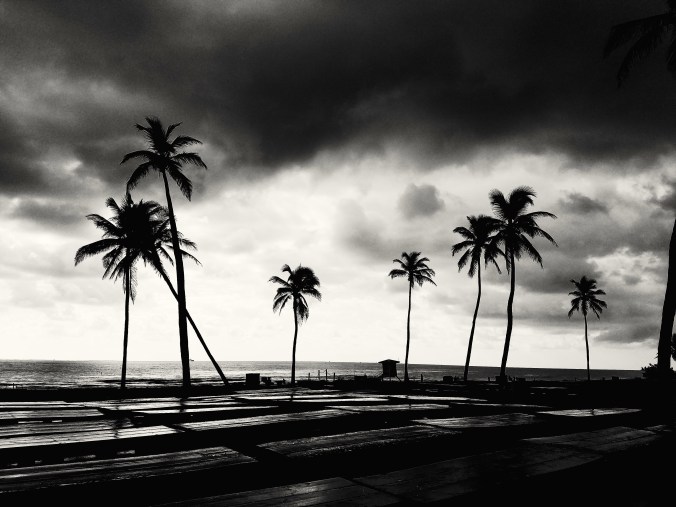
The calm after the storm, Ft. Lauderdale, Florida
TONY’S WAY
Philadelphia Story
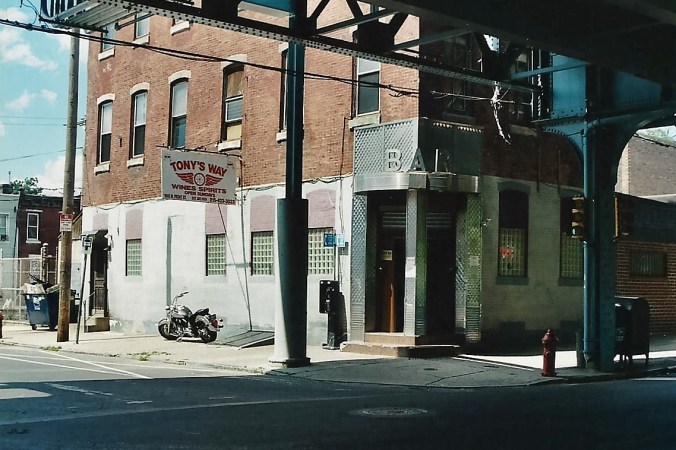
There are a million stories in the semi-clad metropolis and this is one.
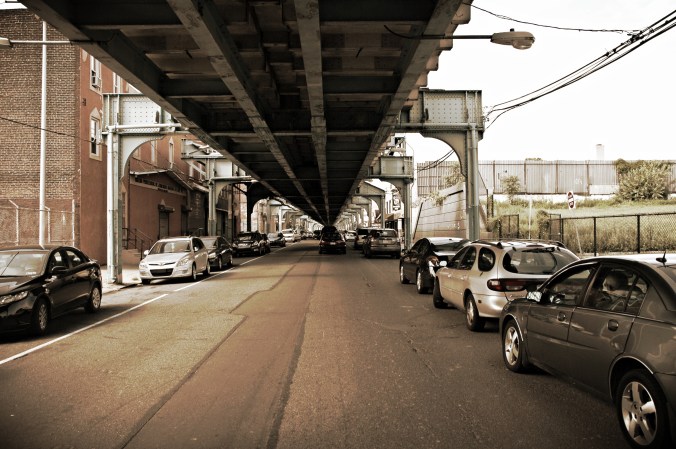
Philadelphia is a city of neighborhoods, and in each neighborhood there is a distinctive culture or ethnicity. Each neighborhood has gradually become more mixed and diversified. In South Philly you have the Italians, in Fishtown the Irish. West Philly and North Philly are predominantly black. In Center City you see the greatest diversity, but it too has its own characteristics. In Kensington, where Tony’s Way is located, it is mainly Spanish, as in Puerto Rican. Tony’s Way is a little Puerto Rican bar nestled below the elevated Blue Line in Kensington.
I lived in several different neighborhoods in Philadelphia. For a while I lived in Fishtown in a little house across from the Palmer Cemetery. Fishtown is a neighborhood that adjoins Kensington. I would sometimes walk over to the Blue Line to take it into town. On the way back home when I arrived at my stop and descended the steps from the “El” I would find Tony’s Way beckoning to me in the darkness. So one night I hustled there inside.
I stepped inside of the brightly lit cantina and immediately was blasted with the sound of Latin music blaring on the jukebox and uproarious laughter. The joint was juking and very colorfully decorated with tinsel and streamers and signs of various descriptions. Very festive. The bar was in the center with seating all around. Behind the bar were a pair of barmaids in cut off jeans and tank tops.
I stepped up the the bar and ordered a shot of tequila and a Corona. That was what everybody else was drinking. I had a couple of rounds then stepped back into the night and walked home.
Since Tony’s Way was right on my way as I walked back and fourth from the El, I started to become a regular. I would go over in the afternoons sometimes and on the weekends. One day I was in there having a beer and a shot when Tony walks over to me and introduces himself.
He gave me a broad smile and stretched out his hand which I took. He had a strong grip.
“I’m Tony,” he said. “This is my place. Welcome. If you ever find you have a problem here, you see that large fellow sitting over there in the corner? That’s Ricardo. He’s my cousin. And do you see that other fellow standing over there? That’s Edwardo. He’s my other cousin. You just call one of them over and he will help you.”
He smiled again and patted me on the back and strolled off to greet the other customers. That was how it was at Tony’s Way.
One Friday night I walked over for a little entertainment and to see if there might be some Puerto Rican girls just dying to meet me.
There was line to get in. So I queued up and waited my turn to be let in. As I was waiting I noticed there were a couple of bouncers at the front door. They were frisking people, as in patting them down for weapons, before they were allowed in. Now this wasn’t too unusual for Philadelphia so I didn’t think too much of it at first. When It came my turn they just waved me in.
So I entered the establishment and walked around the bar to the other side so I could keep an eve on the door. I ordered my usual: A shot of Jose Cuervo and a bottle of Corona with a lime wedge.
I got to noticing the way the bouncers were frisking the patrons. A guy would step up to the door and they would frisk him and then they would wave him on in. A couple of girls would step up up and they would get waved through. A guy come in gets frisked. The girls get waved through.
As I’m watching this it slowly begins to dawn on me, hey! Wait a minute, I didn’t get frisked. What’s up with that? They must not have thought I was dangerous enough to frisk. Now in Philly, it’s not enough to look tough. You got to look dangerous too. So this was beginning to bother me a bit and I was feeling a little slighted if not insulted.
I turned to my fellow barfly sitting next to me and relayed my tale of woe to him. He said, relax, they probably just know you.
Ohhhhh! Yeah! I never thought of that! Well, I felt a whole lot better then and enjoyed the rest of the evening.
I moved away from Philly a short while after that incident. First to Trenton then back home to Kentucky. It’s been about 10 years since I had been to Tony’s Way, but I always had fond memories.
Recently I had the opportunity to travel back to Philadelphia on business, and while there I wanted to visit some of my old neighborhoods and stomping grounds

The first thing I noticed was the sign was down So I was’t sure if it was still Tony’s Way or not. I stepped into the bar from the bright sunlight and waited a few moments for my eyes to adjust to the light. I sat down on a bar stool and ordered a shot and a beer. I looked around and things looked pretty much the same. It was early afternoon so not too many people were in there. My eyes came to rest on a familiar character who was sitting across the bar from me reading a newspaper.
I finished my drink and walked around the bar and approached the man reading the paper.
“You’re Tony aren’t you? I don’t know if you remember me or not but a few years ago when I lived in Philly I used to come in here. You were always very nice to me. I’m in town for a short visit and I just wanted to come by and say hello.”
“Yeah, I remember you,” he said. “Your hair was a little longer then. What happened to you?”
“I moved away.”
“Where did you move to?”
“To Kentucky.”
“To Kentucky?” He started laughing, Why’d you move to Kentucky?”
I explained I had family there and that was my home state, but he couldn’t get over the fact that I moved to Kentucky.
“Hey Angelina!. Come over here.” He waved the barmaid over. “This guy used to come here all the time, but he moved to Kentucky.”
“Kentucky?!!!” Then she started to laugh.
She moved away from us and took another customer’s order who had just sat at the bar. And she told them what Tony had said and they laughed. Then the people sitting next to them started laughing and shouted, “Kentucky!” when they laughed. And pretty soon the whole establishment was laughing and shouting Kentucky! And no one was laughing more than Tony and me. But after a few minutes the laughter eventually died down, but it did not die down entirely for a long time for always at this table or that a new area of laughter would begin.
I drank free that day. Of course I suffered the next day from a hangover. But it was definitely the best day of my trip.
THEY LIVE BY NIGHT (1948)
Movie Blurb
Debut film by Nicholas Ray. A film noir that is a cut above the rest. A genuine love story between two innocents that was bound to fail.

Ray did some innovative things with sound and one of the earliest overhead shots shot from a helicopter. He went on to direct such films of note as, Rebel Without a Cause, Johnny Guitar, and King of Kings.
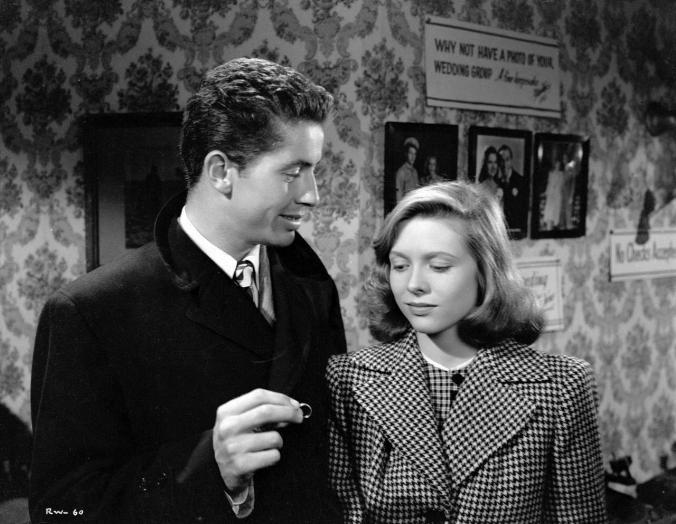
They Live by Night was remade in 1974 by Robert Altman using the title, Thieves Like Us, which is the title of the novel the two movies was based upon. It was a pretty good flick as well.
Don’t confuse these two well made and entertaining movies with the execrable, Live By Night, directed by Ben Afleck in 2016. It is unwatchable.
They Live by Night (1948), I give it an eight out of ten.
STALKER (1979)
Movie Review

Well, I’ve seen Stalker two times now and I had to ask myself both times, whoa! What was it I just saw? It’s like watching a movie while on acid but without the acid. I can’t stop thinking about it. The movie definitely has a certain haunting quality about it
Stalker is a feature film by master Russian filmmaker Andrei Tarkovsky, based on the short novel, Roadside Picnic, written by Arkadiy Stugatskiy and Boris Stugatskiy. The brothers also wrote the screenplay along with Tarkovsky. I am relatively new to Tarkovsky, but better late than never. Having seen this film two times, I now I want to see every film in his oeuvre.
This is a film about a quest into a zone in search of a room that will grant you the one thing you desire most. The zone appears to be sentient and dangerous. It requires the skills of a stalker to enter the zone and locate the room. On this journey Stalker takes with him two characters from the Russian intelligentsia, a dispirited writer and a hopeless scientist. The job of a stalker is illegal and entering the zone is forbidden. The zone may have been created by a meteorite or it may be inhabited by aliens. This is never made clear as many things are never made clear in this very peculiar film.
The zone in the film was inspired by a nuclear accident that transpired near Chelyabinsk in 1957. But it presages a larger and more serious event that occurred at Chernobyl in 1986. At Chernobyl, following the disaster, an area extending 30 kilometers was cordoned off in all directions from the plant and designated the “Zone of Alienation.”
Evocative of the gulag with echoes of a nuclear disaster the zone is alive with possibilities and traps and most of them are deathtraps. It has been described as sentient and in one scene one can clearly see the ground breathing or at the very least undulating. There is water everywhere and submerged beneath the surface is the detritus of a civilization gone by.
The movie starts off in sepia tones then abruptly switches to color once the protagonists get to the zone, then switches back to sepia when they get back. There are more changes to color towards the end when we see Monkey, Stalker’s crippled child.
The writer and professor meet up at a dingy bar at what looks like the edge of civilization and wait for the stalker. After Stalker arrives the trio leave the bar and go to a railway station. There ensues a chase scene of sorts as the travelers try to elude the armed guards and secure a small trolley car to ride the rails. They are shot at by the soldiers but manage to make it out through the gate of the barbed wire topped fencing and onto the tracks with the trolley car. What follows is a long tracking shot as Stalker, Writer, and Professor are transported in the direction of the zone. The rhythmic clanking of the car on the tracks has a lulling effect on the audience and the riders, then on a sudden, the sepia tone turns to color and we are in the lush green environs of the zone.
According to Tarkovsky, writing in his book, Sculpting in Time, “The setting of Stalker is a mysterious place that was reportedly created by an asteroid and may contain other world forces. It doesn’t symbolize anything. The zone is the zone. It is life. An allegory about human consciousness, the necessity of faith in an increasingly secular world, and the ugly, unpleasant dreams and desires that reside in the hearts of man.” The writer and professor may be thought of as archetypes, but no, they are really flesh and blood characters into whose personalities we delve deeply for psychological insight. The movie examines the psychological , philosophical, metaphysical, and existential dimensions of life and man’s relation to it.
The film resists interpretation. It is quite literally anything you think it is, like the zone itself. The zone is always changing, adapting itself to what is going on in your head. The zone seems to have a consciousness of its own. When you step into the room your deepest wishes will come true. What will be revealed to you in the room is who you really are. Stalker says the most important moment of your life is when you enter the room. The main thing is to believe. Yet, when they arrive at the room nobody wants to go in. Stalker says stalkers are not allowed in the room (it is forbidden). The other two don’t want to go in. But, the camera ends up in the room and the audience is given a POV from the room into the anteroom where the Stalker, Writer, and Professor are sitting and ruminating.
Cut back to the bar where it all started. We are now once more in sepia. We don’t know how they got back. The trio disbands and go their separate ways. Stalker’s wife has appeared with their child, Monkey. They go home. The last sequence returns to color when we watch Stalker carry Monkey on his shoulders back home and again in the last scene where Monkey telekinetically moves glasses across a table. It turns out Stalker is the more cultured, educated, and intelligent one in the film, more so than the writer or the scientist. In the film’s finale a bookshelf appears stuffed with books.
According to Tarkovsky, the existence of the zone or the room in which wishes are realized serves only as a pretext to discover the personalities of the three protagonists of the film. Stalker is the last idealist. Writer declares, “A man exists in order to create works of art.” “The world is ruled by cast-iron laws, and it’s insufferably boring,” says Writer.” Tarkovsky further elucidates, “It seemed to me that one could make a film with the unity of place, of time, and of action. These classic Aristotelian unities allows one to arrive at an authentic cinema. The subject permitted me to express in a very concentrated manner the philosophy of the contemporary intellectual, or rather his condition.”
There are 142 shots in Stalker in 161 minutes of run time. The average film has between 2000 and 3000 shots. So that gives you some idea how slow it is compared to, say, an action flick of today. Some of the Russian distributors asked Tarkovsky if he could speed it up. He said no. If anything he would slow it down. That way it would eliminate the kind people who shouldn’t be seeing the film in the first place
There is much symbolism in the movie despite Tarkovsky’s claims to the contrary and his disavowal of the use of symbols. Symbols abound such as the dog, birds, a sand dune filled room, telekinesis and, the meat grinder. The writer at one point dons a crown of thorns. But, what some may call a symbol Tarkovsky may call a metaphor. “We can express our feelings regarding the world around us either by poetic or by descriptive means. I prefer to express myself metaphorically. Let me stress: metaphorically, not symbolically. A symbol contains within itself a definite meaning, certain intellectual formula, while metaphor is an image. An image possessing the same distinguishing features as the world it represents. An image, as opposed to a symbol.”
“In the end, everything can be reduced to the one simple element which is all a person can count upon in his existence: the capacity to love.”
References:
- Tony Guerra, Panorama, April 1979
- Nick Schager, Slant, April 2006
- Andrei Tarkovsky, Sculpting for Time, January 1989
- Geoff Dyer, Zona: A Book About a Film About a Journey to a Room, February 2012
The One That Got Away
Photo of the day

Eddies Tattoo Parlor, Philadelphia
The tattoo parlor was warm so I hustled they’re inside
Don’t misspell her name Buddy she’s the one that got away….
Lyric by Tom Waits
Photo by me
The Girl Who Played Go
Book Review

The game of Go has long intrigued me. I learned how to play years ago from a wizard who lived down the stairs. We wiled away the hours playing the game of Go. I moved away and never played again until recently. I took it up once again and discovered it had never really left me. I became reacquainted with Go because of a novel written by a young Chinese girl that sparked my interest all over again.
When The Girl Who Played Go first came out in 2003, I read a review about the book that was intriguing. I vowed to keep an eye out for it. In those days one didn’t just automatically add a book to one’s Amazon Wish list. One liked to find books the old fashioned way, serendipity. One liked to stumble across them by accident in some far flung and obscure bookstore in the Midwest, or northeast, or wherever. Years went by and I never saw the object of my desire. By then it was locked away in the recesses of my memory and I was no longer consciously looking for it at all.
Then one day in, 2007, in a crowded book store in Philadelphia, I ran across a book entitled, The Master of Go. To my imperfect memory I thought this must be the book I had long sought. I picked it up, took it home and put in a shelf where it languished a few more years. When I finally got around to reading it, I thought, this is strange. This doesn’t seem like the book I had read about all those years ago. This book, written by Yasunari Kawabata, was about a modern day Go player, in Japan. While I enjoyed the book very much, it was a realistic depiction of an elderly gentleman who was a Go master and the rigors of tournament play in Japan. I read the book and put it away and started a new book and didn’t give the Master of Go another thought; until the year 2012. I ran across another book on Go in Louisville, Kentucky at the Half Price Book store where I am wont to go. It was entitled, The Girl Who Played Go. Eureka! Sweet mystery of life, finally I found you! The Girl Who Played Go, written by Shan Sa, was my long sought after book. I immediately purchased the book and took it home and began reading. Friends it was worth the wait.
Go is a territorial contest. In Chinese the game is called, Wei Qi, which means, “surrounding game.” Go has roots in both China and Japan. Most Westerners are unfamiliar with the game of Go. It has simpler rules than chess but is far more subtle and takes longer to master. It is a game that is not structured around the theme of a small battle, like chess. Rather, it is more like a large scale war. In Go, every piece is identical: an ivory or ebony stone is played on a square grid by the contestants. Each piece has the power to turn the tide of a war. Go is powerful metaphor for the story told by Shan Sa in her novel, The Girl Who Played Go.
The Girl who Played Go is a wonderfully written novel set within the framework of the game of Go. It takes place in a small city in Japanese-occupied Manchuria in 1936. An unnamed Japanese soldier has been sent with his battalion to seek out the Chinese resistance movement within the region. Simultaneously, a bored Chinese schoolgirl finds solace obsessively playing Go in the local square eponymously name The Square of a Thousand Winds. In an attempt to infiltrate the enemy, the Japanese soldier joins the city’s Go players, and falls into a game and into love with the girl who played Go. The story of the soldier and the girl are told in alternating, short, chapters. Dramatic events in the lives of the protagonists are repeatedly brought together and interwoven.
The game of Go is a metaphor for the Japanese invasion of Manchuria and the resistance one young girl is able to mount by remaining undefeated at the game. Manchuria has been occupied by the Japanese for several years as the story opens, but there is an active insurgency movement. The girl, however, lives a relatively sheltered life. She is quickly maturing, and becomes sexually active during the unfolding events. The game of go symbolizes the play between man and woman, as well as the conflict between China and Japan.
The story is well presented with some scenes that are picture-perfect observations of life as illustrated by the following examples. “A carp pirouettes in a large jar that serves as an aquarium.” “The appeal of a prostitute has the transient, furtive freshness as the morning dew.” ” Prostitutes have no illusions and this makes them the soldier’s natural soulmates. Already damned, they dare not dream of eternity, and they cling to us like shipwrecked mariners clinging to flotsam. There is a religious purity to our embraces.” “The boys with white silk scarves around their necks, posture like tragic poets.” “In the game of Go, only aesthetic perfection leads to victory.’’ “He has the nobility of a man who prefers the turnings of the mind to the barbarities of life.” “It has taken many years for the game of go to initiate me into the freedom of slipping between yesterday, today, and tomorrow. From one stone to the next, from black to white, the thousands of stones have ended up building a bridge far into the infinite expanse of China.”
Shan Sa has an extraordinary background. She was born in Beijing, started writing at seven and enjoyed success as a teenage poet. At 18 she moved to Paris to study philosophy. She worked for a time with the artist Balthus. Writing in French, she won a Goncourt with her first novel. Her novel, The Four Lives of the Willow won the Prix Caze. In 2001, she was again awarded the Prix Goncourt des Lycéens for her novel, The Girl Who Played Go. Her works have been published in 30 languages worldwide. Since 2001, Shan Sa has continued to write literature and paint. Her works have been shown in Paris and New York, and Japan. In 2009, Shan Sa was awarded by the French Cultural Ministry, Knight of Order of Arts and Letters. In 2011, she was awarded by the French President, The Knight of National Order of Merit.
THE WASP
A Poem by Benn Bell

I saved a wasp from drowning today
I ducked my head as it flew away
I was afraid it might sting me like bee
And hurt like everything
For it is the nature of the wasp to sting
But it is my nature to do the saving thing
Tomorrow you just wait and see
I’ll be saving a Pharisee.
BLOOD AND SOIL
The Myth of Blood and Soil
According to Karl Popper, writing in his The Open Society and its Enemies, The Myth of Blood and Soil was originated by Plato and detailed in The Republic. Plato freely admits that the myth is a lie. It was a propaganda ploy used to bolster his idea of the ideal state which is totalitarian in nature ruled by a philosopher king and a racially pure elite.

The Myth of Blood and Soil is based on two ideas: 1. In order to strengthen the defense of the mother country men are born of the earth of their country which is their mother. 2. Racialism: “God has put gold into those who are capable of ruling, silver into the auxiliaries, and iron and copper into the peasants and other producer classes.” These metals are racial characteristics. Any admixture of one of these base metals must be excluded from the higher classes. In other words, only those with racial purity may rule. Plato goes on to say that any mixing of the metals will lead to the fall of man. “Iron will mingle with silver and bronze with gold, and from this admixture variation will be born and absurd irregularity; and whenever these are born they will they will beget struggle and hostility; the city (state) must perish when guarded by iron and copper” and lead to the degradation and the fall of man. Remember, Plato admits that the Myth of Blood and Soil is a propaganda lie useful in persuading his rulers to follow his racial policies.

Fast forward to Germany in the late 19th century where the phrase Blood and Soil was appropriated by the Germans to signify and glorify racialism and nationalism. The German translation reads: “Blut und Boden.” Rural life was idealized and combined with the ideas of racism and anti-Semitism. “Blood and Soil” became a key phrase of Nazi ideology.
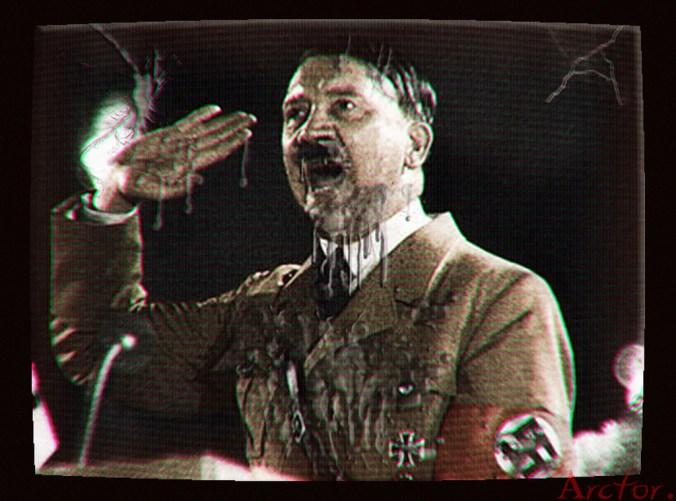
This phrase has been taken up and by neo-Nazis and white supremacist groups here in the United States as a rallying cry. Nazis could be heard chanting the phrase, “Blood and Soil” on the streets of Charlottesville as they marched carrying their torches.

THE ARTIST
A poem by William Carlos Williams
Illustrated by Benn Bell
Dedicated to Ginger Peacock Jones
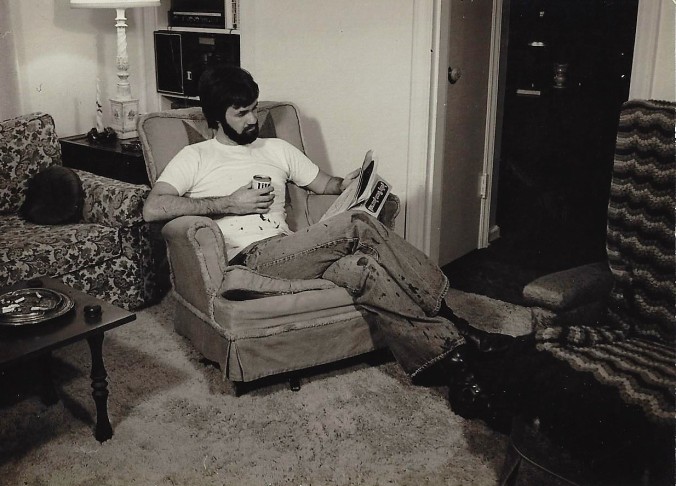
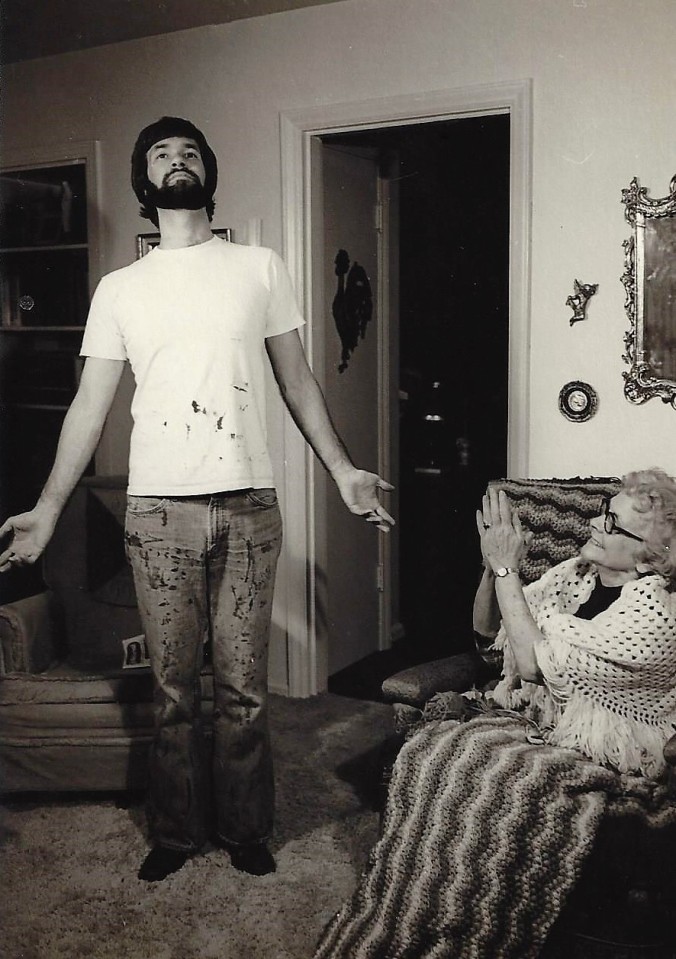
Mr T. bareheaded in a soiled undershirt
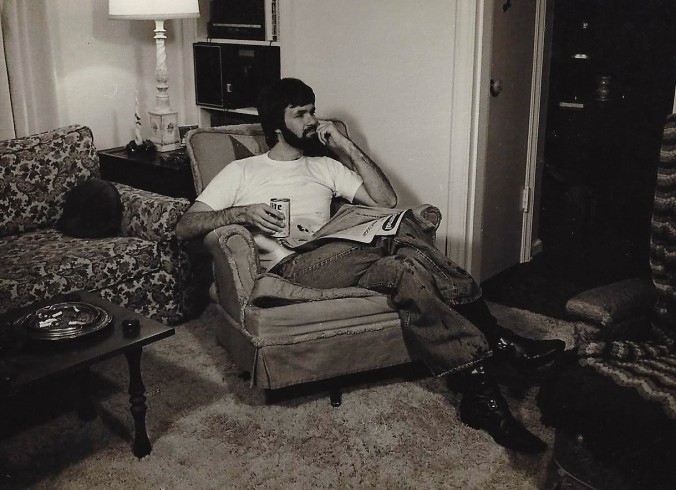
his hair standing out on all sides
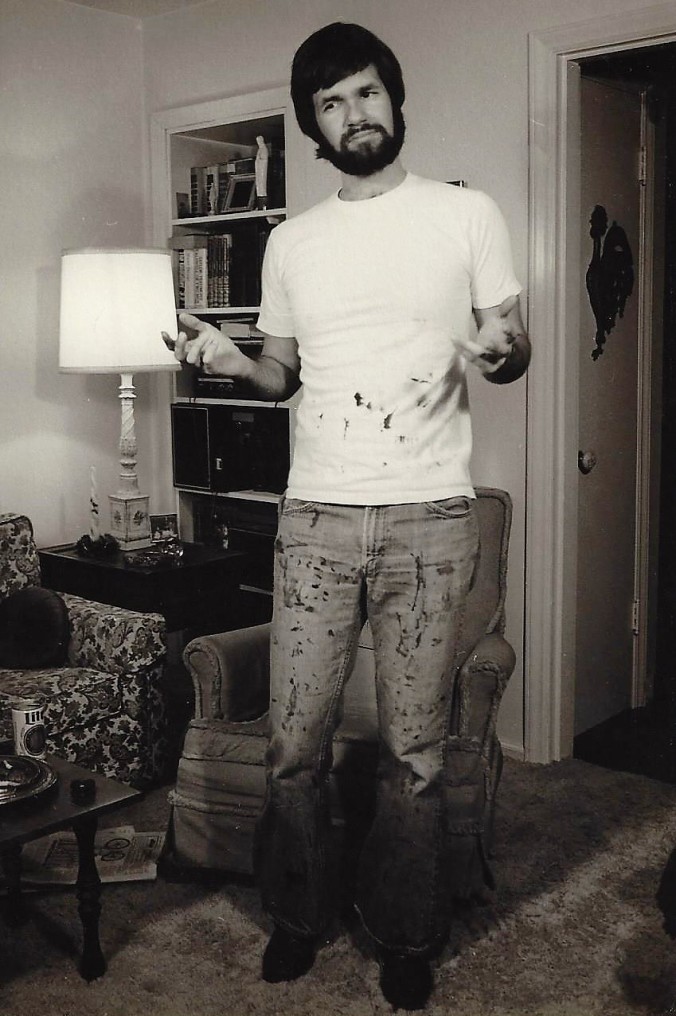
stood on his toes heels together
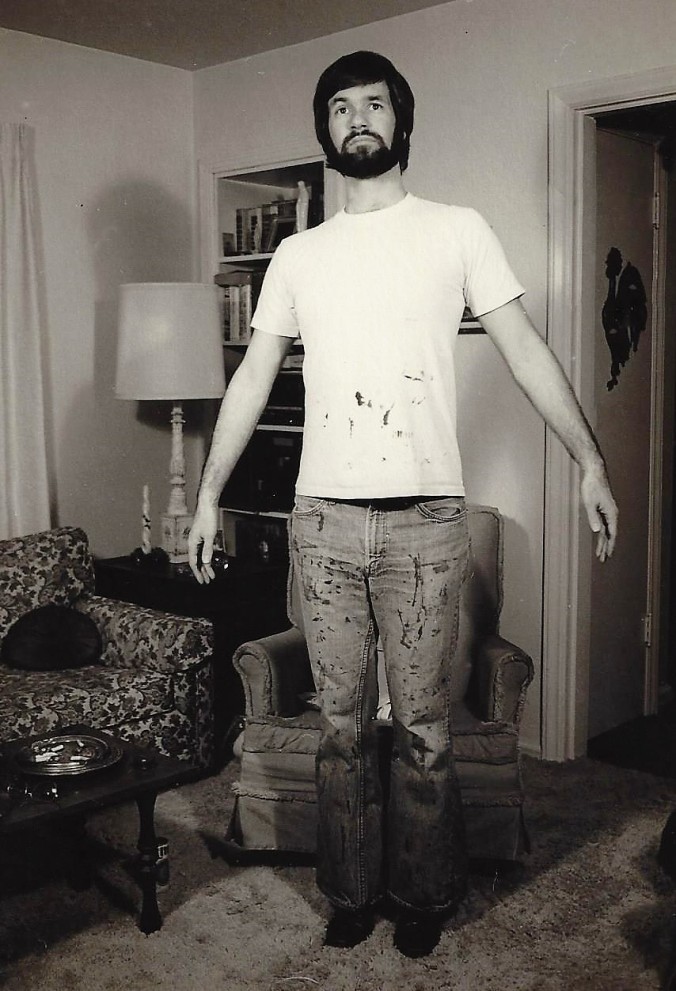
arms gracefully for the moment curled above his head.
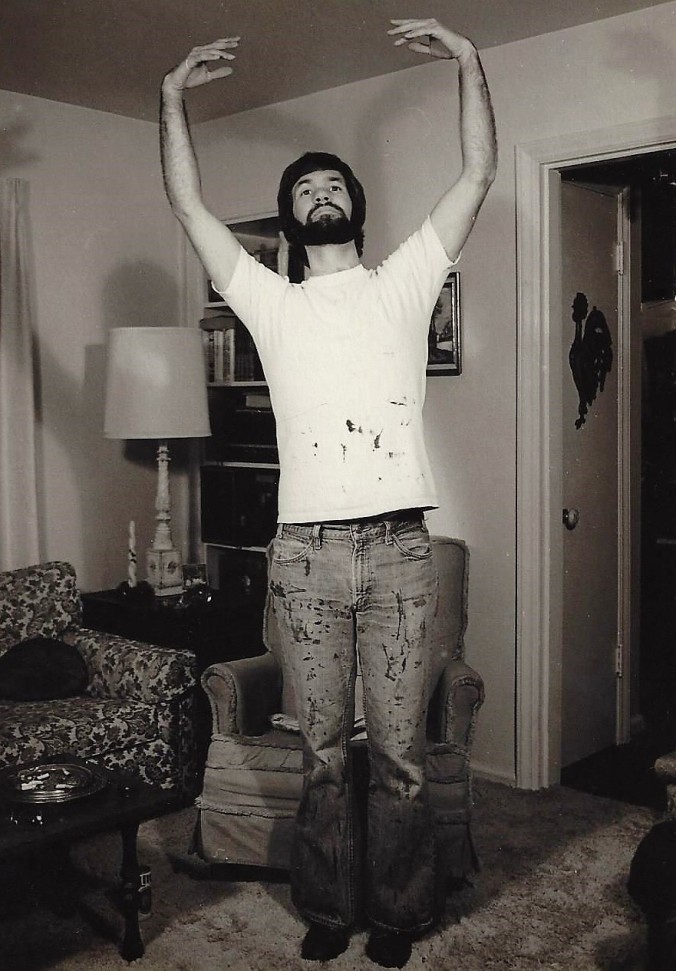
Then he whirled about bounded into the air
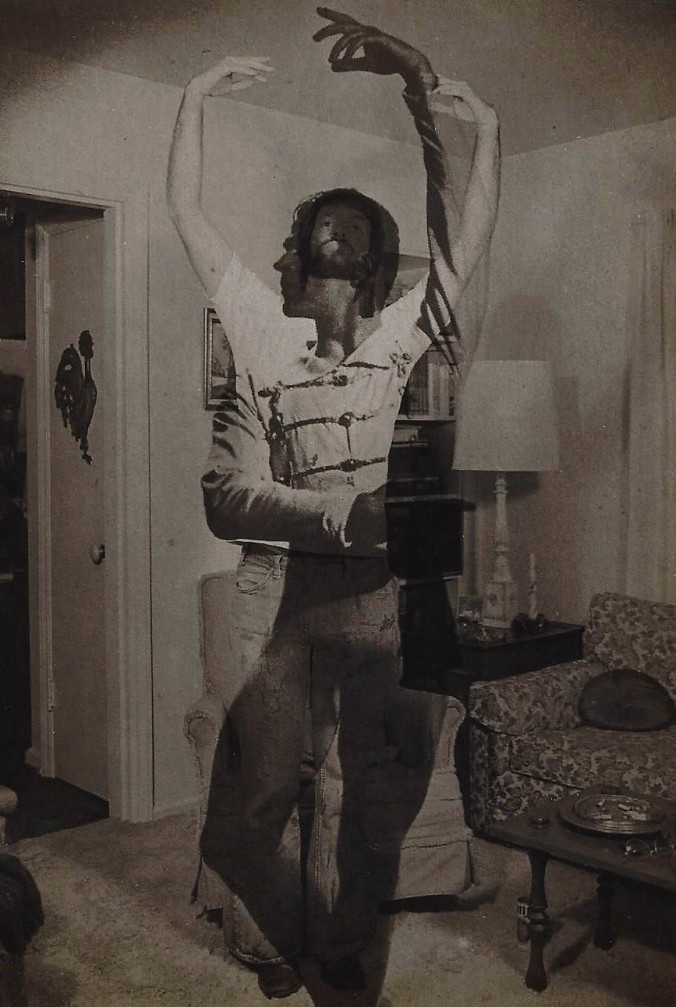
and with an entrechat perfectly achieved
completed the figure.
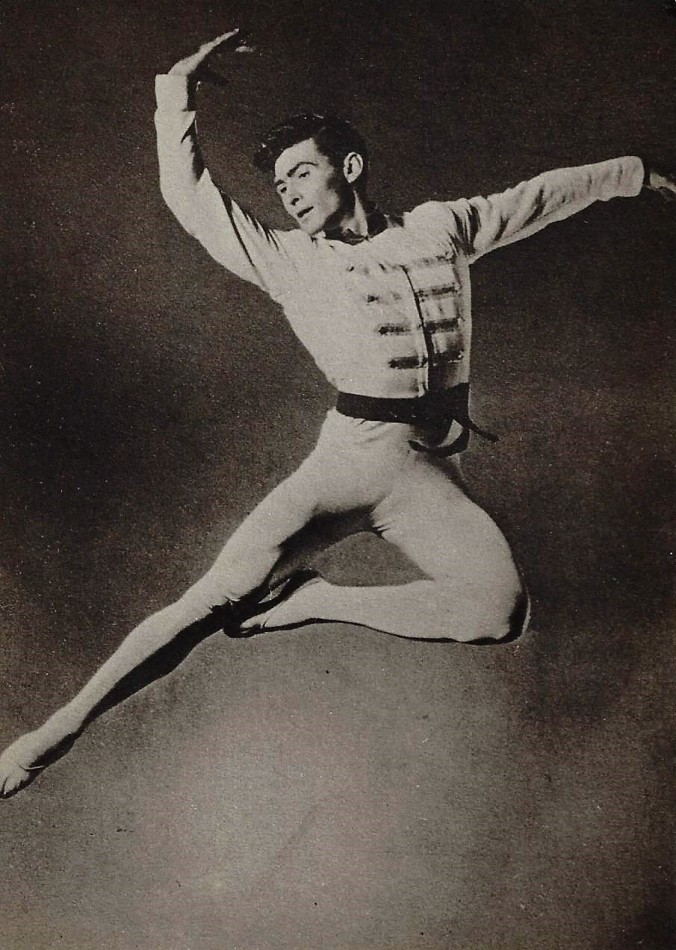
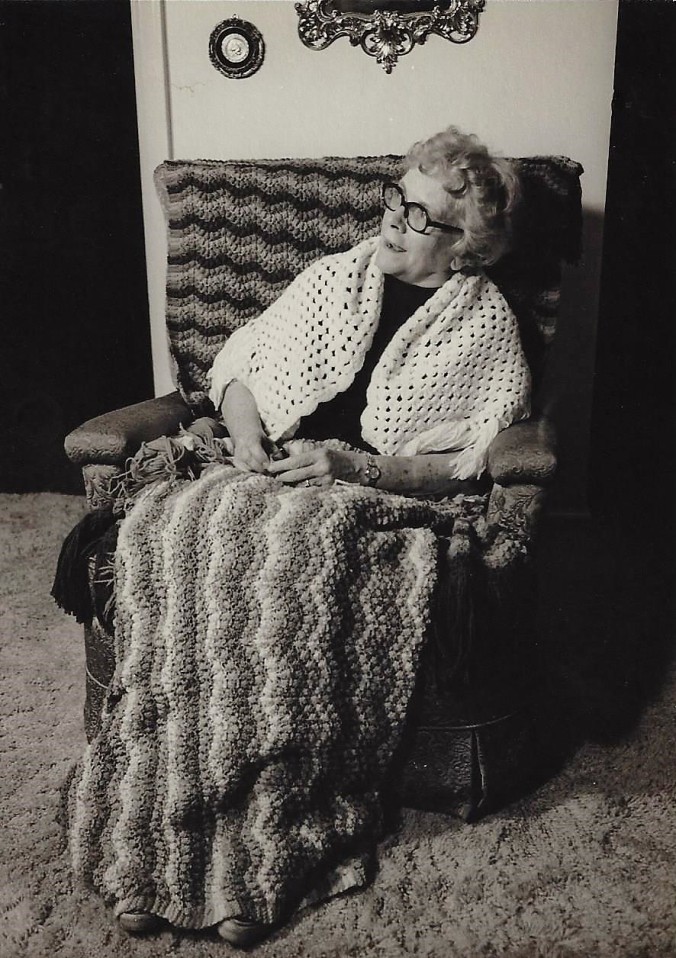
My mother
taken by surprise
where she sat
in her invalid’s chair
was left speechless.
Bravo! she cried at last
and clapped her hands.
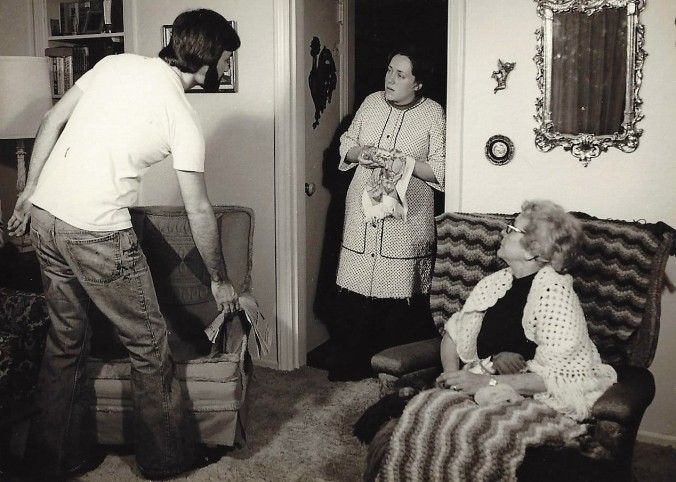
The man’s wife came from the kitchen: What goes on here? she said.
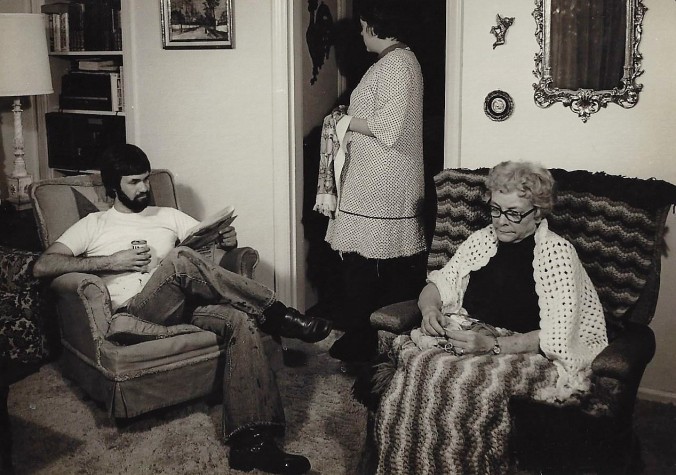
But the show was over.
 Ghost Dog