Best First Lines

Can you guess the names of the novels and the authors from the first lines?

Best First Lines to Novels
1. “What’s it going to be then, eh?”
2. I get the willies when I see closed doors.
3. Call me Ishmael.
4. In my younger and more vulnerable years my father gave me some advice that I’ve been turning over in my mind ever since.
5. Many years later, as he faced the firing squad, Colonel Aureliano Buendia was to remember that distant afternoon when his father took him to discover ice.
6. It was a bright cold day in April, and the clocks were striking thirteen.
7. Mother died today.
8. All this happened, more or less.
9. It was a pleasure to burn.
10. The house was built on the highest part of land between the harbor and the open sea.

Answers
1. A Clockwork Orange -Anthony Burgess
2. Something Happened -Joseph Heller
3. Moby Dick -Herman Melville
4. The Great Gatsby -F. Scott Fitzgerald
5. One Hundred Years of Solitude -Gabriel Garcia Marquez
6. 1984 -George Orwell
7. The Stranger -Albert Camus
8. Slaughter-House Five -Kurt Vonnegut
9. Fahrenheit 451 -Ray Bradbury
10. Islands in the Stream -Ernest Hemingway

The Immigrant

Saw this film tonight. It was a 2013 release. This is what I go to the movies for. It had a terrific story and interesting characters who demonstrated the full range of emotion and transformation as they struggled to survive resulting in the triumph of the human spirit. If there is any actor alive today any better than Joaquin Phoenix I don’t know who it is. Marion Cotillard was radiant as the Immigrant. Two thumbs way up!

Maleficent

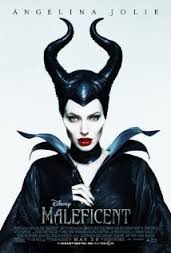
MaleficentAngelina Jolie was magnificent as Maleficent in the retelling of Disney’s Sleeping Beauty, which itself was a retelling of the fairy tale by the Grimm Brothers and a short story by Charles Perrault. The screen play was masterly written by Linda Woolverton. The movie was directed by Robert Stromberg. Angelina’s beauty was breathtaking and her acting was first rate. She is truly a movie star of the first magnitude. The cinematography was stunning. I saw it in digital but it begs to be seen in 3-D. I will have to go back to see it as it was meant to be seen. I saw some parallels to Angelina’s own life but I won’t say anything further here for fear of spoiling the fun. I give it a 10 out of 10. Maleficent has moved into the best film I’ve seen this year category.

Is Beyonce a Terrorist?

I think it is quite extraordinary that author bell hooks and TV host Bill O’Reilly, could possibly come down in the same place on the same issue, but apparently that is what happened. Both have come out and criticized Beyoncé for her negative affect on young black girls. Bill from the point of view of an “imperialist, white supremacist, capitalist patriarch” and bell from the point of view of a radical black feminist. Bill accuses Beyoncé on his show, The O’Reilly Factor, on the Fox News Network, of providing a negative role model for black girls to follow with her so called libertine lyrics and sexual imagery in her videos and music which he says encourages black girls to engage in unprotected sex and by doing so become pregnant. bell calls out Beyoncé for perpetuating the stereotype of the young black woman who is always sexually available and asks the question, is she still a slave? She goes so far to say Beyoncé is an antifeminist terrorist. What gives? You know something is wrong when these two agree even if it’s for different reasons.

bell references the cover of Time Magazine by citing Beyoncé for wearing a white panties and bra set like what she used to wear when she was a young girl. It was actually a two piece bathing suit but it did have the intended illusion of looking like a white bra and panties and it was very sexy and provocative. Is it possible that Bill and bell cancel each other out? Or is it one of those you don’t get to make those kinds of criticisms unless you are one of us kind of things? I don’t know, but my head is spinning and about to explode.

I feel I must hazard a response and offer my opinion, such as it is. Full disclosure: I am a white male of a certain age. Now, I have a great deal of respect for bell hooks, but less so for Bill O’Reilly. I lost all respect for him years ago as he became the chief bloviator Fox News. I have read many of bell’s books, we are both from Kentucky, we share a name with each other, and I have actually met bell hooks, although I’m sure she probably wouldn’t remember. It was a few years ago, in Philadelphia, when I attended a lecture she gave and she was kind enough to autograph a book of hers I brought along for that purpose. It was a wonderful lecture and I remember thinking during the Q & A that she doesn’t much suffer fools. She was rather pointed with several of her questioners. But it was what you would expect from bell hooks.

I think bell has gone too far in describing Beyoncé an antifeminist terrorist and a slave. If anything Beyoncé is exploiting the slave mentality that still exists for her own personal gain. She demonstrates great personal agency in her creativity and has become rich in the process. bell asks the question, would we even be talking about her if she weren’t rich? Yes, I think so, because she is beautiful and talented, not to mention provocative.

Bill O’Reilly is off base with his comments because he is white and comes off sounding like a racist in the process. Actually, Beyoncé provides a positive role for black girls as an empowered, creative, talented, and successful black woman.

In my view there is nothing wrong with sexy or having sex. I need to take a long hard look in the mirror, however, at my own self to be sure my attraction to black women isn’t the product of my own master/slave mentality. I will have to give it some deep thought. Meanwhile, I will continue to enjoy Beyoncé and other talented black sexy women. For the record, I am a Rihanna man.


The Girl Who Played Go

Image

The game of Go has long intrigued me. I learned how to play years ago from a wizard who lived down the stairs. We wiled away the hours playing the game of Go. I moved away and never played again until recently. I took it up once again and discovered it had never really left me. I became reacquainted with Go because of a novel written by a young Chinese girl that sparked my interest all over again.
When The Girl who Played Go first came out in 2003, I read a review about the book and was intrigued. I vowed to keep an eye out for it. In those days one didn’t just automatically add a book to one’s Amazon Wish list. One liked to find books the old fashioned way, serendipity. One liked to stumble across them by accident in some far flung and obscure bookstore somewhere in the midwest, or northeast, or wherever. Years went by and I never saw the object of my desire. By then it was locked away in the recesses of my memory and I was no longer consciously looking for it at all.
Then one day in, 2007, in a crowded book store in Philadelphia, I ran across a book entitled, The Master of Go. To my imperfect memory I thought this must be the book I had long sought. I picked it up, took it home and put in a shelf where it languished a few more years. When I finally got around to reading it, I thought, this is strange. This doesn’t seem like the book I had read about all those years ago. This book, written by Yasunari Kawabata, was about a modern day Go player, in Japan. While I enjoyed the book very much, it was a realistic depiction of an elderly gentleman who was a Go master and the rigors of tournament play in Japan. I read the book and put it away and started a new book and didn’t give the Master of Go another thought; until year 2012. I ran across another book on Go in Louisville, Kentucky at the Half Price Book store where I am wont to go. It was entitled, The Girl Who Played Go. Eureka! Sweet mystery of life, finally I found you! The Girl Who Played Go, written by Shan Sa, was my long sought after book. I immediately purchased the book and took it home and began reading. Friends it was worth the wait.
Go is a territorial contest. In Chinese the game is called, Wei Qi, which means, “surrounding game.” Go has roots in both China and Japan. Most Westerners are unfamiliar with the game of Go. It has simpler rules than chess but is far more subtle and takes longer to master. It is a game that is not structured around the theme of a small battle, like chess. Rather, it is more like a large scale war. In Go, every piece is identical: an ivory or ebony stone is played on a square grid by the contestants. Each piece has the power to turn the tide of a war. Go is powerful metaphor for the story told by Shan Sa in her novel, The Girl Who Played Go.
The Girl who Played Go is a wonderfully written novel set within the framework of the game of Go. It takes place in a small city in Japanese-occupied Manchuria in 1936. An unnamed Japanese soldier has been sent with his battalion to seek out the Chinese resistance movement within the region. Simultaneously, a bored Chinese schoolgirl finds solace obsessively playing Go in the local square eponymously name The Square of a Thousand Winds. In an attempt to infiltrate the enemy, the Japanese soldier joins the city’s Go players, and falls into a game and into love with the girl who played Go. The story of the soldier and the girl are told in alternating, short, chapters. Dramatic events in the lives of the protagonists are repeatedly brought together and interwoven.
The game of Go is a metaphor for the Japanese invasion of Manchuria and the resistance one young girl is able to mount by remaining undefeated at the game. Manchuria has been occupied by the Japanese for several years as the story opens, but there is an active insurgency movement. The girl, however, lives a relatively sheltered life. She is quickly maturing, and becomes sexually active during the unfolding events. The game of go symbolizes the play between man and woman, as well as the conflict between China and Japan.
The story is well presented with some scenes that are picture-perfect observations of life as illustrated by the following examples “A carp pirouettes in a large jar that serves as an aquarium.” “The appeal of a prostitute has the transient, furtive freshness as the morning dew. Prostitutes have no illusions and this makes them the soldier’s natural soulmates. Already damned, they dare not dream of eternity, and they cling to us like shipwrecked mariners clinging to flotsam. There is a religious purity to our embraces.” “The boys with white silk scarves around their necks, posture like tragic poets.” “In the game of Go, only aesthetic perfection leads to victory.’’ “He has the nobility of a man who prefers the turnings of the mind to the barbarities of life.” “It has taken many years for the game of go to initiate me into the freedom of slipping between yesterday, today, and tomorrow. From one stone to the next, from black to white, the thousands of stones have ended up building a bridge far into the infinite expanse of China.”
Shan Sa has an extraordinary background. She was born in Beijing, started writing at seven and enjoyed success as a teenage poet. At 18 she moved to Paris to study philosophy. She worked for a time with the artist Balthus . Writing in French, she won a Goncourt with her first novel. Her novel, The Four Lives of the Willow won the Prix Caze. In 2001, she was again awarded the Prix Goncourt des Lycéens for her novel, The Girl Who Played Go. Her works have been published in 30 languages worldwide. Since 2001, Shan Sa has continued to write literature and paint. Her works have been shown in Paris and New York, and Japan. In 2009, Shan Sa was awarded by the French Cultural Ministry, Knight of Order of Arts and Letters. In 2011, she was awarded by the French President, The Knight of National Order of Merit.

Zero-Base Budgeting

In these times of economic hardship it is particularly important to hold onto your money and stretch your dollars as far as they will go. For the householder with a family to consider budgeting is a must. The budgeting method I found that works best for me is zero-base budgeting. This method is the way I have run my personal finances all my adult life and it works really well.
I first heard about this method when Jimmy Carter was president of the United States in the late 1970s. This is the type of budgeting he employed to balance the budget in Georgia when he was governor of that state and he also used it in the federal budgeting process once in the White House. Carter got the idea from Peter Phyrr, a manager at Texas Instruments, who originally came up with the idea of zero-base budgeting. Zero based budgeting was eliminated in the federal budgeting process in 1981, but elements remained in place throughout the Reagan, Bush, and Clinton administrations.
When I was a manager in industry we also employed a type of zero-base budgeting, even though I had a traditional type of budget to work with. Money was so tight that we had to justify every dollar spent whether it was budgeted or not. If one department needed to spend some money on a piece of equipment, for example, the other departments were expected to help them out by not spending even if they had money to spend.
The way zero-base budgeting works is that every item in the budget must be justified before an expenditure is made. The budget starts with zero dollars. Every item of income is accounted for and budgeted. Any money spent must be balanced by money not spent in other places. This might be what is called in in the modern lexicon, “paid for.”
The term zero-based budgeting differs in its meaning to different people. Some experts say that there should be zero difference between your income and your expenses each month. In this methodology, the individual starts with a blank page and lists all sources of income on one side and all their expenses on the other. A spread sheet is also helpful for this exercise. This will help you control every dollar earned and every dollar spent. From there you look at ways to reduce unnecessary or excessive spending such as eating out or buying clothes.
The way I do it is a little less formal. I have it fixed in my head how much money I have to spend and I don’t spend a dime more than is necessary I justify every single expenditure. This method has served me well over the years and has allowed me to remain solvent even through the tough times.


Travels with Aunt Renie


2014-05-02 16.18.36

Aunt Renie came to Louisville, Kentucky for a visit. It was in the spring of the year so I decided to take her to Churchill Downs to watch the horses run.
We drove to south Louisville where the track is located and parked the car a few blocks away and walked the remaining distance to the track entrance. Aunt Renie is pretty spry for an old lady.
We were both able to get in for the admission price of only $1.00 as we are both senior citizens. Louisville likes to encourage its seniors to go to the track. We made our way through the throng of horse racing fans to a booth where they were selling racing forms. I bought one and stuck it in my pocket. Then we walked out to the track and sat in the sun on the hard benches and studied the form to make our picks.
We studied the racing form and saw that there was a field of eight horses for the next race. Aunt Renie had never been to a race track before so I had to teach her how to handicap the race. I am not an expert myself but here’s how I do it. The first thing I do is to study the form for information listed about the horses in the racing form for that particular race. First of all I look for names I like. Something that clicks. Then I look at the stats on that horse. Who is the trainer, who is the jockey, how much weight does the horse carry, how many races did the horse win this year and last, what are the odds?
I take all these things into consideration and make a selection. I picked what looked like a winner: Psycho Blue Boots. The number 5 horse in the 3rd race. I suggested to Aunt Renie that we bet $10.00 to win on the 5 horse. If it won, we would split the winnings. She agreed.
I pushed my way through the crowd to the pari-mutuel window and placed my bet. “$10.00 to win on the 5 horse in the 3rd race,” I said. The teller smiled, took my money and punched my ticket.
The race was about to begin as was indicated by the trumpet call to the gate. I hurried back to where Aunt Renie was sitting and showed her our ticket. Just then the announcer announced, “They’re off!” and the race began.
“In the lead was Solient Green, on the outside Gold Band. On the rail was Shiftless Joe followed by our horse, Psycho Blue Boots. Royal Pain was moving up to fourth place, Psycho Blue Boots makes a sudden move….They are in the turn, Royal Pain is in third. Psycho Blue Boots moving up on the outside…now moving in…in the stretch Psycho Blue Boots takes the lead… at the wire… Psycho Blue Boots wins by a nose!” he crowd goes wild. I go wild. Aunt Renie goes wild. We are winners!
We won enough on this race we were able to celebrate at one of Louisvilles most prestigious steak houses, Jack Fry’s. We had quite a day at the races and a nice meal to boot!
Next morning, I took Aunt Renie to the airport where she resumed her travels. Next stop, Amsterdam!


Homage to Catalonia

Homage to Catalonia, written by George Orwell, is one of the most important documents of its kind.  It is about a period of time Orwell spent fighting in Spain during the Spanish Civil War. While there, he was almost fatally wounded by taking a bullet to the throat. This event, while quite painful, did little to dampen his voice. He was told he would never talk again, but little by little, he regained his ability to speak. The doctors said he was quite lucky to have survived his wound. Orwell couldn’t help but thinking that if he had been truly lucky, he would not have been shot at all. Orwell prefaced his description of his ordeal stating, “The whole experience of being hit by a bullet is very interesting and I think it is worth describing in detail.”   

The Spanish Civil War was one of the most decisive events of the 20th century. While the memory of this event fades into the background, reading this book brings it vividly back to life. One is transported in time immediately back to the trenches of the battlefields with their stench of human waste and long periods of boredom and sudden periods of danger and to the turbulent streets of Barcelona where rival factions fought each other for control of the Telephone Exchange Building. The importance of such a record would be difficult to overstate.

As one reads the record of the events taking place in Spain, taken from Orwell’s direct experience, one cannot escape noticing the similarity to events taking place in America today in the 21st century. As Lionel Trilling indicated in his excellent introduction to the book, Homage to Catalonia is a testimony to the nature of modern political life. He observes that politics is a relatively new thing in the world, and we do not yet know very much about it. That is hard to understand nowadays, given the 24 hour news cycle and the complete immersion of politics on the cable news television stations. Ideas play a large role in politics and have great power. These ideas are directly connected to another kind of power that is described in the book: the power of force.

In 1937, Orwell went to Spain to observe the civil war and to write about it. When he arrived in Barcelona, he got so caught up in the revolutionary furor that he decided to stay and fight. He joined the militia as private. The militia unit he joined by chance was a unit known as POUM (Party of Marxist Unification). The Spanish Civil war was a fight in defense of democracy against the Fascist enemy led by its chief proponent, Generalissimo Franco.    

There were many rival factions taking up the fight against the Fascists: POUM, communists, Trotskyites, and anarchists. We see some of these same echoes today in the Occupy Wall Street Movement. There are many and various factions protesting the inequality of the 1% of the wealthiest Americans versus the 99% of the rest. These inequalities have brought great unrest to our country along with high unemployment, economic hardship, and social injustice. The militaristic mien of the jackbooted SWAT Teams breaking up the demonstrators in Oakland, Boston, and New York are reminiscent of Franco’s fascist brigades.

When Orwell first arrived in Barcelona, outward appearances revealed it to be a town where the wealthy classes had practically ceased to exist. Nobody said, “Senor” or “Don” anymore, but rather, “comrade.” Practically everyone wore rough working class clothes. Orwell recognized it immediately as situation worth fighting for.  It was a worker’s state where the entire bourgeoisie had either left, been killed, or came over to the worker’s side. There was no unemployment and the cost of living was extremely low. Human beings were trying to behave as human beings and not as cogs in the capitalist machine. In barber shops (all barbers were anarchists) there were notices that barbers were no longer slaves. Orwell said, “A fat man eating quail while children are begging is a disgusting sight. But you are less likely to see it when you are within sight of guns.”   

Orwell was quickly sent to the front to fight in the trenches. In trench warfare, according to him, five things are of paramount importance: firewood, food, tobacco, candles, and the enemy, in that order. The real preoccupation with both armies was trying to keep warm. Firewood was the only thing that really mattered. The trenches were more than 500 yards apart and in those circumstances no one gets hit except by accident. He describes a particular experience that eerily presages passages from 1984:  “In the barn where we waited the place was alive with rats. They came swarming out of the ground on every side. If there is anything I hate more than another, it is a rat running over me in the darkness.” This articular horror is to found behind the doors of room 101.

In another scene, Orwell described a maneuver where he and his fellow soldiers were to attack a fascist position at night. The ground was muddy and wet and he was sodden from head to foot and was weighted down with a heavy rifle and bayonet and 150 cartridges. The patrol was successful in overrunning the enemy redoubt and had the fascists on the run. Suddenly the command to retire came. As Orwell and his men left the parapet and headed back across the 200 yards to their own parapet the fascists reappeared and began to attack the patrol.  He had thought earlier that he could not run being as laden down as he was, but, “I learned you can always run when you think you have 50 armed men after you.”

Barcelona is a town with a long history of street fighting.  While on leave in Barcelona after serving three and one half months at the front, the last thing Orwell wanted was to be mixed up in some meaningless street fight. To be  marching up the street behind red flags inscribed with elevating slogans, and then be bumped off from an upper window by some total stranger with a sub-machine gun- that was not his idea of a useful way to die.

When Orwell saw an actual flesh and blood worker in conflict with his natural enemy, the policeman, he did not have to ask himself which side he was on. Completely innocent people were being arrested owing to police bungling. He reached the point that every time a door banged he reached for his pistol.      

Foreign journalists in Spain were hopelessly at the mercy of the Ministry of Propaganda, though one would think that the very name of this ministry would be a sufficient warning.  Watching a fat Russian agent explaining that a particular event   was an anarchist plot was the first time Orwell, according to his account, had seen a person whose profession was telling lies, unless of course, one counts journalists. One is reminded again of today’s Fox News which studies have shown its viewers to be the most uniformed. Its entertainers, posing as newscasters, have a way of stating their biased opinions as fact.

The fighting began on July 18, 1936. Most anti-fascists in Europe felt a “thrill” of hope. Here at last was democracy standing up to Fascism. For years, the so called democratic countries had been surrendering to Fascism: The Japanese, Hitler, and Mussolini. When Franco tried to overthrow the center left government in Spain, the Spanish people rose up against him. Franco was not really comparable to Hitler or Mussolini. His rising was a military mutiny backed by the aristocracy and the Church.  It was an attempt not so much to install fascism but to restore feudalism. The Spanish working class resisted by revolt. Land was seized by the peasants and factories were seized by trade unions. Churches were destroyed and priests were driven out or killed. In certain areas of revolt as many as three thousand people died on the streets in a single day. Men and women armed with sticks of dynamite rushed across open squares and stormed stone buildings held by soldiers with machine guns. Anarchists and socialists were the backbone of the movement. The entire issue had been reduced to Fascism versus democracy.

The war, in which Orwell claims to have played so ineffectual a part, left him with memories that were mostly evil, and yet he did not wish that he had missed it. The whole experience left him with not less, but more belief in the decency of human beings
Haiku – Short Poems

11199282975_cce75b4723_oAccording to Jane Hirshfield, in the “Art of Haiku,” a Haiku is a poem composed of 17 syllables or sound bites containing vivid imagery. The traditional Haiku poem should evoke a particular season, although western Haiku writers don’t always follow this proscription.

The original meaning of the Japanese word Haiku, according to Hirshfield, is “Playful verse.” The celebrated Japanese poet, Basho, raised Haiku to new levels of significance by adding a spiritual and emotional dimension.

Basho wasn’t too strict about the form. He advised that you can have an extra syllable or two as long as the poem sounded right. If the sound was off, then a re-write was in order. He also said it was important to see the world with new eyes and to write down the present moment.

Three Haikus

Here are three Haikus that I wrote that I would like to share with you.

The monk stumbles from
The Black Mountain Demon’s Cave
To find the world one bright pearl.

The sound of the dragon
Singing in the withered tree
Comes to my ear.

The empty boat returns
From its long Journey abroad
Full of moonlight.