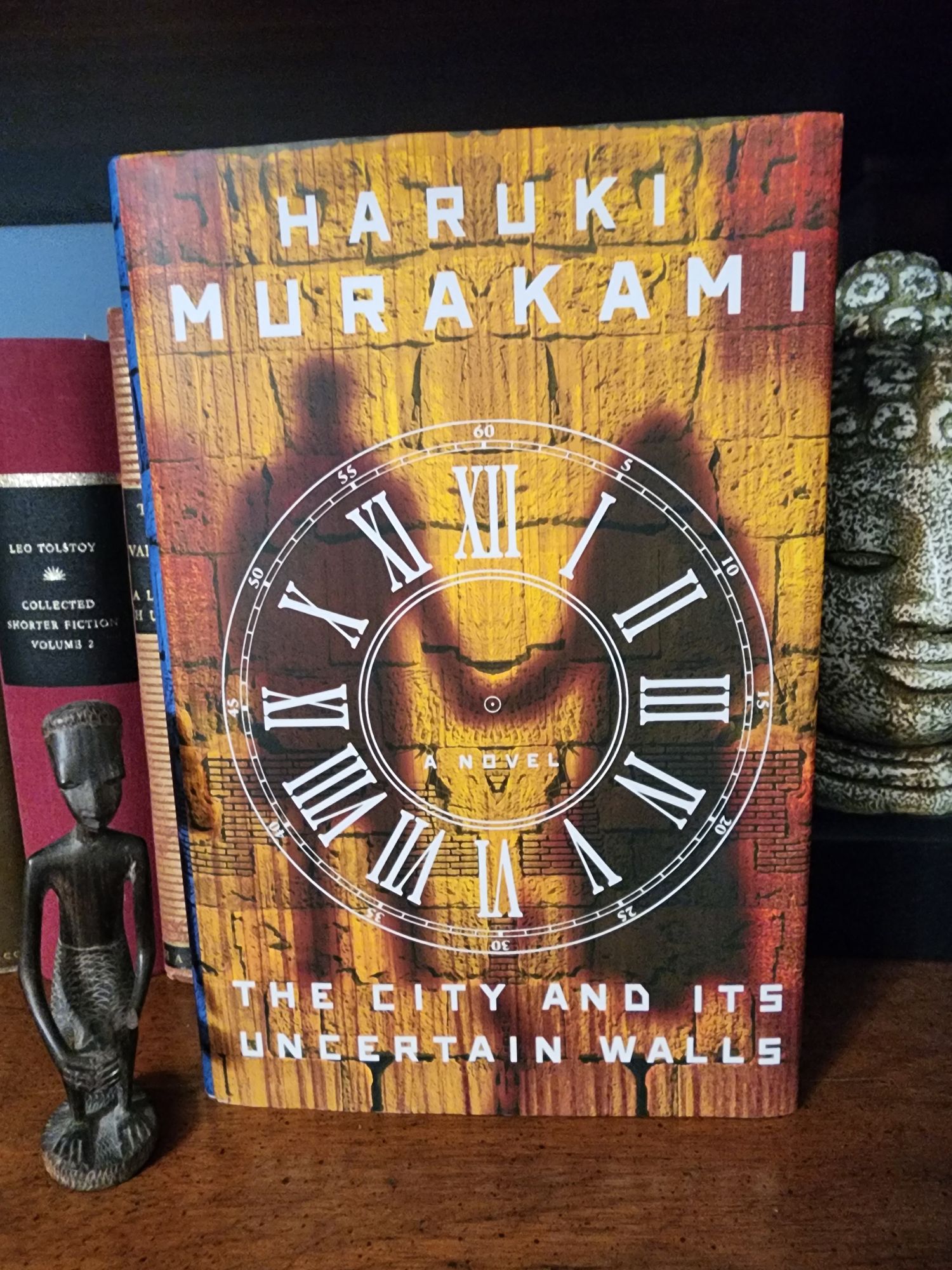
The City and Its Uncertain Walls

Book Review

“The City and Its Uncertain Walls” by Haruki Murakami is a richly imagined and thought-provoking narrative that explores the themes of isolation, identity, and the complexities of urban life. This is a take-off from another of his novels, “Hard Boiled Wonderland and the End of the World”. If you drill deeper into the history of this novel, you will find a short story or novella that Murakami wrote early in his career that he was unsatisfied with.  I think he may have achieved perfection with this latest iteration.

In this book, Murakami masterfully constructs a labyrinthine cityscape that serves as a mirror to the inner worlds of its inhabitants. The protagonist, whose name remains undisclosed, journeys through this enigmatic urban sprawl, encountering a myriad of characters who each add a layer of complexity to the narrative. Their stories intertwine, creating a tapestry of human experience that is as fragmented as it is compelling.

The protagonist’s quest for meaning and connection is punctuated by encounters with figures such as a reclusive artist, a disillusioned academic, and a mysterious woman who seems to hold the key to the city’s secrets. Each of these individuals grapples with their own existential dilemmas, reflecting the broader themes of isolation and identity that pervade the novel.

Murakami’s prose is both lyrical and haunting, imbuing the city with a sense of melancholy beauty. The walls that encircle the city are not just physical barriers, but also metaphors for the psychological and emotional confines that the characters must confront. The walls seem to be alive and have a life of their own as they change slightly from day to day and represent for me a sense of consciousness. They are interior walls as well.

The novel is essentially a ghost story. We don’t realize this until we are well into the narrative. Murakami is a master of magical realism, and he refers to the magical realism of Gabriel Garcia Marquez in his telling of the tale.

Through the struggles of the various characters, the narrative probes into what it means to seek freedom and understanding in a world that is perpetually uncertain.

Some authors’ voices are missed when absent for a while. Murakami is one such author. I return to him again and again.
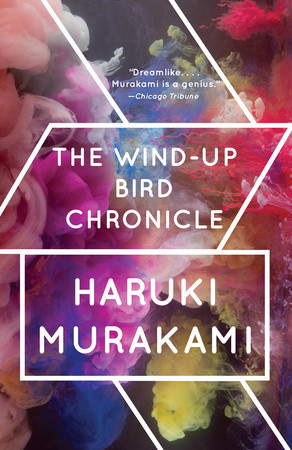
The Wind-Up Bird Chronicle, by Haruki Murakami

Book Review by Benn Bell

The Wind-Up Bird Chronicle is the fourth Murakami novel that I have read. The others are Kafka on the Shore, Norwegian Wood, and Hardboiled-Wonderland and the End of the World. I would be loath to say which one I liked the best. Probably Norwegian Wood is the greatest departure from the other three, but they all stand on their own and are all equally excellent in my view.

I love the way Murakami blends magical realism and naturalism into his novels and the way he sprinkles his writing with cultural references (mostly Western).

Wind-Up Bird is the chronicle of a man who first loses his cat and then loses his wife. It is partly a detective story as the main character searches for his cat and his missing wife. Along the way, we meet some fascinating characters and find ourselves at the bottom of a deep dark well contemplating the mysteries of the universe.

Some of the themes Murakami explores are Identity and journey to the self, polar opposites, the forgotten war, parallel universes, past and present; marriage and love, alienation, aloneness, and isolation; loyalty and trust, subconscious, and reality, and finally the power of fate.

This is a big long book and perhaps a little rambling, and at times incoherent, but it is pure Murakami and if you have a taste for his writing it is a joy to read.

Norwegian Wood

A Novel by Haruki Murakami

Norwegian Wood is the second Murakami book that I have read. The first one was Kafka on the Shore. I was looking for a second book to get into when I landed on Norwegian Wood. I understand that it is a bit of a departure from his other books, but that is ok because I really loved Norwegian Wood.  It was not what I was expecting, but it was perhaps better than what my expectations were. It is essentially a love story of a young man coming of age in Japan in the late 60s.

In Chapter one, Toru Watanabe hears the strains of the Beatles song, Norwegian Wood, as he lands at an airport in Hamburg, Germany. This song recalls to his mind the loves story of his youth in Tokyo when he was attending college. The rest of the novel tells that story.

In the telling, Murakami evokes the sights and sounds of the turbulent 60s, the songs of the period, the student unrest, and the pangs of falling in love. He has created some unforgettable characters, who by the end of the novel, we feel emotionally bonded to and care deeply about.

Spoiler alert!

There are five deaths in the novel, four suicides, and one illness. But the way Murakami tells it, they are played “off stage” and are referred to rather than happening on the page. This gives a little emotional distance from the deaths but never the less has a powerful impact. When Toru got word of Naoko’s suicide in the last chapter it was like a punch to the gut. I literally let out an, “Oh no!” and went on reading. I don’t usually cry at novels but this was an exceptionally gut-wrenching moment.

I started off by saying this was a love story, and so it was, but I think it was more a book about loneliness, mental illness, and suicide. But Murakami is such a beautiful writer the way he presents his story is not depressing, but quite beautiful and poignant.  I truly loved this novel.