Aftershock

The first thriller in a new series

Courtesy of Goodreads

Andrew Vachss writes like an avenging angel who has just been through hell.

I have long been a fan of Vachss and have read all the Burke series. He is sort of a guilty pleasure for me, not exactly literature, but a compelling read nonetheless. The man can write!

I ran across this volume in my favorite bookstore in Philadelphia, Molly Bloom’s, and I just couldn’t resist. Apparently, it is the first book in a new series featuring Dell and Dolly. Dell is an ex-legionnaire who was orphaned at a young age and has no idea where he came from. Dolly was a nurse with Doctors without Borders and their paths crossed when Dell was wounded in action on a mission somewhere in Africa. They fell in love, left their pasts behind, and moved to a small coastal town in Oregon. That is where the story begins.

The star softball player at the local high school walks into school on the last day of class and shoots to death a boy for no apparent reason. She also wounds two others. Why did she do it? Was it justified? That is largely what the book is about. But along the way, we meet some pretty onery characters inhabiting the dark underbelly of the town. We also meet some of the good guys. A small-town lawyer who rises to the occasion and puts on a masterful defense and a colorful expert witness from Kentucky.

The book culminates in a riveting courtroom scene that produces a satisfying denouement.

All in all, a good read. If you like thrillers, this is the book for you. Highly recommend!

Norwegian Wood

A Novel by Haruki Murakami

Norwegian Wood is the second Murakami book that I have read. The first one was Kafka on the Shore. I was looking for a second book to get into when I landed on Norwegian Wood. I understand that it is a bit of a departure from his other books, but that is ok because I really loved Norwegian Wood.  It was not what I was expecting, but it was perhaps better than what my expectations were. It is essentially a love story of a young man coming of age in Japan in the late 60s.

In Chapter one, Toru Watanabe hears the strains of the Beatles song, Norwegian Wood, as he lands at an airport in Hamburg, Germany. This song recalls to his mind the loves story of his youth in Tokyo when he was attending college. The rest of the novel tells that story.

In the telling, Murakami evokes the sights and sounds of the turbulent 60s, the songs of the period, the student unrest, and the pangs of falling in love. He has created some unforgettable characters, who by the end of the novel, we feel emotionally bonded to and care deeply about.

Spoiler alert!

There are five deaths in the novel, four suicides, and one illness. But the way Murakami tells it, they are played “off stage” and are referred to rather than happening on the page. This gives a little emotional distance from the deaths but never the less has a powerful impact. When Toru got word of Naoko’s suicide in the last chapter it was like a punch to the gut. I literally let out an, “Oh no!” and went on reading. I don’t usually cry at novels but this was an exceptionally gut-wrenching moment.

I started off by saying this was a love story, and so it was, but I think it was more a book about loneliness, mental illness, and suicide. But Murakami is such a beautiful writer the way he presents his story is not depressing, but quite beautiful and poignant.  I truly loved this novel.

August Strindberg

Sunday. 2/6/2022. 2:58 pm Riot Café. Reading August Strindberg – Miss Julie and Other Plays. Notes to follow.

Riot Café. Photo by the author

The Red Room, A satirical novel written by Strindberg in 1879. It is not a far cry to go from Red Room to Redrum to Murder. Just saying.

“Strindberg’s naturalism is not a slice of life, but rather the intense, immediate drama associated with what he called, ‘the battle of the brains.’ This is fought, not with theatrical swords or daggers, but with the equally lethal mental cut and thrust of two implacably hostile minds, bound to each other by desire and hatred. It is a battle in which one of them ultimately destroys the other’s will and commits ‘soul murder.’” One is immediately put in mind of Edward Albee’s, Who’s Afraid of Virginia Woolf?

Indeed, Translator Michael Robinson makes the very same observation writing about, The Dance of Death, a play written by August Strindberg in 1900, as a depiction of a marital inferno. He cites the numerous critics who regard it as the forerunner to Eugene O’Neill’s, Long Day’s Journe into Night and Edward Albee’s, Who’s Afraid of Virginia Wolf?

Why read Strindberg today? Because he is as relevant today as he was in 1887.

Strindberg was one of the most extreme theatrical innovators of the late 19th century and ultimately the most influential. The five plays presented here mark his transition from naturalism to modernism.

In The Father, Strindberg shifts away from social and political questions towards more psychological writing. Strindberg was more concerned with the discussion going on in Scandinavia at the time about the “woman question,” sexual morality, marriage, and the shifting psychological states of his characters (Robinson).

The Father is a three-act play with eight characters. The two principal characters are the Captain and his wife, Laura. It is a naturalistic tragedy about the struggle between parents over the future of their child.

The Captain is a scientist and freethinker whose marriage has gone south. He is engaged in a power struggle with his wife, Laura, over their daughter who wants to keep the girl home under her own influence whereas he wants to send the girl away to school. In an attempt to dominate her husband and get her way, Laura decides to drive her husband insane by first insinuating that he is not the girl’s father. The mother (Laura), uses her cunning to subdue and finally destroy the father (The Captain).

Strindberg is a great purveyor of naturalism, but in The Father, he is reaching for “greater naturalism” which is intense, immediate, and associated with a battle of the brains. (Battle of the sexes, battle of wills). The two main characters can be seen as representing the male and female principles.             

Strindberg believed that life is a series of struggles between weaker and stronger wills.

What initially brought me to revisit Strindberg were the films of Ingmar Bergman. Always a big fan of Bergman I began to realize what an influence Strindberg had on the filmmaker. I began to do a little research and it turns out in his lifetime Bergman directed eleven Strindberg plays for the stage, eight for radio and two for television. He was responsible for altogether twenty-eight Strindberg productions. He often returned to the same plays, producing A Dream Play and The Ghost Sonata four times, The Pelican three times and Miss Julie, Playing with Fire and Stormy Weather twice.

My favorite Bergman movie is The Seventh Seal. It has many similarities to the play, The Saga of the Folkungs. They are both set in the 14th century, the plague is present and religion is a major component.

Sources:

  1. Michael Robinson, Translator, Introduction and Notes to Miss Julie and Plays by August Strindberg.
  2. Strindberg and Bergman, Egil Tornquist, November 2012

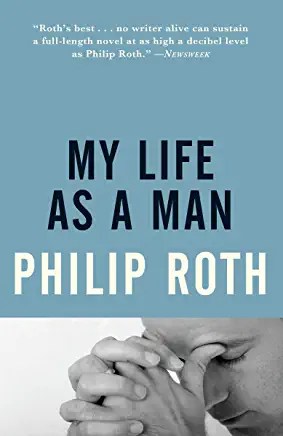
My Life as a Man

A Well-Known Seducer of College Girls

Image courtesy of Goodreads

My Life as a Man, a novel written by Philip Roth, comes from Roth’s middle period, after Goodbye Columbus and Portnoy’s Complaint, but before American Pastoral, I Married a Communist, and The Human Stain.  Roth has written some 30 odd books, not all of them odd but some pretty strange, and he is possibly America’s best writer, if not one of the most prolific. Beats me why he never won the Nobel, for he was surely deserving. 

I’ve read most of his later works and all of his earlier works and I am slowly catching up on his middle period. I don’t profess to be an expert on Roth, but I certainly like his writing I and return to him over and over again.

This book, My Life as a Man, is a story within a story, or two stories within a story, then Peter Tarnopol’s (narrator) true story. It concerns his marriage to Maureen Tarnopol who tricked him into marrying him and has become his arch-enemy. Maureen, in their divorce proceedings, described him as, “…a well-known seducer of college girls.”

Peter Tarnopol is a promising young writer who is also a college professor who teaches creative writing. He occasionally gets involved with his young students who become grist for his mill. He teaches literature and creative writing at The University of Wisconsin and Hofstra College on Long Island. He was a patient of Dr. Otto Spielvogel, a Manhattan psychoanalyst, from 1962-1967. Spielvogel considered Peter Tarnopol to be among the nation’s top young narcissists in the arts.

As usual, Roth draws from his own life and previous fiction and writes about what he knows best.

It is a rollicking satire teetering on the edge of tragedy as Roth brilliantly tells the tale of his marriage and his many peccadillos.

Roth writes in an attempt to make art out of his calamitous life and to spin gold out of straw. Is it him or his characters, or is it Memorex? You be the judge. For him, (Tarnopol), “…writing is a vain attempt to get myself to feel like something other than a foreigner being held against his will in a hostile and alien country.”

For Philip Roth, life is a Kafkaesque nightmare whereupon the dreamer ruminates on the possibility of being transformed into a gigantic cockroach. Upon awakening, he heeds the advice of Gustave Flaubert who suggests leading a regular and orderly life and being violent and original in his writing. This is a lesson Philip Roth seems to have taken to heart.

Dr. Seuss: “And to Think I saw it on Mulberry Street.”

OK, I guess I’ll weigh in on this. My two cents are worth about the same as anyone else’s, I reckon.

What we have here is an intersectionality. Where cancel culture meets book burning and freedom of speech meets banned books. Now, for the record I am against burning books and it seems like everyone has a match these days. And I have always enjoyed Dr. Seuss and even read these books to my kids when they were growing up….

But! There is no book burning going on here, no cancelling of Dr. Seuss, just a recalibration. His own estate has made the decision to not publish six books that contained overtly racist images. Six out of hundreds. And these books are still available. As a matter of fact, they are flying off the shelves!

We are living in strange times. The culture has evolved in many good ways in some bad ways. There is no question we come from a white supremacist patriarchal past. But that is not what we look like today. We are a multicultural, multiracial society and everyone deserves a seat at the table and everyone deserves to be included. It is important what books are put in front of children as they are the most impressionable among us. Reinforcement of white stereotypes and racial tropes is inappropriate. White children don’t need the reinforcing of white supremacy and children of color don’t need to be exposed to the hurtful images that remind them of their second-class citizenship.

This is a publishing decision, just like any other, but this one reflects the willingness of the estate of Dr. Seuss to learn and try to do better. It is not part of the so-called cancel culture, which I question really exists anyhow.

Zuckerman Unbound

Book Blurb

Not the best Philip Roth book but pretty good. It always amazes me how Roth can take the ordinary and turn it into literature or a simple idea like what happened to him after he became famous after publishing Portnoy’s Complaint and spin gold out of it. Pure genius! And quite funny too, I might add. I had several laugh out loud moments as I was reading this book. Highly recommend!

Top 10 Books 2020

I read 28 books in 2020. Here are my top 10 favorites:

  1. 2666 – Robert Bolano
  2. The Follies of God – James Grissom
  3. War and Peace – Leo Tolstoy
  4. The Adventures of Auggie March
  5. The Odyssey – Homer
  6. All Quiet in the Western Front – Erich Maria Remarque
  7. Notes from the Underground – Fyodor Dostoevsky
  8. The Weight of Ink – Rachel Kadish
  9. Tropic of Cancer – Henry Miller
  10.  The Last Carousel – Nelson Algren

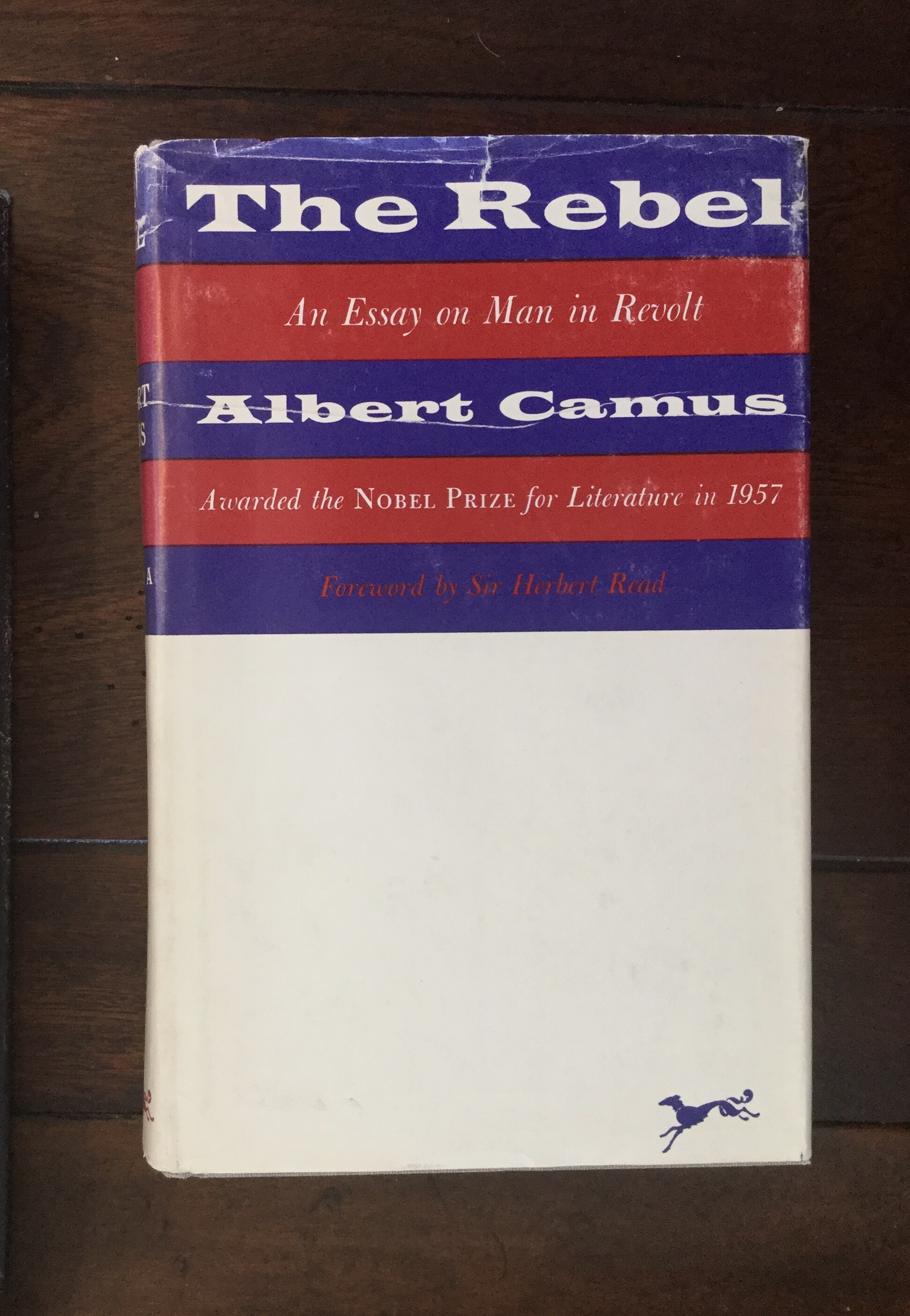
THE REBEL

The Rebel – Albert Camus

I’m giving The Rebel another read, a book I read when I was in my 20s, written by a man who has shaped my views more than any other, Albert Camus. You might think that The Plague might be more in order given the current plague we are now living through. Well, I’ve read that one too and it is vividly etched in my brain. But no, for me, given the current political situation in the USA, The Rebel is far more relevant. At no time during my lifetime, with the possible exception of the Vietnam war, has the idea of “man in revolt” been more relevant or more important. Updates to follow. I’ll be reading with new eyes…

Eugene Onegin, written by Alexander Pushkin (1799-1837)

wp-15899173769308512276441121568517.jpg

A challenge by Elisabeth from A Russian Affair

I am no literary scholar but I do like to play around the edges some. So, in the spirit of playing around the edges, I submit the following for your consideration.

First of all, I would like to thank Elisabeth for introducing me to Alexander Pushkin and this delightful verse novel, Eugene Onegin. I had of course, heard of Pushkin, but never read him. So, it was a pleasant surprise.

As I was reading, Eugene Onegin, I heard some echoes of Poe, and Shakespeare. There were of course, dozens of other literary references throughout the work, which were richly detailed in the appendix. I was put in mind of Poe’s, The Raven, and Shakespeare’s Hamlet. Although the meter was quite different, there were similarities such as the generous use of alliteration, the rhyming scheme and some of the same words rhymed. Poe and Pushkin were contemporaries and I could not help but wondering if their paths might have crossed or if one influenced the other. So, I did a little digging and found some interesting references.

There is an account of Poe and Pushkin mentioned in the novel, Time, Forward, by Soviet writer Valentin Kataev. The novel’s American character, Ray Roupe, says, “Certain of Pushkin’s poems had kinship with the stories of Edgar Poe, which is of course paradoxical, but quite explicable. When still a youth, Edgar Poe travelled to St. Petersburg on a boat. They say that in one of the taverns there he had met Pushkin. They talked all night over a bottle of wine and the great American poet made a gift of the plot, Man of the Crowd, to Pushkin.” So, I guess I wasn’t the only one who imagined that.

The Raven, by Edgar Allen Poe, has internal rhyming and a general rhyme scheme of ABCB BB. Meter is Trochaic Octameter which is one stressed syllable followed by one unstressed or Dum-da, Dum-da,  Dum-da.

Eugene Onegin consists of 366 14-line stanzas that more or less meet the definition of a sonnet but which serve as paragraphs in the verse novel. There are over 5000 lines of poetry. The meter is Iambic tetrameter. An iamb is a beat in a line of poetry where one unstressed syllable is followed by a stressed syllable, that sort of sounds like this: duh-DUH, duh-DUH, duh-DUH, duh-DUH with a rhyme scheme of ABAB; CCDD; EFFEGG

Here are some examples of similarities and references to Poe and Shakespeare:

Pushkin: “I’d seek to borrow – languid sorrow”(Chapter 3 Stanza 30)

Poe: “Vainly I had sought to borrow from my books surcease of sorrow.”

Tatyana’s letter to Onegin: “There’s no one else I adore. The heaven’s chose my destination and made me thine for evermore.”

“My life til now has been a token in pledge of meeting you, my friend, and in coming, God has spoken.

You’ll be my guardian in the end.”

Poe: “Nevermore” is used throughout The Raven. “That God we both adore,” “Leave no black plume as a token of the lie thy soul has spoken.”

Pushkin (Chapter 5 Stanza 11):

And what an awesome dream

She’s been dreaming

She walks upon a sunny vale

All around her dully gleaming.

Poe: “All the seeming of a demon’s that is dreaming.”

Pushkin: (Chapter 7 Stanza 15)

“…Of fisherman were dimly gleaming

Tatyana walked, alone and dreaming,”

Pushkin: (Chapter 8 stanza 20).

“Was this the Tanya he once scolded

In that forsaken, distant place?”


Poe: “By that Heaven that bends above us—by that God we both adore—

Tell this soul with sorrow laden if, within the distant Aidenn,”


Pushkin: “Our lives were weary, flat, and stale.” (Chapter 1 stanza 45)

Shakespeare: “The world is weary, stale, flat, and unprofitable.” (Hamlet, Act 1 scene 2)

Pushkin: “Poor Yorick!” (Chapter 2, stanza 37)

Shakespeare: “Poor Yorick!” (Hamlet, Act 5 Scene 1)


In Chapter 1 I became convinced Pushkin my have had a foot fetish:

“I love their feet-although you’ll find

That all of Russia scarcely numbers

Three pairs of shapely feet…And yet,

How long it took me to forget

Two special feet. And in my slumbers

They still assail a soul grown cold

And on my heart retain their hold.” (Chapter 1 stanza 30)

I also found it quite interesting that Pushkin foreshadowed his own death in his description of the duel with Lensky. That was a bit of a chill!

All in all a very fun read! Thank you again for this marvelous challenge!


pingback: https://wordpress.com/read/blogs/82358410/posts/967


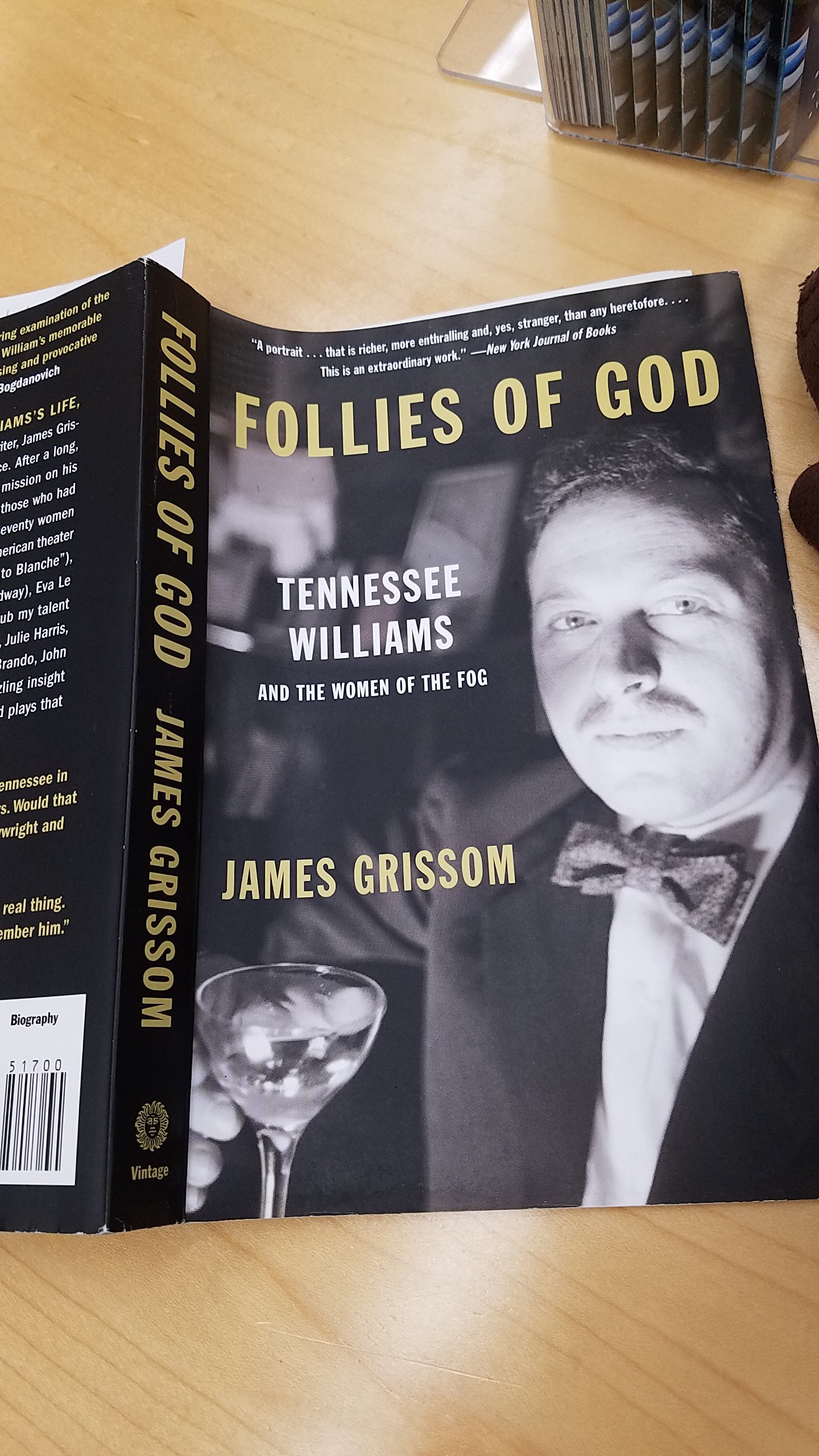
Follies of God

Book Review

wp-15886835993568539113605201244016.jpg

Follies of God is a book that came a long at just the right time for me. I had been thinking about Tennessee Williams for a while and had just read one of his plays. He has long been a figure that has fascinated me, both the man and his work.

I was watching YouTube videos one evening and came across an interview with a young man who told a story about meeting Tennessee Williams. It seems he got a call one morning and his mother woke him and said there was a man on the phone who says his name is Tennessee Williams. The young man realized that it must be him because he had written him a letter asking for advice on how to be a writer. He took the call. As the young man related the story, Tennessee asked him to come to have lunch with him. Where are you, he asked? I am in New Orleans, Tennessee answered. But I’m, in Baton Rouge. Well, you better hurry. So, the next day James Grissom drove to New Orleans to meet Tennessee Williams for lunch and thus began the amazing story of how this book came about. Well, I was hooked. I ordered the book that night on Amazon and it arrived very shortly thereafter.

James met with Tennessee Williams and was given a mission. To find the women that had meant so much to him, the women who appeared in his plays and movies, and some of whom were his muses and characters he modeled his characters on or wrote for. He wanted to know if he mattered to them. He called these women, The Follies of God. The characters he created for the stage he called, The Women of the Fog. Tennessee described his writing process as one of creating a mental theater in his mind. The fog rolls in across the boards and a female emerges. “I have been very lucky. I am a multi-souled man, because I have offered my soul to so many women, and they have filled it, repaired it, sent it back to me for use.”

This book is the story of that mission and how it came to be. It also gives us deep insight into the mind of one of the most creative geniuses of the American theater. Tennessee Williams needed a witness and young James Grissom was who he chose.

“Good Lord, can I get a witness? Here is the importance of bearing witness. We do not grow alone; talents do not prosper in a hothouse of ambition and neglect and hungry anger. Love does not arrive by horseback or prayer or good intentions. We need the eyes, the arms, and the witness of others to grow, to know that we have existed, that we have mattered, that we have made our mark. And each of us has a distinct mark that colors our surroundings, that flavors the recipe of every experience in which we find ourselves; but we remain blind, without identity until someone witnesses us.”

During the course of fulfilling his mission James Grissom talked to some of the most important figures on the American Theater scene: Lillian Gish, Maureen Stapleton, Marlon Brando, Elia Kazan, John Gielgud, Jessica Tandy, Kim Hunter, Geraldine Page, and Katherine Hepburn, to name a few. This book is the fascinating account of his interviewing these witnesses and the sometime startling things they had to day. And yes, Tennessee did matter, and so he still does.