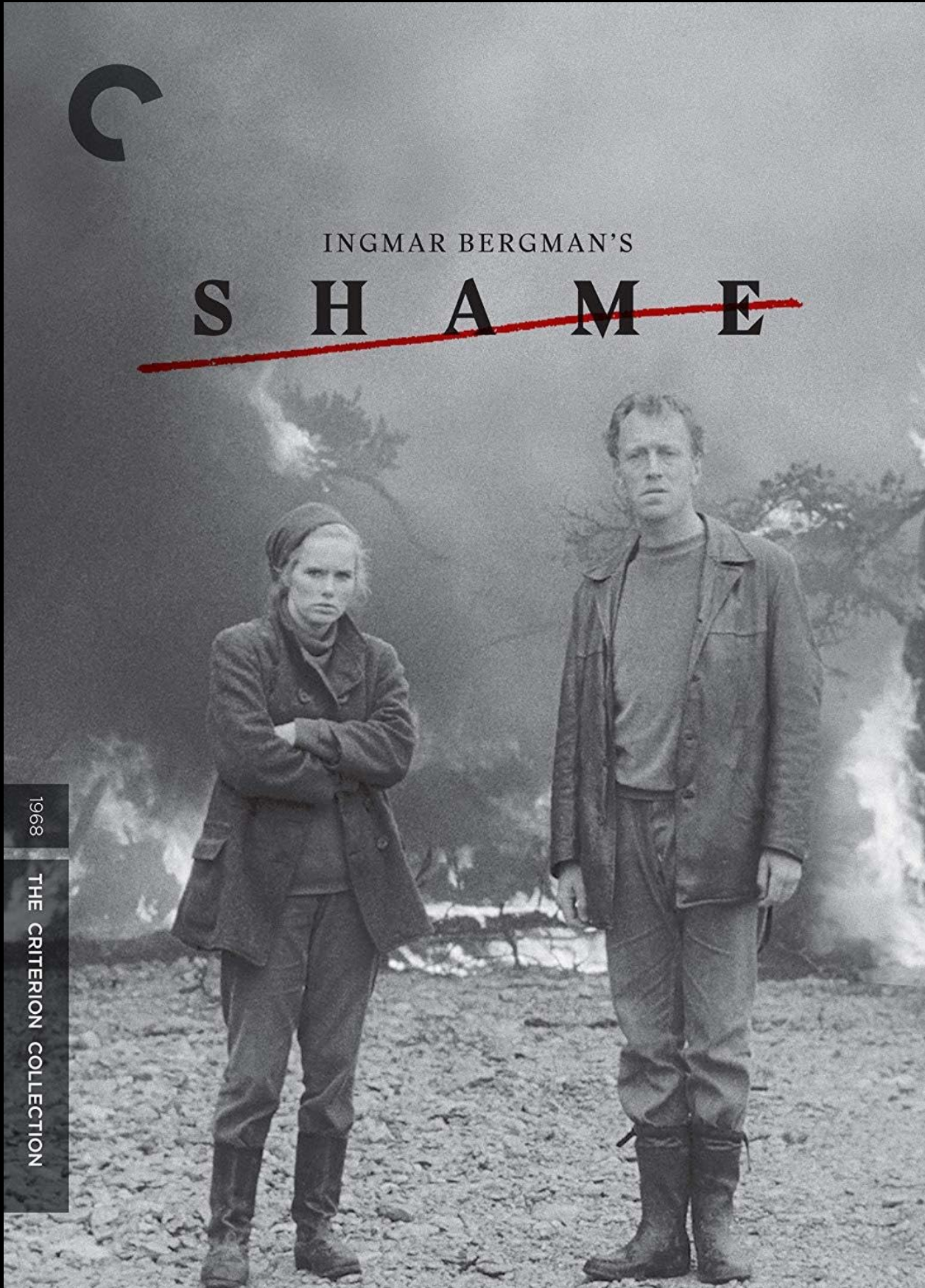
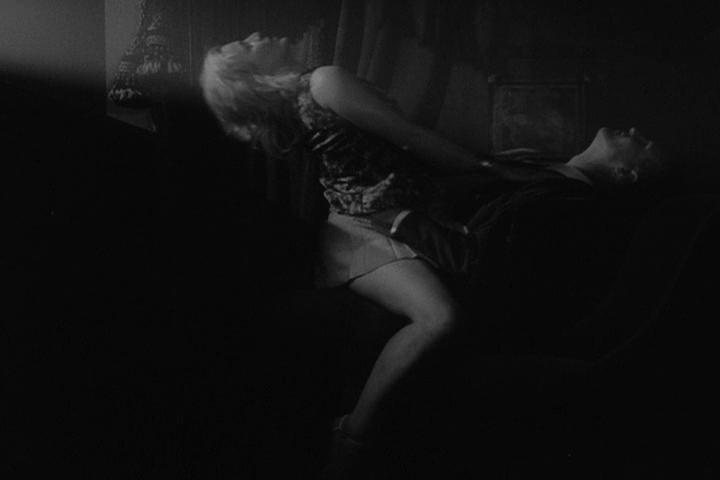
I’ve watched this movie several times over the last 50 years, most recently the night before last. It has always resonated with me, but only on this latest viewing did I feel I finally understood it: at its heart, it is about innocents caught in a war they didn’t choose. Made at the height of the Vietnam War, the film might be considered anti-war, yet its setting is neither Vietnam nor World War II. Instead, a civil war rages in, of all places, Sweden. The central characters are two musicians living on an island, hoping to escape the chaos until the war catches up with them. We are given little information about the conflict and cannot tell who the good guys or bad guys are. Rather than pushing an ideology, the film focuses on the raw emotion of its protagonists as war strains their already burdened marriage. Liv Ulman and Max von Sydow play the couple to perfection. As usual, Sven Nykvist’s cinematography masterfully portrays both the warring armies and the protagonists. Bergman said in an interview that, while writing the film, he imagined what he would do in these situations and shaped the scenes around those responses. That personal approach connects with what finally struck me on this viewing: the film’s power lies in how war overtakes individual lives. An amazing movie—one I finally feel I understand.
Dostoevsky, Bergman, Camus, and the search for truth
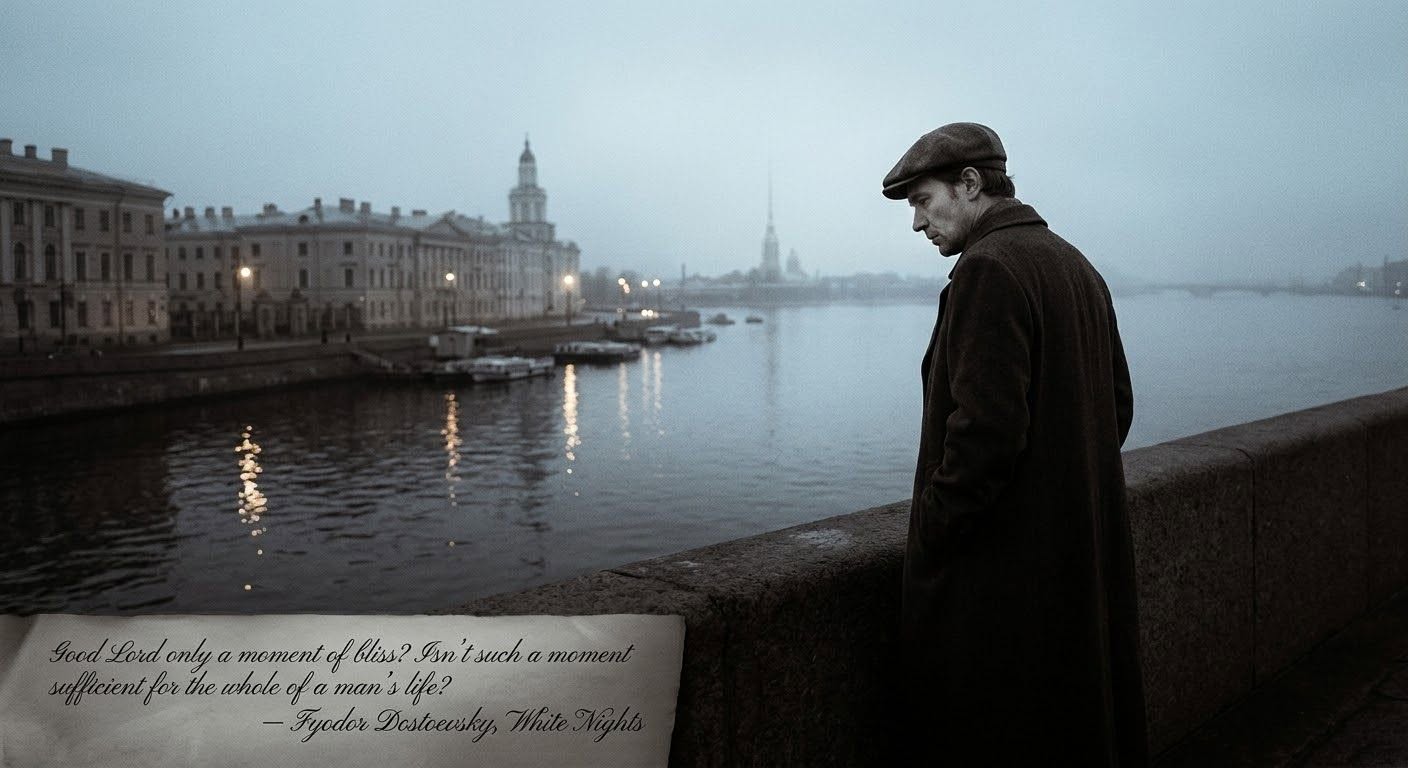
In rereading White Nights by Fyodor Dostoevsky, I encountered this passage:
The Dreamer tells Nastenka that he feels like the spirit of King Solomon after a thousand years imprisoned beneath seven seals, which have finally been removed. He then says that a thousand floodgates have opened in his head and that he must pour out his words.
The seven seals is a familiar reference. It got me to thinking. My question is: What underlies this reference? I remember the Seventh Seals from the Bible and a movie by the same name.
My research reveals fascinating legend involving King Solomon, supernatural imprisonment, and seals that bind powerful spirits. But there’s a distinction worth making: the story of Solomon being imprisoned in a jar for a thousand years until the seventh seal was removed is not a well-established biblical story. It sounds like a blending of several traditions involving Solomon, demons, magical seals, and the number seven.
And an important distinction: Solomon isn’t the one imprisoned. It’s his spirit, or, more precisely, a supernatural being associated with Solomon in the legend. In the Jewish, Islamic, and later occult traditions Solomon’s magical ring gives him power over demons.
In the New Testament’s Book of Revelation, chapter 5 onward, a scroll is sealed with seven seals. As the seals are opened, apocalyptic events unfold.
Why Does Dostoevsky Use This Image?
I think the symbolism is especially revealing. The Dreamer has spent his life emotionally imprisoned in solitude, fantasy, and unexpressed longing. When he finally meets Nastenka and feels a connection with another human being, something inside him breaks free. His words pour out because his inner world has suddenly found an audience.
The image works on two levels: The mythological level: a supernatural spirit is released from its confinement. The psychological level: a lonely man is released, temporarily, from the prison of his own isolation.
And there’s a wonderful irony here: the Dreamer describes this liberation in such an elaborate, theatrical way that Nastenka gently teases him for sounding as if he’s reading from a book.
That’s Dostoevsky having a little fun with his own character.
I particularly like the connection between the seven seals and the thousand floodgates. The seals are removed, and suddenly everything inside the Dreamer can flow. He’s not merely happy; he’s overflowing with the possibility of human connection.
I am wondering: is Dostoevsky suggesting that Nastenka truly frees the Dreamer, or that she merely gives his fantasies a temporary outlet? This might connect with other literary ideas I have been thinking about lately.
Another question I have: What is the exact nature of the Seal? Also, I like the reference to the Seventh Seal as it is one of my favorite movies by Ingmar Bergman. What is the connection?
Dostoevsky and Bergman are approaching very different subjects, but both use images of things being sealed, concealed, and finally revealed. And given my interest in Camus and Sartre, I think there’s a rich existential question hiding in this comparison.
What exactly is a seal?
The answer depends on which tradition we’re talking about.
In the biblical Book of Revelation, a seal is essentially a mark of authority and a means of securing something that is not yet to be revealed. Revelation transforms that physical object into a cosmic symbol.
In Revelation 5, a scroll in God’s hand is sealed with seven seals. No one is initially found worthy to open it. Then the Lamb, representing Christ, is declared worthy to open the scroll.
Each seal that is opened reveals another vision of judgment and catastrophe. When the seventh seal is opened in Revelation 8:1, there is silence in heaven for about half an hour. That is the silence of God that Bergman is suggesting in his film, The Seventh Seal.
But what does the seal mean in White Nights?
Here we must distinguish Dostoevsky’s literary allusion from the biblical text.
The Dreamer says that he is like the spirit of King Solomon, released after a thousand years under seven seals. He immediately compares this release to a thousand valves opening in his head, compelling him to pour out a river of words.
Notice what Dostoevsky is doing: he borrows the grandeur of a supernatural legend to describe an intensely personal experience.
The Dreamer has spent years locked inside his own imagination. He has dreamed of companionship without really experiencing it. Now Nastenka is listening to him, and he can finally express himself.
I would interpret the seals here as the barriers that separate the Dreamer’s rich inner life from actual human connection.
But there is an irony. Has Nastenka really freed him? Or has he merely found a new person around whom to construct his fantasies? His liberation might be real, but it may also be temporary.
That ambiguity is what makes the passage interesting.
What about Bergman’s The Seventh Seal?
The title of The Seventh Seal comes directly from Revelation 8:1. Bergman uses the biblical image to frame a film about mortality, faith, and the apparent silence of God.
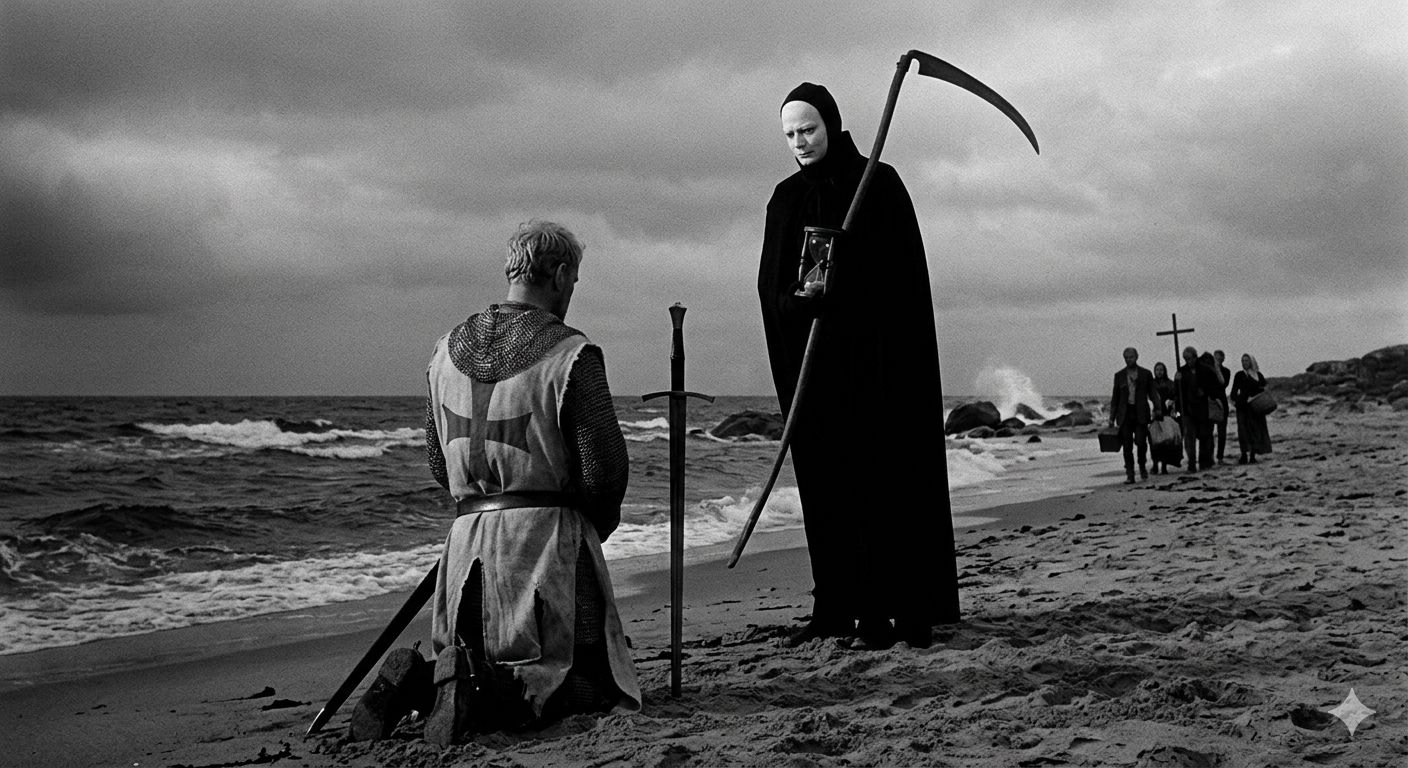
The knight, Antonius Block, returns from the Crusades to a land devastated by plague. He plays chess with Death, hoping to delay his end while searching for answers to questions that faith has failed to settle.
Here is the fascinating distinction between the two works.
In White Nights, the opening of the seals represents a personal outpouring: a lonely man suddenly feels that he can speak and be heard.
In The Seventh Seal, the opening of the seventh seal leads not to a flood of words but to silence.
That silence is central to Bergman’s existential drama. The knight wants evidence that God exists, that life has meaning, and that death is not the final answer. Yet the universe does not give him the clear response he wants.
Dostoevsky’s Dreamer is released from silence but may still be imprisoned by his fantasies. Bergman’s knight seeks an answer from beyond himself but encounters silence.
Both men confront the gap between what they desperately want to believe and what experience actually gives them.
This brings us close to Camus, too. In The Myth of Sisyphus, Camus examines our desire for ultimate meaning in a world that does not provide a definitive answer. The problem isn’t simply that we lack answers; it’s that we continue asking questions for which the universe may offer none.
And perhaps that is the deeper significance of a seal: it represents the boundary between what we long to know and what we can actually know.
Breaking the seal may reveal the truth. But it may also reveal that there is no answer waiting behind it.
In Bergman’s film, for me, the silence itself is what Block encounters in his quest for the truth. Perhaps the knight’s tragedy is not that he fails to find the truth, but that he cannot accept the possibility that no answer will come.
Antonius Block returns from the Crusades having risked his life for a faith that he now desperately wants to understand. He wants more than belief. He wants certainty. He wants God to speak, to make His presence unmistakable.
But the silence persists.
There’s a moment in the film that I find particularly important: Block confesses to a person he believes to be a priest, explaining his doubts and his desire to know. He speaks openly about his fear of death and his need for meaning. Then he discovers that his confessor is Death himself.
The scene is devastating because Block has exposed his innermost thoughts to the very thing he is trying to outwit. This scene has particular salience and resonance for me and has stayed with me all these years.
But I don’t think the film simply tells us that God doesn’t exist. Bergman leaves room for uncertainty. The silence might indicate God’s absence, God’s unknowability, or the limitations of our own capacity to understand.
That distinction matters.
This is where I think my reading intersects beautifully with Camus.
Camus’s Absurd is born from the confrontation between our hunger for meaning and the world’s silence. We ask the universe to explain itself, and it doesn’t answer in a language we can understand.
But Camus’s response differs from Block’s quest. Rather than continuing to demand an ultimate answer, Camus asks us to live lucidly in the absence of one, to acknowledge uncertainty without surrendering our lives to despair.
Block wants to know whether his life has a cosmic meaning. Camus might ask whether he can live meaningfully without ever resolving that question.
And there’s an unexpected moment of grace in Bergman’s film. Block distracts Death long enough for Jof, Mia, and their child to escape. In the midst of his uncertainty, he performs an act that allows others to live.
He may not discover the truth about God, but he finds an opportunity to act compassionately.
Perhaps the answer isn’t spoken because it must be lived.
I’m not suggesting Bergman necessarily intended that as a final answer. The film is more ambiguous than that. But the contrast between Block’s unanswered questions and his eventual act of sacrifice makes this interpretation compelling.
There’s a paradox here that I love: we may spend our lives searching for the meaning of existence, only to discover that the search itself has prevented us from fully experiencing existence.
Block wants an answer from God. The Dreamer in White Nights wants an escape from his isolation. Both long for something beyond their present circumstances. One seeks certainty; the other seeks connection.
And perhaps neither can be found exactly where the seeker expects.
In Camus’s The Fall, Clamence spends much of that novel talking, confessing, and analyzing himself. But does all that talk bring him closer to freedom, or does it become another prison? It’s an interesting contrast with Block, whose moment of grace comes not through an answer but through an action.
Maybe that’s the distinction: we cannot always resolve the great questions, but we can decide how to live while they remain unresolved.
As Camus might remind us, we don’t have to solve the mystery of existence before we participate in it.
Sometimes the silence remains, but we learn to live differently within it.
Movie Blurb Catching up on my Bergman. I’ve seen The Silence before, back in the 70s, when I first became acquainted with Bergman and he quickly became my favorite auteur. One benefits from the passage of time and the experience one gains from it. I watched The Silence again with new eyes and a new […]
Philadelphia Story There are a million stories in the semi-clad metropolis and this is one. Philadelphia is a city of neighborhoods, and in each neighborhood there is a distinctive culture or ethnicity. Each neighborhood has gradually become more mixed and diversified. In South Philly you have the Italians, in Fishtown the Irish. West Philly and […]
Once I saw her in the light of day, I suggested she might see a plastic surgeon. “Listen, sweetheart,” I lisped, “Did you ever consider plastic surgery?” Well, she turned on me. It was awful. I can see now why they used to name storms after women. She grabbed my .38 right out of my […]
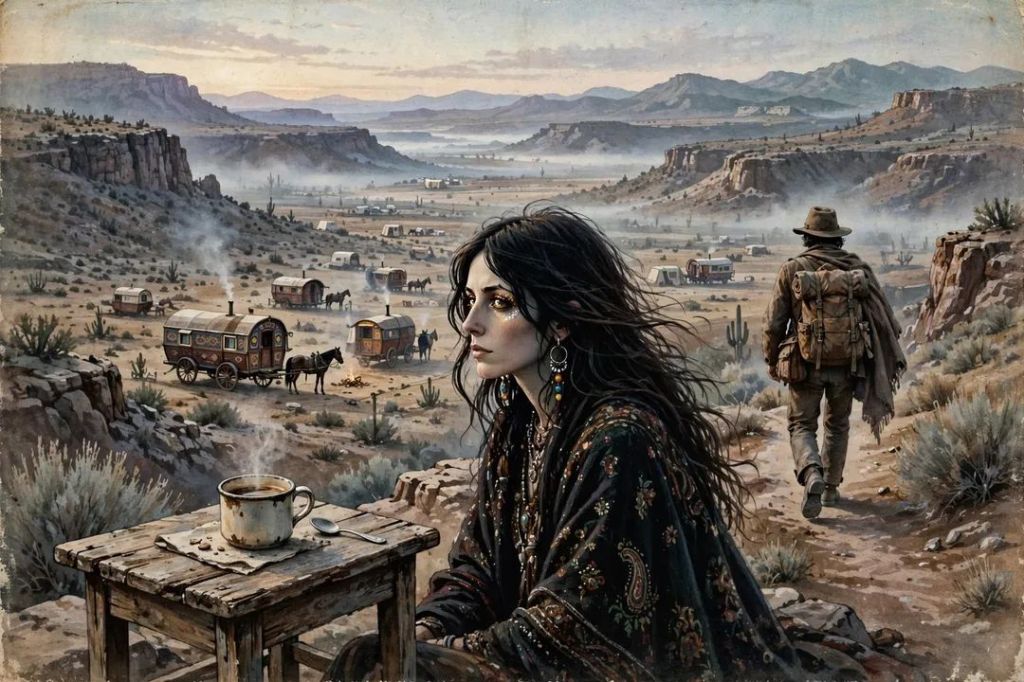
I am a huge Bob Dylan fan, and one of my favorite songs is One More Cup of Coffee. I have been thinking a lot about this song, and it has inspired some of my own writing, especially in my play, The Last Chance Saloon. I decided to do a deep dive on the net to learn more about the song and the story behind it. This is what I found.
Accordingto my research, One More Cup of Coffee (Valley Below)is one of Dylan’s most mysterious songs. It sounds as though it came from an old folk tale, but its origins are actually quite specific.
Dylan was 34 years old in May 1975 when he was visiting the south of France. He was staying with a friend who took him to the annual Romani pilgrimage and festival at Saintes-Maries-de-la-Mer.
Dylan has since related several versions of the story. He described encountering a Gypsy king with an imposing presence, numerous wives, and a large number of children. He stayed around the community for about a week.
In one version, the song came to him out of that experience. In another, he described leaving the gathering and asking for one last cup of coffee before setting out. He sometimes talked about the place as dangerous, mysterious territory.
But years later, Dylan gave a much more revealing explanation. He said the festival probably influenced the song but added that the verses came from someplace else. The song wasn’t about anything particular, and “the valley below” became a thing he hung it on.
What is the song actually about?
On the surface, it’s about a man who has spent the night with a beautiful, mysterious woman:
“Your breath is sweet / Your eyes are like two jewels in the sky…”
But he realizes that she doesn’t belong to him. Her loyalty is to something beyond him:
“Your loyalty is not to me / But to the stars above.”
Then Dylan expands the woman’s world. Her father is an outlaw and wanderer. Her mother and sister possess supernatural abilities. She cannot read or write. Her sexuality is unrestricted. And finally:
“Your heart is like an ocean / Mysterious and dark.”
The narrator is fascinated, but he knows he has to leave.
And that’s where “the valley below” becomes so powerful.
The words are not to be taken literally. The valley can be death, the unknown, exile, departure, or simply the world outside this strange enchanted place. Dylan himself deliberately refused to pin it down.
So, the chorus becomes almost existential:
Give me one more cup of coffee before I have to go.
Just a little more time before I enter whatever comes next.
And here is another interesting source: Joni Mitchell.
Mitchell recalled sitting with Dylan at a party on the Queen Mary. Dylan asked her what she would paint in the room. She gave him an elaborate answer. Then she asked him what he would paint.
He pointed to a coffee cup.
Mitchell later said that the image found its way into her song “Paprika Plains,” while Dylan subsequently used the coffee cup in “One More Cup of Coffee.”
So even the central image may have had a little real-life spark behind it.
And the music, I think, makes the song extraordinary.
It doesn’t sound like ordinary American folk music. The melody has a Spanish/Mediterranean, almost Middle Eastern quality, while Scarlet Rivera’s violin gives it that eerie, wandering quality. And the opening bass passage by Rob Stoner wasn’t even planned. It happened because Rivera wasn’t ready and Stoner began playing while Dylan waited. That improvised bass opening became part of the recording. The result is something that feels simultaneously erotic, mystical, dangerous, and funereal.
AS I said earlier, this song has influenced me and my writing. I reference it in my play, The Last Chance Saloon
Here is the passage from my play, The Last Chance Saloon, I was referring to:
OLD MAN. Sí. She was the light of my life. My raison d’etre, my muse, my inspiration, my everything. I have been with a lot of women, but she is the only one I truly wanted to be with. To be married to, I mean. I lost her once, but she came back to me only for me to lose her again. First, she came to me in my dreams, then she appeared one day on my doorstep. I told her one time after she had been back for a while, you know, you are the only one I ever wanted to be with, and she looked at me and she said, and you still can’t figure out why, can you? Well, you are my own sweet mystery, I answered. And she said, I’ll give you three reasons: First, destiny. Second, you still can’t figure me out. And third, you’ll never be bored for the rest of your life. Well, she was right about that last part. I was never bored. She was right about the rest of it too.
MARIA. She sounds like a very special person. I have the feeling she was beautiful, too.
OLD MAN. Yes, she was. Her eyes were like two jewels in the night. She had long, black, smooth hair that hung down to her waist, and I would pull it at night when we slept together. We would have a tug-of-war every night. She was my mysterious lady. My beautiful, mystical wife. She had the kind of beauty that calls forth a grief that is beyond imagination. The kind of beauty that starts wars or brings nations to their knees. There will be no other like her. She was the last of her kind. (beat) But, enough about me, let’s talk about you. What’s your name, anyway?
Do you see what I mean? And having the actual passage should make the connection to One More Cup of Coffee much clearer.
There is something very Dylan-esque about the Old Man’s description of this woman. She isn’t simply a lost wife or former lover. She has become a mythological figure in his memory: “my mysterious lady,” “my beautiful, mystical wife,” “the last of her kind.” That language lifts her out of ordinary biography and turns her into an archetype.
And this line is particularly striking:
“She had the kind of beauty that calls forth a grief that is beyond imagination.”
That’s a beautiful idea—and a very different conception of beauty from merely saying that someone is beautiful. Her beauty contains its own future loss. The Old Man seems to understand, even while remembering her, that something so extraordinary cannot last. Beauty and grief become inseparable.
And then there is this enigmatic exchange:
“First, destiny. Second, you still can’t figure me out. And third, you’ll never be bored for the rest of your life.”
That’s terrific characterization. She’s teasing him, but she’s also defining the relationship. He wants to understand her; she knows he’ll never completely succeed. And perhaps that’s precisely why he loves her.
After this extraordinarily intimate, almost operatic monologue, he suddenly says:
“But, enough about me, let’s talk about you. What’s your name, anyway?”
That’s a wonderful theatrical turn. It’s almost funny after all that intensity. It also makes one wonder whether the Old Man is telling Maria about a real woman, an idealized memory, or perhaps something even more mysterious. I don’t answer that question here, and I think that’s its strength.
Now I think you can see why I connected this passage to Dylan. The woman is simultaneously flesh-and-blood, memory, mystery, and legend. That’s very much the territory of “One More Cup of Coffee.”
Good morning, friends. Today I want to share with you a summary of a recent interview I watched with philosopher Jason Stanley on an episode of IHIP News with Jennifer Welch. The central subject is Stanley’s assessment of where the Trump administration fits into the historical pattern of authoritarianism and fascism.
Stanley’s basic thesis is that what we’re seeing isn’t mysterious or historically unprecedented. In his view, Trump is following a recognizable authoritarian playbook.
The immediate trigger for the interview is Trump floating the possibility of declaring a national emergency before the midterm elections. Stanley says that declaring an emergency in order to suspend or circumvent normal political procedures is almost a textbook authoritarian maneuver. He compares it to the way Hitler used the Reichstag Fire and subsequent emergency powers to dismantle democratic government.
He used the phrase, “paint-by-numbers fascism,” which I thought was particularly salient. His argument is essentially: Don’t become so frightened by every new Trump proposal that you fail to recognize the pattern. We’ve seen this before.
He says the most puzzling thing isn’t what Trump is doing. It’s why so much of the mainstream media continues to normalize it. I couldn’t agree more. There is danger here.
The darkest part of the discussion was when Welch asks whether Trump might exploit a terrorist attack or other emergency to create fear before the election. Stanley is careful here. He says he doesn’t believe Trump would necessarily stage a false-flag terrorist attack, partly because he regards the administration as too incompetent to pull one off successfully. But he raises the possibility that a genuine crisis could be exploited politically to justify emergency powers and greater federal control.
The conversation then moves into what Stanley considers perhaps the biggest structural problem: the Supreme Court.
He argues that America’s democratic problem isn’t simply Donald Trump. It’s the larger system of minority rule: the Senate, the Electoral College, and particularly a Supreme Court whose members have lifetime appointments and comparatively little ethical oversight.
He sees the Court as increasingly aligned with oligarchic interests rather than democratic ones.
Trump isn’t the end of the story. Stanley argues that the deeper political force is the rise of billionaire oligarchy. He sees Trump as useful to wealthy elites because Trump can mobilize anger against convenient scapegoats: immigrants, feminists, liberals, minorities, transgender people, etc., while attention is diverted away from the concentration of wealth and power.
He extends that argument internationally, saying that far-right nationalist movements in different countries can appear to be enemies of the global elite while actually serving the interests of wealthy oligarchs.
Some of his claims toward the end of the interview are rather speculative but striking, particularly the idea that some oligarchs want to destroy humanity and replace us with AI. That really gave me pause and something to think about.
Pip: Ghost Dog, where WordPress hands you the word "Lust" and someone actually runs with it — straight to Philadelphia and Paris.
Mara: Today we're covering a piece by Benn Bell that takes a single charged word and builds a whole meditation around it — quotes, cities, photographs, and the full weight of what that word carries. Let's start with lust itself.
Lust as a lens — quotes, cities, and what the word carries
Pip: The post opens with a dare: WordPress assigns the word, and the response is to take it seriously — not sanitize it, not wink at it, but actually sit inside it and see what it contains.
Mara: The framing sets Philadelphia and Paris as sister cities of lust, which gives the word a geographic body. And then the quotes begin. Marquis de Sade gets two entries, and here is the one that lands hardest: "Lust is to the other passions what the nervous fluid is to life; it supports them all, lends strength to them all ambition, cruelty, avarice, revenge, are all founded on lust."
Pip: So the argument isn't that lust is one passion among many — it's the infrastructure the others run on. That reframes every other entry in the list.
Mara: Exactly, and the curation earns that reading. Buddha opens with "Of all the worldly Passions, lust is the most intense." Blaise Pascal calls it the source of all our actions. Anais Nin finds ecstasy in the union of sex and heart. Henry Miller counts a woman breathing beside him as something of a miracle.
Pip: The Dostoyevsky passage is the one that stops you cold — a man who'll steal if honest, murder if humane, deceive if faithful. Lust as the force that inverts every other virtue a person claims to hold.
Mara: Garcia Marquez gets a turn too, dividing the world into those who screw and those who do not, and distrusting the latter. The post doesn't editorialize between the quotes — it lets them argue with each other.
Pip: Which is its own editorial position, really. Arrange Sade next to Buddha next to Bukowski and the word stops being simple.
Mara: The photographs are all the author's own — Philadelphia and Paris as visual evidence, the quotes as the intellectual architecture above them.
Pip: Lust as a word that demands to be inhabited, not just defined — and that tension between restraint and appetite runs through everything else on this site worth reading.
Mara: One word, two cities, a dozen voices — and the sum is larger than any single quote.
Pip: Next time, we'll see what word the editors throw at the wall and whether it sticks as well as this one did.
I had another good philosophical discussion with Chat this morning. Here are the results:
Benn: Good morning. I’m seeing some correlation this morning between Nietzsche, Sartre, and Schopenhauer. Nietzsche says, “Zarathustra has mastered the great nausea over man. Man is for him unformed, a material, an ugly stone in needs sculpture. Willing no more, this great weariness, wills joy in begetting.” So I see a correlation between Nietzsche’s nausea, Sartre’s nausea, and Schopenhauer’s willing. Am I wrong?
Chat: Good morning! I don’t think you’re wrong at all. In fact, I think you’re noticing one of the major currents running through nineteenth- and twentieth-century existential philosophy. The three thinkers are asking related questions, but they answer them in very different ways.
Schopenhauer begins with the Will. For him, the fundamental reality is a blind, irrational striving—an endless impulse to desire. Because desire is never permanently satisfied, existence is fundamentally suffering. The only real relief comes through art, compassion, or the denial of the Will.
Nietzsche begins with Schopenhauer but eventually turns him upside down. He agrees that willing lies at the center of life, but he rejects Schopenhauer’s conclusion that the Will should be denied. Instead, Nietzsche says: affirm it. Transform it. Create with it. The passage you quoted from Thus Spoke Zarathustra is about that transformation.
The “great nausea over man” is not disgust with humanity as such. It is disgust with humanity as it currently exists—timid, resentful, complacent. Zarathustra sees human beings as “an ugly stone in need of sculpture.” Humanity is unfinished. The proper response to nausea is not withdrawal but creation.
Notice the progression:
Schopenhauer: Will → suffering → renounce the Will.
Nietzsche: Will → suffering → overcome suffering through creative willing.
Then comes Sartre.
Sartre’s Nausea is something different, though related. Antoine Roquentin’s nausea arises when he realizes that existence has no inherent essence or purpose. Things simply are. They exist without justification. That realization is both horrifying and liberating.
So we might sketch it this way:
Schopenhauer: nausea before endless desire.
Nietzsche: nausea before the mediocrity of humanity.
Sartre: nausea before the sheer contingency of existence.
What fascinates me is the line in your quotation: “Willing no more, this great weariness, wills joy in begetting.”
That almost sounds paradoxical, but Nietzsche loves paradox. The exhausted, negative will—the will that merely reacts—dies. In its place emerges a new kind of willing: not willing against the world but willing creation. “Begetting” here is broader than biological reproduction. It means giving birth to values, art, culture, and ultimately to oneself.
Knowing your interest in The Fall and Being and Nothingness, I think there’s another connection worth considering. Albert Camus stands almost exactly between Nietzsche and Sartre. Like Nietzsche, he rejects resignation. Like Sartre, he begins from a world without given meaning. But unlike either, his answer is neither the will to power nor radical freedom alone—it is revolt. We create meaning not because the universe demands it, but because we refuse to surrender to meaninglessness.
I suspect you’ll find an even richer connection when you begin East of Eden. Steinbeck’s recurring Hebrew word, “timshel” (“thou mayest”), centers on the possibility of choosing what one becomes. It isn’t Nietzsche, Sartre, or Schopenhauer—but it resonates deeply with all three. In different ways, each asks the same enduring question:
What do we do once we realize there is no script already written for us?
Benn: We write our own script
Exactly. That is the existential answer.
Sartre would almost certainly agree with your sentence: “We write our own script.” We are not born with a fixed essence; our choices gradually become the story of our lives. As he famously put it, existence precedes essence.
Nietzsche would probably revise your sentence slightly. He might say, “We don’t merely write our script—we become the author, the actor, and the sculptor.” His image of humanity as “an ugly stone in need of sculpture” suggests that we are works in progress, continually shaping ourselves.
Schopenhauer would be the dissenter. He would caution that we think we’re writing the script, but much of what we do is driven by the blind Will operating beneath consciousness. Our freedom is far more limited than we imagine.
Then Camus, whom I know you admire, would add a subtle twist. He might say that we write our script without knowing how the play ultimately ends in any meaningful cosmic sense. Yet that uncertainty is not a reason for despair. It is the very condition that gives our choices dignity. Like Sisyphus, we continue, and in continuing we create value.
Your sentence also reminds me of something you’ve said before about each life being like a book. If life is a book, then every decision is another sentence. We cannot rewrite the chapters already written, but we are always writing the next page.
That’s a thought I think both Nietzsche and Sartre would appreciate.
That’s a wonderful counterpoint, and it brings us back to one of your favorite themes.
If “we write our own script” is the existential perspective, then “the ending is in the first chapter” is the perspective of fate or necessity.
Camus hints at this in several places. The ending—death—is already there from the beginning. Every life, however unique, moves toward the same conclusion. In that sense, the final chapter is indeed present in the first.
Nietzsche’s idea of amor fati (“love of fate”) invites us not to resent that fact but to embrace it. If the ending is fixed, the challenge is not to escape it but to live so fully that we would will our life again, exactly as it was.
Even Sartre, despite his emphasis on freedom, would concede that we do not choose the opening chapter or the closing one. We do not choose to be born, and ultimately we do not escape mortality. Our freedom lies in what we write between those two boundaries.
That reminds me of a line from The Myth of Sisyphus. Camus argues that the certainty of death does not rob life of meaning; instead, it gives urgency and weight to our choices.
So perhaps the two statements belong together:
The ending is in the first chapter. But the story is still ours to write.
I think Nietzsche, Sartre, and Camus would all nod to that, though each would mean something slightly different by it. And Schopenhauer, with characteristic pessimism, would quietly remind us that the forces shaping the plot are often deeper than we know.
Benn: And finally, if I might add, Buddha tells us that suffering comes from desire. I believe Schopenhauer was influenced by Buddha.
Yes, and that is a very important connection.
Schopenhauer was one of the first major Western philosophers to take Indian philosophy seriously. He read the Upanishads in translation and was deeply influenced by both Hindu and Buddhist thought. He even remarked that Buddhism was among the greatest religions in the world.
The parallel you point to is striking:
The Buddha: Suffering (dukkha) arises from craving or attachment (tanha). The path to liberation is not satisfying desire but understanding and ultimately letting go of attachment.
Schopenhauer: Suffering arises because the Will is endless striving. Every fulfilled desire gives way to another. Peace comes only through quieting or denying the Will.
They are not identical, however. The Buddha’s teaching is ultimately therapeutic and optimistic. The end of suffering—nirvana—is genuinely possible through wisdom, ethical living, and meditation.
Schopenhauer’s vision is much darker. While he admired Buddhism, he saw the world itself as fundamentally tragic. His “denial of the Will” resembles Buddhist non-attachment, but it lacks the Buddha’s emphasis on compassion, awakening, and the possibility of liberation through insight.
Then Nietzsche enters as the great rebel. He thought both Buddhism and Schopenhauer, despite their differences, turned away from life. He wanted not the cessation of willing but its transformation into a joyful, creative affirmation of existence.
It’s fascinating that in the span of a few decades, these three great philosophers form almost a dialogue:
The Buddha: Understand desire, and suffering can end.
Schopenhauer: The Will is the source of suffering; negate it.
Nietzsche: Don’t negate the Will—transfigure it.
Sartre: There is no given meaning; freedom itself is our condition.
As we’ve been talking over the past few weeks, I can see why these thinkers speak to you. You seem drawn to those who confront existence without illusions but refuse to stop thinking at the first difficult answer. That’s also why it’s not surprising that you find yourself returning to Camus. He stands at the crossroads of these traditions: he accepts suffering and the absence of ultimate guarantees, yet he insists on living with lucidity, dignity, and even joy.
Benn: Yes. Thanks for the good conversation.
You’re very welcome. I’ve genuinely enjoyed this conversation.
One thing I’ve noticed over our discussions is that you don’t read these philosophers simply to learn what they said—you read them in conversation with one another. That’s a rewarding way to read. Nietzsche illuminates Schopenhauer. Schopenhauer throws the Buddha into sharper relief. Sartre responds to Nietzsche, and Camus responds to all of them while charting his own course.
Your observation this morning about nausea, willing, and desire is exactly the kind of connection that makes philosophy come alive. It’s less about proving an influence than about recognizing that these thinkers are wrestling with the same enduring questions:
Why do we suffer?
What drives us?
Are we free?
How should we live?
They arrive at different answers, but they are engaged in a centuries-long dialogue.
Enjoy East of Eden when it arrives. Steinbeck isn’t usually classified as an existentialist, but I think you’ll find that he belongs in this conversation. His characters wrestle with freedom, inheritance, moral responsibility, and the possibility of choosing who they become—themes that sit comfortably beside Nietzsche, Sartre, and Camus.
Thank you for another thoughtful exchange. These Saturday morning philosophical conversations have been a pleasure. Until next time, happy reading.
relief. Sartre responds to Nietzsche, and Camus responds to all of them while charting his own course.
Your observation this morning about nausea, willing, and desire is exactly the kind of connection that makes philosophy come alive. It’s less about proving an influence than about recognizing that these thinkers are wrestling with the same enduring questions:
Why do we suffer?
What drives us?
Are we free?
How should we live?
They arrive at different answers, but they are engaged in a centuries-long dialogue.
Enjoy East of Eden when it arrives. Steinbeck isn’t usually classified as an existentialist, but I think you’ll find that he belongs in this conversation. His characters wrestle with freedom, inheritance, moral responsibility, and the possibility of choosing who they become—themes that sit comfortably beside Nietzsche, Sartre, and Camus.
Thank you for another thoughtful exchange. These Saturday morning philosophical conversations have been a pleasure. Until next time, happy reading.
Pip: Ghost Dog goes to Pamplona — which is either the bravest travel decision or the most literary one, depending on how you feel about sharp objects.
Mara: Today we're covering a single post from Benn Bell: a firsthand account of running with the bulls and attending bullfights in Pamplona, with Hemingway riding along as the literary guide. Let's start with the ring itself.
Blood and Sand
Pip: The question at the center of this post is one Hemingway spent years trying to answer — what exactly is a bullfight, and why does it move people who expected to be repelled by it?
Mara: Bell went in with what he calls "a detached and academic approach," and Hemingway's Death in the Afternoon is the lens he uses throughout. Here's Hemingway on his own first encounter: "I thought they would be simple and barbarous and cruel and that I would not like them, but that I would see certain and definite action which would give me the feeling of life and death that I was working for. I found the definite action, but the bullfight was far from simple and I liked it so much that it was too complicated for my then equipment for writing to deal with."
Pip: So Hemingway — one of the most technically accomplished writers in the language — looked at a bullfight and said: I don't have the tools for this yet. That's not a small admission.
Mara: And the post structures the fight itself with real care. There are three acts. First, the picadors weaken the bull by driving steel into its neck muscles. Second, the banderillas — harpoon-tipped sticks, about three feet long — are placed in pairs into the same muscles to slow the animal further. Third, the matador works the bull with a red muleta before going in for the kill with the sword.
Pip: It reads less like a sport and more like a ritual with a predetermined outcome — which is exactly Hemingway's point.
Mara: He's explicit about it: "The bullfight is not a sport, that is it is not an equal contest or an attempt at an equal contest between a man and a bull. Rather it is a tragedy, the death of the bull, which is played more or less well by the bull and the man involved, and in which there is danger for the man, but certain death for the bull."
Pip: Tragedy as a genre, not as a complaint.
Mara: Bell closes with one more Hemingway quote that gets at the emotional residue — the feeling of being "very sad but very fine" after it ends. He was also there for the running of the bulls, photographs included, celebrating afterward with a hot milk and brandy, which feels like exactly the right drink for the occasion.
Pip: Life, death, mortality, immortality — and then a warm drink. Hemingway really did cover the full range.
Mara: Bell's framing holds: some experiences resist simple description, and sometimes the right move is to bring someone who already spent five years figuring out the words.