Donald Trump is disqualified from taking office by the plain language of the Constitution which reads as follows:
Section 3 of the 14th Amendment: “No person shall be a Senator or Representative in Congress, or elector of President and Vice-President, or hold any office, civil or military, under the United States, or under any State, who, having previously taken an oath, as a member of Congress, or as an officer of the United States, or as a member of any State legislature, or as an executive or judicial officer of any State, to support the Constitution of the United States, shall have engaged in insurrection or rebellion against the same, or given aid or comfort to the enemies thereof. But Congress may by a vote of two-thirds of each House, remove such disability.”
The clause is self-executing and needs no conviction to take effect. One jurisdiction has adjudicated the fact that Trump engaged in an insurrection and at least one secretary of state has found that Trump has engaged in an insurrection. That is enough.
Now that the Supreme Court has taken up the matter it will be interesting to see what weasel words the right-leaning SCOTUS will come up with to keep Trump on the ballot.
The crime of all crimes is genocide. If the 20th century was the age of genocide the 21st is not looking much better.
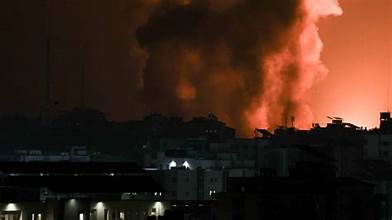
There has been a lot of talk lately about genocide and the word has been bandied about rather loosely. Mostly regarding the ongoing war in Israel against Hamas in the Gaza Strip. Because Hamas uses the civilian population as human shields innocent civilians are getting caught in the crossfire and bombardment by Israel.
The recent conflict began with an act of terror waged against innocent Israelis by Hamas and other Palestinian fighters who invaded a peaceful Kibbutz, killing some 1400 men, women, children, and babies, in the most inhumane ways imaginable. This act of terror was a war crime itself. The question is, is Israel’s response to the killing of 1400 Israelis by bombing and killing of large numbers of noncombatant Palestinians (17,700 as of this writing) many of them women and children, and the forced removal of thousands more, justified? Certainly, some type of response is justified. Israel has the right to defend herself. But shouldn’t it be proportional? And shouldn’t it be within the boundaries of the internationally recognized laws of war?
Let’s return to the question of genocide. What exactly is genocide? What is its legal definition?
Raphel Lempkin, a Polish Jew, invented the word “genocide” and secured the passage of the first-ever United Nations human rights treaty in 1948. It took the United States 19 years to ratify the treaty. According to the Convention, genocide is a crime that can take place both in time of war as well as in time of peace. The definition contained in Article II of the Convention describes genocide as a crime committed with the intent to destroy a national, ethnic, racial or religious group, in whole or in part. The Convention establishes a duty on State Parties to take measures to prevent and to punish the crime of genocide, including by enacting relevant legislation and punishing perpetrators, “whether they are constitutionally responsible rulers, public officials or private individuals.” (Article IV)
The current definition of Genocide is set out in Article II of the Genocide Convention:
Genocide means any of the following acts committed with the intent to destroy, in whole or in part, a national, ethnical, racial, or religious group, as such:
(a) Killing members of the group;
(b) Causing serious bodily or mental harm to members of the group;
(c) Deliberately inflicting on the group conditions of life calculated
to bring about its physical destruction in whole or in part;
(d) Imposing measures intended to prevent births within the group;
(e) Forcibly transferring children of the group to another group.
What is going on in Gaza?
Genocide is the actual reality of Palestinians living in Gaza. They are an entrapped, displaced, starved, water-deprived population of 2.3 million facing massive bombardments and carnage in one of the most densely populated areas in the world. Over 17,000 people have already been killed as of this writing. Tens of thousands have been injured and over 45% of homes in Gaza have been destroyed. The United Nations Secretary-General said that Gaza is becoming a “graveyard for children.” A ceasefire remains elusive. Israel continues to blatantly violate international law: dropping white phosphorus from the sky, dispersing death in all directions, shedding blood, shelling neighborhoods striking schools, hospitals, and universities, bombing churches and mosques, wiping out families, and ethnically cleansing an entire region in both callous and systemic manner. What do you call this? I call them war crimes. Crimes against humanity and yes, I think this rises to the level of genocide.
The United States must use whatever influence it has to bring this atrocity to a halt. Israel has a right to defend herself, but she must do so within the bounds of international laws and norms. She must abide by the United Nations Convention on the Prevention of Genocide.
In 1979 President Jimmy Carter stated, “We must forge an unshakeable oath with all civilized people that never again will the world fail to act in time to prevent this terrible act of genocide.”
The aim of Zen Buddhism is a clear vision of reality, seeing things as they are and that is acquired by the power of concentration. This clear vision is enlightenment.
Arenal Volcano, Costa Rica. Photo Credit: Benn Bell
“Before practicing Zen, rivers were rivers and mountains were mountains. When I practiced Zen, I saw that rivers were no longer rivers and mountains were no longer mountains. Now I see that rivers are again rivers and mountains are again mountains.” Zen Master
Cumberland River, Kentucky. Photo credit: Benn Bell
Antisemitism is on the rise in this country and around the world. I loathe bigotry of any sort, but antisemitism is particularly galling. How did we get to this place? The war between Israel and Hamas has a lot to do with it. Hamas knew exactly what it was doing when it struck on October 7. They knew Israel would unleash fury upon Gaza. As they use civilians as human shields, collateral damage is inevitable. The more carnage the more world opinion turns against Israel and sympathy rises for the Palestinians. This is exactly what Hamas wants and it is winning the propaganda war. I don’t like to see civilians killed in war, especially innocent children. It breaks my heart every time I see a small broken body being carried in a parent’s arms. There doesn’t seem to be any good solution, but I would like to see a cease-fire, the hostages released, and negotiations begin for a two-state solution. Big ask. I know Israel won’t stop until Hamas is obliterated. This is understandable as they face an existential threat, but they must do everything possible to limit civilian casualties and abide by the rules of war.
One more thing. Just because you criticize the state of Israel does not make you an anti-Semite. Every country in the world is subject to criticism. That is the very basis of free speech. It’s when that speech crosses over to hate speech is when we have a problem, and that speech could be interpreted as anti-Semitic. Let’s keep it clean. We should be able to discuss these issues without devolving into hate speech.
It took me quite a while to get around to reading Herzog. It has been sitting around in my personal library since 1985 when I purchased it in a used bookshop in Tulsa, Oklahoma. Since then, I and my books have moved around several times, but we have now finally come to rest in Louisville, Kentucky. Maybe we will be here a little bit longer. The book was published in 1964 and was awarded the National Book Award for Fiction. Bellow, himself, won the Nobel Prize for Literature in 1976.
I have been reading Bellow since the 1970s and for a long time considered him to be my favorite author. Until Philp Roth came along and then I was in this author’s thrall for many years and stopped reading Saul. Much to my detriment, I may add, but now I happily return to Saul Bellow in this wonderful book, Herzog.
Herzog is a classic novel that explores the existential crisis of a middle-aged man who is dissatisfied with his life. The protagonist, Moses Herzog, a middle-aged intellectual living in Chicago is a writer and a thinker, grappling with personal and philosophical questions and writes letters to various people, both living and dead, as a way of coping with his failures and frustrations. The novel is a rich and complex portrait of a man who is searching for meaning and identity in a chaotic and absurd world. It is also very funny.
As I read this story, I couldn’t help but relate to the main character, Moses Herzog. His story deeply resonated with me, and I felt it was a bit synchronous with my own life. For example, Moses had lived in a small town in Massachusetts near Pittsfield. I lived in a small town near Pittsfield. Moses has an affair with a woman in New York while living and teaching in Philadelphia. I lived in Philadelphia and was having an affair with a woman from New York. Like Moses, I would travel back and forth between the two cities. Moses at one time had an Asian girlfriend. I was married to a Korean woman for 14 years. Moses was going through a second divorce as he tried to sort out his life and survive a midlife crisis. Been there, done that. And finally, at lot of the action takes place in Chicago, a city I love and adore.
One of the central themes of Herzog is identity. Moses Herzog is a character deeply rooted in his own sense of self, and the novel examines how he grapples with this identity in the midst of personal and societal turmoil. Herzog’s journey is marked by his attempts to make sense of his failed marriages, his complex relationships, and his role as a father. His introspection on his own identity is similar to the search for meaning that many other individuals undertake in their lives.
Spirituality is another significant theme in Herzog. The novel raises questions about the nature of faith and belief. Herzog’s exploration of spirituality is a deeply personal one, as he grapples with the concepts of God and meaning. He is a secular man, yet he contemplates the existence of a higher power and the role of religion in human life. This internal spiritual journey is one that many people undertake in their search for purpose and transcendence.
Saul Bellow’s prose is rich and thought-provoking. He skillfully weaves together Herzog’s reflections with vivid descriptions of the world around him. Bellow’s writing captures the essence of the mid-20th century and provides a snapshot of American society at the time, with its cultural and intellectual upheavals.
The character of Moses Herzog himself is a complex and deeply human protagonist. He is flawed, struggling, and as I said earlier deeply relatable. His journey of self-discovery and reflection makes Herzog a timeless tale that continues to resonate with readers today. It did with me.
I unequivocally condemn Hamas’ brutality, and I am horrified by the bloodshed left in its wake, and deeply mourn the loss of innocent lives. The horror of these attacks beggars the imagination and can only be described as pure evil and acts of terrorism.
There is no moral equivalency between what Hamas did and what Israel is doing to defend herself. I completely support Israel’s right to defend herself, but she must do so in accordance with international law. I agree with the concerns expressed by international human rights organizations who are worried about civilian casualties in the war.
The U.S. and its allies have a moral obligation to uphold the laws of war and abide by the Geneva Conventions.
Palestinian civilians are not Hamas and had nothing to do with the shocking attacks. The United States must work to ensure innocent residents of Gaza are not indiscriminately punished for the actions of terrorists. The intentional attack on civilian populations is nothing less than a war crime.





 Ghost Dog